|
May 2017
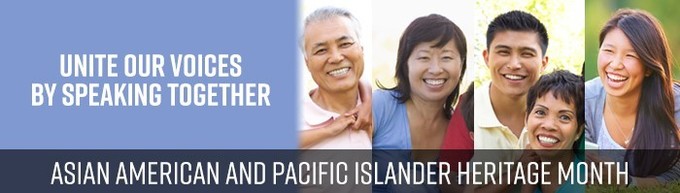
Please join the Office of
Minority Health in celebrating Asian American and Pacific Islander Heritage
Month. Asian American scientist David
Ho’s research on AIDS led to the discovery of the combination of
protease-inhibitor and antiviral drug “cocktails”; now widely used to treat
HIV/AIDs. Scientist Tuan Vo Dinh’s medical research led to the discovery of an
optical method of cancer detection. Other Asian American scientists, like
Flossie Wong-Staal, David T Wong, Har Gobind Khorana are just a few of many
Americans of Asian and Pacific Islander descent whose contributions have
improved the health of millions.
As we celebrate these contributions this
month, it is also a time to draw attention to the fact that there is still much
to do to eliminate health disparities among Asian Americans and Pacific
Islanders. For instance, 50% of people living with Hepatitis B
are among the Asian American and Pacific Islander population; however, this
population only comprises 5% of the total U.S. population. To learn more,
please plan to join the Office of Minority Health and the Asian Pacific
Islander Health Forum webinar on May 22, 2017, 4:00 pm ET. Register
here.
 |
|
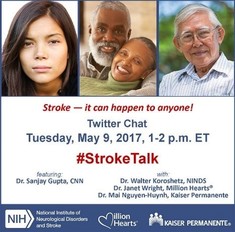
A stroke can strike at any age. In fact, about 1
in 7 strokes occur in people ages 15–49.
Join the National Institutes of Health’s National
Institute of Neurological Disorders and Stroke and partners and a panel of
stroke experts for a Twitter chat on May 9 at 1PM ET to learn about the prevalence
of stroke in young adults. Follow the hashtag #StrokeTalk to join the conversation. Dr. Sanjay Gupta from
CNN will join the talk. |
 Lupus is more prevalent among African
American, Latina, and Native American women than Caucasian women.
The Lupus Nature Versus Nurture (LUMINA) study—a large multi-ethnic, multi-regional, and
multi-institutional examination of lupus begun in 1993—found that genetic and
ethnicity influence disease activity more than socioeconomic status. The study tracked death,
damage, disability, and disease activity. The results also suggest
that there are probably other genetic factors affecting the presentation of the
disease in the African-American and Latino communities.
- African-American women
are three times more likely than Caucasian women to get lupus and develop severe symptoms, with as many
as 1 in every 250 affected.
- The disease is two times more prevalent in
Asian-American and Latina women than it is in Caucasian women. Women of Native
American descent are also disproportionately affected.
Learn more about the communities most affected by Lupus.
|
 |
|
The National Women’s Health Week is led by the U.S. Department of Health and Human
Services (HHS) Office on
Women's Health (OWH). The 18th annual observance kicks off on
Mother’s Day, May 14, and is celebrated through May 20, 2017. National Women’s
Health Week encourages women to make their health a priority and reminds them
to take steps for better health at every age. HHS OWH provides
helpful tools on their website in the link above for National Women’s Health
Week and encourages women to:
|
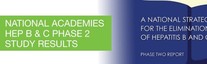 This spring, the National Academies of Sciences, Engineering, and
Medicine released the second phase of a report on eliminating viral hepatitis
in the United States.
The report, Eliminating
the Public Health Problem of Hepatitis B and C in the United States provides a U.S. strategy for eliminating
hepatitis B and hepatitis C virus infection and the disease and mortality
caused by these agents as public health threats by 2030.
The
report was sponsored by the HHS Office of Minority Health, CDC’s Division of
Viral Hepatitis and Division of Cancer Prevention and Control, the American
Association for the Study of Liver Diseases, Infectious Diseases Society of
America and the National Viral Hepatitis Round-table.
The
report sets forth goals for eliminating these diseases and a practical set of
recommendations to scale up current prevention activities in the U.S. The five
areas of focus are:
- Public health
information
- Essential
interventions
- Service
delivery
- Financing
elimination
-
Research
|
 |
|
The Office of Minority Health participated in the
#NotAlone Twitter chat hosted by The National Institute of Health’s U.S.
National Library of Medicine, AARP Foundation and ACRIA, on May 4th
to launch the Older Adults observance this month. The title of the Twitter chat
was Loneliness and Older Adults. View below the resources for caregivers and
learn how one can help end loneliness among older adults.
|
WEBINARS:
Improving Health &
Quality of Life of Individuals Living in Chronic Pain
Join HHS’s
Office of the Assistant Secretary of Health and National Institute for
Neurological Disorders and Stroke for their webinar,
Implementation of the National Pain Strategy (NPS), to be held on Thursday, May 11, 2017, from 8:30 a.m. –
4:30 pm ET. Federal
officials, scientists, researchers and partners share activities and discuss
barriers, gaps and new strategies in implementing the NPS. Register here. You’ll be able to ask
your question and share your efforts!
Hepatitis C – Going the Extra Mile to Achieve a Cure for
Hepatitis C in the Hispanic/Latino Communities
In
observance of National Hepatitis Awareness Month, please join us on May 15, 2017, 1:00 pm ET for a webinar
which will feature presentations from Valley AIDS Council – Westbrook Clinic
and the HHS Office of Minority Health Resource Center. Topics
include: World Health Organization updates,
global Hepatitis C virus (HCV) strategies and current U.S. health statistics in
the context of the disproportional impact in Hispanic communities. The
discussion will be driven by our goal to identify what stakeholders can do to
help eradicate HCV within this population. Registration
here.
Recent Developments to Help Communities at-risk of HIV, TB,
STDs, and Viral Hepatitis
The Office of Minority Health and the Asian
Pacific Islander Health Forum will co-host a discussion on issues and practices
in racial/ethnic data collection and reporting across four conditions: HIV,
sexually transmitted infections, viral hepatitis and tuberculosis on May 22, 2017, 4:00 pm ET. Learn how our provider
tool serves to enhance your outreach to address chronic hepatitis B,
particularly in areas with high numbers of at-risk populations. Register here.
 EVENTS:
Please join us June 6-7:
California State University, Sacramento, Sacramento, CA for the
Office
of Minority Health Resource Center HETAP initiative; the University Vision, Design and
Capacity (U-VDC) technical
grant writing workshops. This workshop will provide the university and health
professionals with strategies to make their grant proposals more competitive.
This hands-on, two-day workshop is for junior
faculty, staff and college/university health professionals who are interested
in community-based participatory research. A commitment to working with
underserved populations and having current responsibilities and/or professional
goals pertaining to building their institution’s capacity to compete and
receive grant awards are highly encouraged. Register here.
|
 |
|
Join the OMHRC Knowledge Center at the upcoming conference:
for the American Library Association (June 22-27)
Stop by our booth and learn about the largest collection of minority health and health disparities in the nation! |
|