|
From the smallest scales of nature to the technologies that shape our everyday lives, quantum science is transforming how we understand and interact with the world. Announced at the "White House Summit on American Innovation" and in alignment with the executive order "Ushering in the Next Frontier of Quantum Innovation," the U.S. National Science Foundation is excited about the quantum innovations NSF Project Triad will unleash to improve American prosperity, national security and create jobs for American workers. In this issue of NSF Insights, learn more about how researchers are harnessing quantum phenomena to develop new materials, advance sensing capabilities, strengthen cybersecurity and unlock new possibilities across science and technology. |
|
|
If you are not yet subscribed to NSF Insights and would like to continue receiving these monthly updates, please sign up below to stay connected.
|
|
|
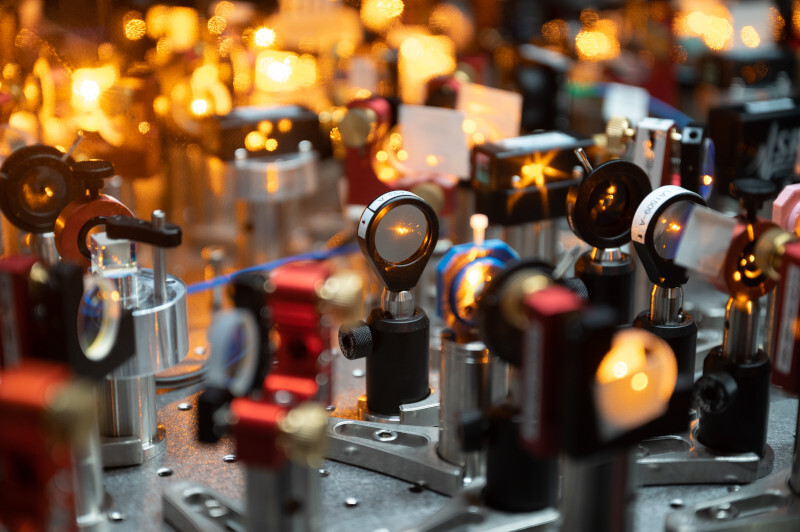
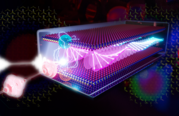
This optical bench contains lasers and optical elements to cool molecules to nanokelvin temperatures, where quantum effects become easier to observe. Using it, NSF-supported scientists created the first-ever Bose-Einstein condensate made from molecules, cooled to 5 nanokelvin (around -459.66 degrees Fahrenheit) and stabilized for two seconds. Credit: Sebastian Will/ Will Lab/ Columbia University
|
|
Did you know millions of people rely on spatial data every day without even thinking about it? Decades of NSF investments advanced the technologies behind modern mapping and navigation systems, transforming how we move through the world |
|
 |
|
|
 |
|
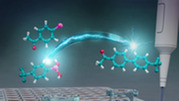
Join the NSF Directorate for Mathematical and Physical Sciences (NSF MPS) for virtual office hours featuring updates on programs, funding opportunities and other topics of interest to the U.S. chemistry research community. Register here.
|
 |
|
September 15, 1–2:30 p.m.
Join the NSF Directorate for Geosciences for virtual office hours featuring updates on programs, funding opportunities and other topics of interest to the earth science research community. Register here.
|

 |
|
September 16, 1–2 p.m.
Join the NSF Directorate for Biological Sciences for virtual office hours featuring updates on programs, funding opportunities and other topics of interest to the biological sciences research community. .
|
|
|
NSF is proud to join the White House Office of Science and Technology Policy, the U.S. Department of Energy (DOE) and other federal partners in advancing the administration's artificial intelligence priorities through the Genesis Mission.
NSF has announced an $83 million investment in integrated data systems and services to advance AI-driven science and strengthen U.S. research infrastructure.
NSF has launched a new initiative to unlock the value of existing scientific datasets and accelerate AI-enabled discovery in national priority areas.
NSF has announced a $400 million investment to 20 research teams to establish a national network of AI-programmable cloud laboratories in alignment with the U.S. government's Genesis Mission.
NSF has awarded 12 new Regional Innovation Engines to accelerate breakthrough technologies, create high-quality jobs and strengthen regional economies. The new Engines will advance critical technologies ranging from energy grid security and critical minerals to quantum computing.
NSF has announced its first-ever NSF Fostering Interdisciplinary Network Driven Educationally Responsive Solutions Foundry (NSF FINDERS FOUNDRY) awards, supporting 50 teams working on projects to strengthen K-12 STEM education and prepare students for a digital, AI-driven future.
|
|
The White House unveiled more than $5 billion in federal commitments expanding the Genesis Mission, with over 15 federal agencies contributing research awards, datasets, and facilities.
NSF has announced its second round of NSF Engines awards to advance cutting-edge, multidisciplinary research and technology development in key focus areas, such as energy grid security, mineral extraction and quantum computing.
NSF launched Project Triad, a first-of-its-kind initiative to integrate quantum sensing, networking and computing into a unified system. By bringing these technologies together, the effort will accelerate practical quantum capabilities and strengthen U.S. technological leadership.
The largest digital camera on Earth, the NSF-DOE Vera C. Rubin Observatory, has finally started filming a motion picture of the universe.
CNN:
The world’s most powerful solar telescope, the NSF Daniel K. Inouye Solar Telescope, has captured the highest resolution observations of the sun’s visible surface and uncovered a hidden process that drives solar activity.
The Smithsonian's National Air and Space Museum is opening five new and updated galleries, including the "NSF Discovering Our Universe" gallery, just in time for the big 250th July 4 celebration.
|
|
1998 – Bridging the gap to commercialization (Aug. 6)
In August 1998, NSF introduced a new supplementary funding opportunity to help startups and small businesses move promising technologies closer to the marketplace. This program provides additional support to awardees, helping sustain development while companies secure third-party investment. .
|
|
|
|
|