|
|
Dear Colleagues,
Over the last few months, the U.S. National Science Foundation Mathematical and Physical Sciences Directorate (NSF MPS) has made over 1,500 new research awards to help enable discoveries across the foundational disciplines we support: astronomy, chemistry, materials, mathematics and physics.
Among those awards are the first design awards for the NSF National Quantum Virtual Laboratory, the Mathematical Sciences Research Institutes, the newest NSF Center for Chemical Innovation, the first NSF AI institute devoted to materials discovery, joint awards with United Kingdom Research and Innovation supporting quantum information in chemical systems and many more.
In late June, we celebrated the first images released by NSF-DOE Vera C. Rubin Observatory, a major new scientific facility jointly funded by NSF and the U.S. Department of Energy's Office of Science. And this month we celebrate the 10-year anniversary of NSF LIGO's historic 2015 detection of gravitational waves and its recent results that provided the best evidence yet for Stephen Hawking's 1971 black hole area theorem.
As part of NSF's strategic goal to inspire the next generation of scientists, we're proud to share a wonderful educational program inviting K-5 students and teachers to take a virtual field trip to the NSF Daniel K. Inouye Solar Telescope. The videos and classroom resources were produced in a partnership between NSF, Sesame Workshop and Discovery Education. It joins another virtual field trip released earlier this year that allows youngsters to explore the NSF National High Magnetic Field Laboratory.
As the leaders of MPS, we are in awe every day of our incredible research community and the equally incredible MPS staff who work so hard to carry out NSF's vital mission. Thank you for everything you are doing to further the progress of science, which expands our understanding of the universe and creates an ever-stronger foundation for our quality of life, our economy and our security.
Tie Luo
Directorate Head
NSF Mathematical and Physical Sciences Directorate
David B. Berkowitz
Assistant Director
NSF Mathematical and Physical Sciences Directorate
|
|
 NSF National Quantum Virtual Laboratory speeds into the design phase
Four teams will receive funding to lay the groundwork for a shared national resource for quantum science and technology to accelerate the development of useful quantum technologies.
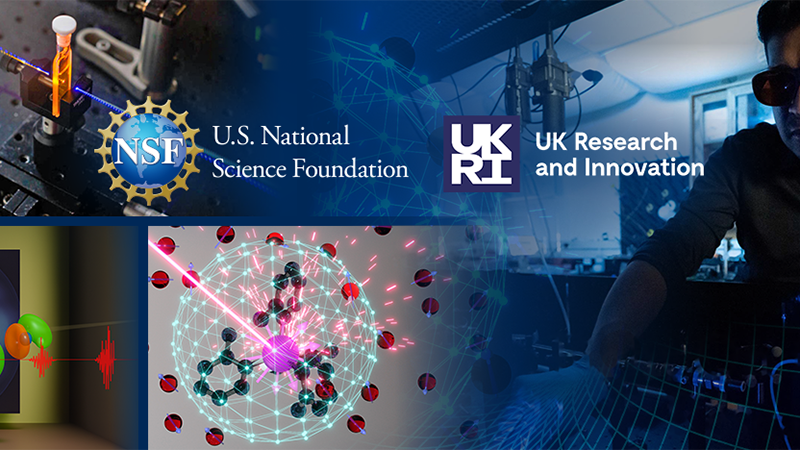 NSF and UKRI launch $10M quantum chemistry collaborative research effort
Eight new projects could lead to breakthroughs in computing, sensing and secure communications, bringing together U.S. and U.K. researchers to investigate how quantum information affects chemical reactions and molecular systems.
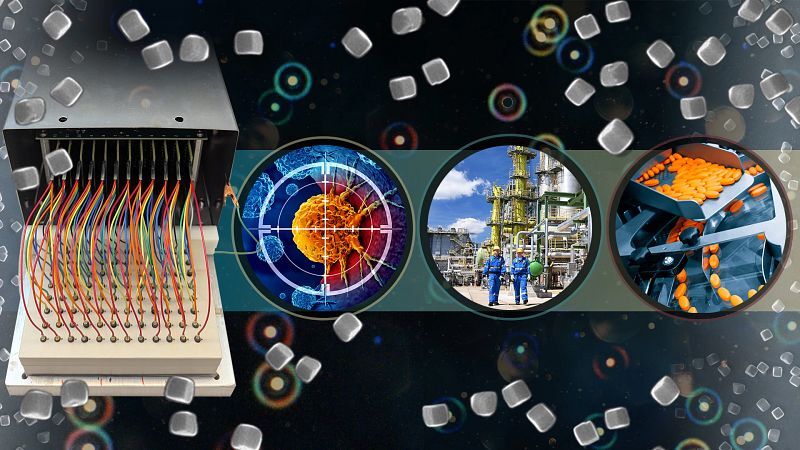 Tiny crystals, huge impact — NSF launches new nanocrystals research center
The newest NSF Center for Chemical Innovation will create artificial intelligence-based technologies to rapidly identify nanocrystals with potentially useful properties for biomedicine, electronics, fuel production, chemical manufacturing and more.
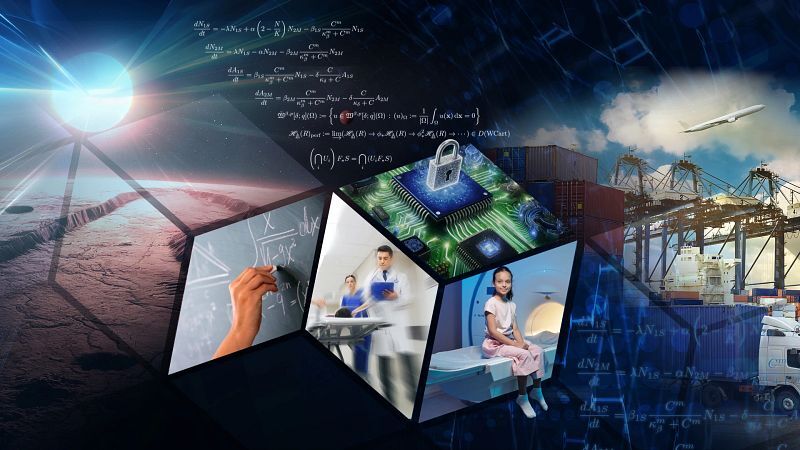 NSF invests over $74 million in 6 mathematical sciences research institutes
From improving medical care to detecting planets in other solar systems, the institutes will explore mathematical sciences with a broad range of applications in science, technology and many industries.
 NSF announces $100 million investment in National Artificial Intelligence Research Institutes awards to secure American leadership in AI
Among the institutes receiving awards are the new NSF AI-Materials Institute and the NSF Molecule Maker Lab Institute, which will drive innovation in materials discovery, drug development and other areas.
|
|
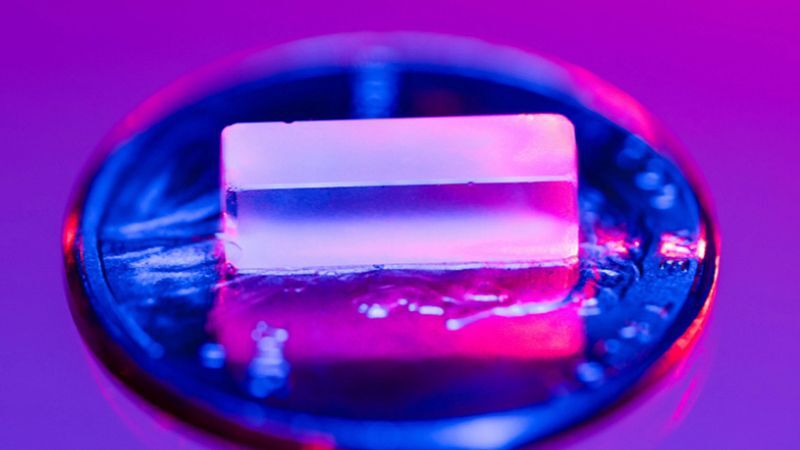 Imagine a quantum computer capable of identifying new medicines by rapidly exploring trillions of molecular interactions. Or quantum sensors able to detect underground oil and gas deposits without drilling. NSF's investments in fundamental research are driving the development of quantum technologies with the potential to do what no other technology can.
|
|
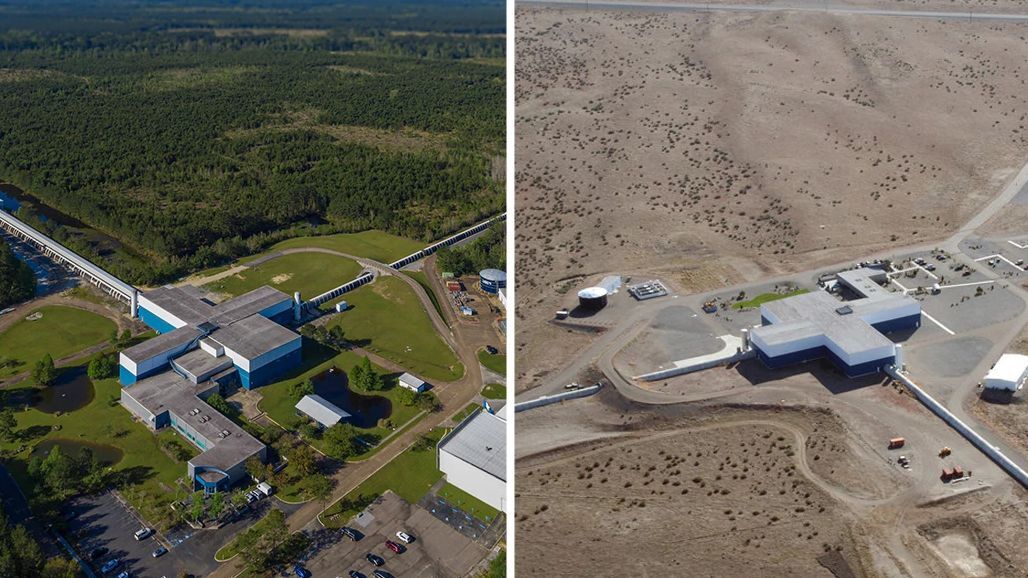 Ten years ago this month, the U.S. National Science Foundation Laser Interferometer Gravitational-Wave Observatory (NSF LIGO) made the first-ever direct detection of gravitational waves, which came from a pair of remote black holes that had merged about 1.3 billion years ago. Today, LIGO routinely observes roughly one black hole merger every three days, thanks to the cutting-edge quantum precision engineering in its sensitive detectors.
|
|
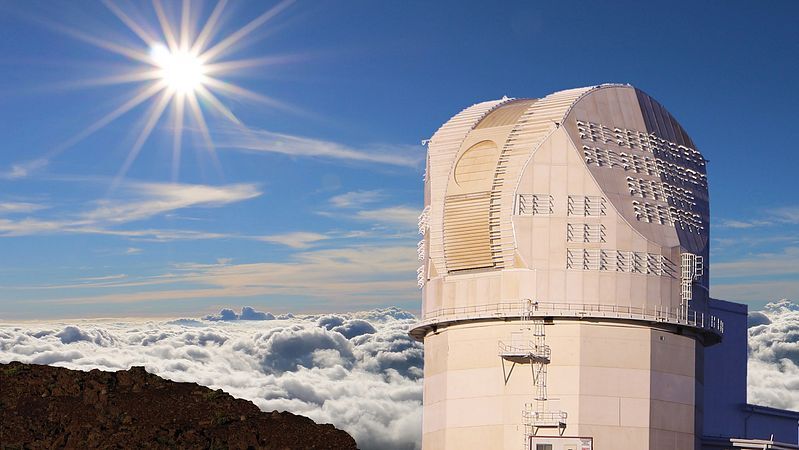 NSF, Sesame Workshop and Discovery Education invite you on a virtual field trip to the NSF Daniel K. Inouye Solar Telescope atop Haleakalā on the island of Maui, Hawaii. Created for K-5 students and educators, this engaging experience introduces students to the cutting-edge technology used to study the sun and how it helps predict future solar behavior.
|
|
Science that creates the future
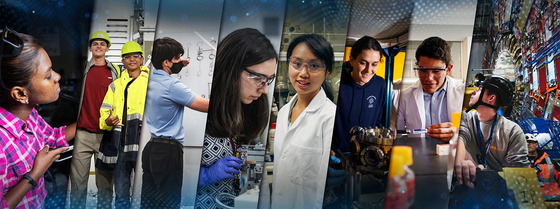 The NSF Directorate for Mathematical and Physical Sciences is one of the preeminent federal forces behind over 75 years of major scientific breakthroughs and innovations. MPS enhances America's national security, economic growth and quality of life by advancing human understanding of the fundamental nature of the universe at all scales.
|
|
|
|