|
|
A Message from the Assistant Director for STEM Education at NSF
Warm wishes and welcome to the EDU spring newsletter, where many exciting things are taking root, including a new and historic investment that is poised to transform the future of STEM education.
In April, the agency awarded $90 million to OpenStax at Rice University to establish SafeInsights, a groundbreaking research platform. This initiative represents the agency’s largest single investment in research and development infrastructure for education on a national scale. It is a monumental investment that EDU celebrates alongside many of its colleagues across the agency and among many of its educational research collaborators, supporters, and investigators across the Nation.
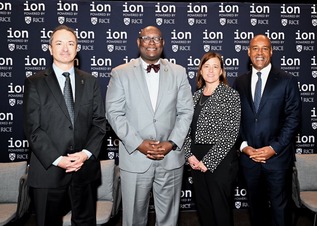
SafeInsights comprises 40 partners and 39 collaborating institutions. The project outlines a means for generating critical research on teaching and learning for educators, institutions, and learning platforms. It will enable the creation of tailored programs, better equip learners for success, and catalyze innovation in STEM education everywhere, including in some of the Nation’s most vulnerable and underresourced schools, institutions, and communities.
Throughout my career, I have learned that there is genius in every zip code – talent that EDU is working every day to create opportunities for throughout the American STEM ecosystem. And SafeInsights will help make this a possibility by accelerating student learning, expanding knowledge mobilization, and introducing useful tools to more teachers and learners in all pockets of the country.
Speaking of teachers, this month, EDU is showing its admiration, appreciation, and indebtedness to STEM teachers across the U.S. With this in mind, I’d like to take a moment to echo the sentiments of our Director, Sethuraman Panchanathan, that teachers play such an essential role in supporting the foundation of this Nation, and EDU is committed to supporting you.
|
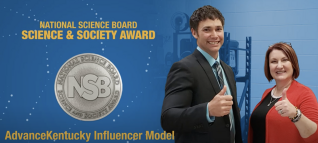
EDU is also celebrating its funded investigators, like Eric Wooldridge and his close collaborator, Sheri McGuffin of Kentucky Science Technology Corporation.
Wooldridge is the first ATE PI honored with the National Science Board’s Science & Society Award. EDU congratulates Wooldridge and his close collaborator on receiving this prestigious recognition for high-impact and accessible additive manufacturing education training programs that reach thousands of students in rural Kentucky.
|
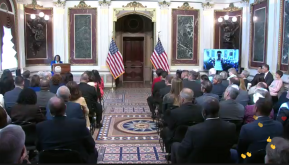
I would also be remiss if I did not acknowledge that, not too long ago, EDU’s Deputy Assistant Director (DAD), Sylvia Butterfield, received the Presidential Rank Award in recognition of her exceptional work at NSF and throughout the federal government. I congratulate her on receiving this highly regarded award. I also want to extend a hearty welcome to Sylvia on her return to EDU this spring. Sylvia served as Acting Assistant Director for the Directorate for Social, Behavioral and Economic Sciences, and my EDU colleagues and I are thrilled to have her back!
In closing, I hope you enjoy learning about the range of EDU’s investments highlighted in this newsletter. I encourage you to share this newsletter with your colleagues and invite them to subscribe here. As always, keep making STEM excellence in education, workforce development, and research a priority!
Respectfully,
|
 James L. Moore III
|
|
 NSF announces pilot phase and anticipated opening date of Arecibo C3 at the site of the NSF Arecibo Observatory Historic District in Puerto Rico
The upcoming pilot phase will engage small groups of local students and educators to test activities and exhibits at the Arecibo Center for Culturally Relevant and Inclusive Science Education, Computational Skills, and Community Engagement (NSF Arecibo C3). Learn more here.
EDU invests $90M in cyberinfrastructure for transforming STEM education
SafeInsights is a unique, national scientific cyberinfrastructure aimed at transforming learning research and STEM education. OpenStax at Rice University will lead and oversee the implementation and launch of this new project of unprecedented scale and scope. Learn more here.
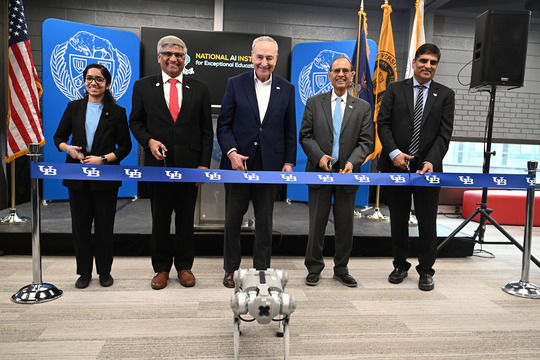 NSF Director celebrates the launch of the National AI Institute for Exceptional Education
This large-scale, multi-partner initiative aims to transform education for children with speech and language processing challenges using advanced artificial intelligence. Learn about the Director's visit to the University at Buffalo with Senate Majority Leader Chuck Schumer.
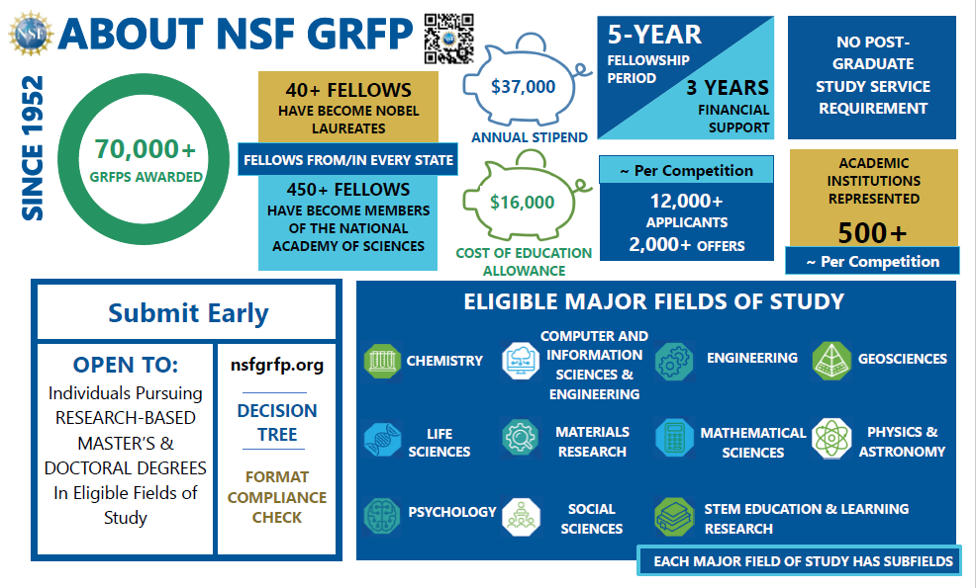 NSF Graduate Research Fellowship Program (GRFP) announces 2024 recipients
The GRFP recognizes and supports outstanding graduate students who have demonstrated the potential to be high achieving scientists and engineers early in their careers. Find the full list of this year's fellow candidates and honorable mentions here.
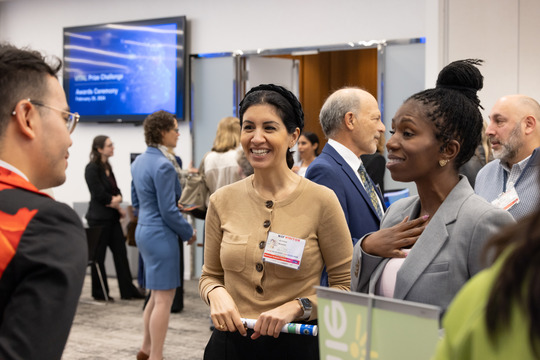 Anissa Moeini, Goldstar Education; Shayla Cornick, Project Director, Digital Promise, at the Vital Prize Challenge event at NSF.
NSF announces nine VITAL Prize Challenge winners
The Visionary Interdisciplinary Teams Advancing Learning (VITAL) Prize Challenge invited teams to take new approaches to bringing emerging innovations to K-12 learning. A partnership between NSF, the Bill & Melinda Gates Foundation, Schmidt Futures, and the Walton Family Foundation made this $6 million prize challenge possible. Learn more about the winners here.
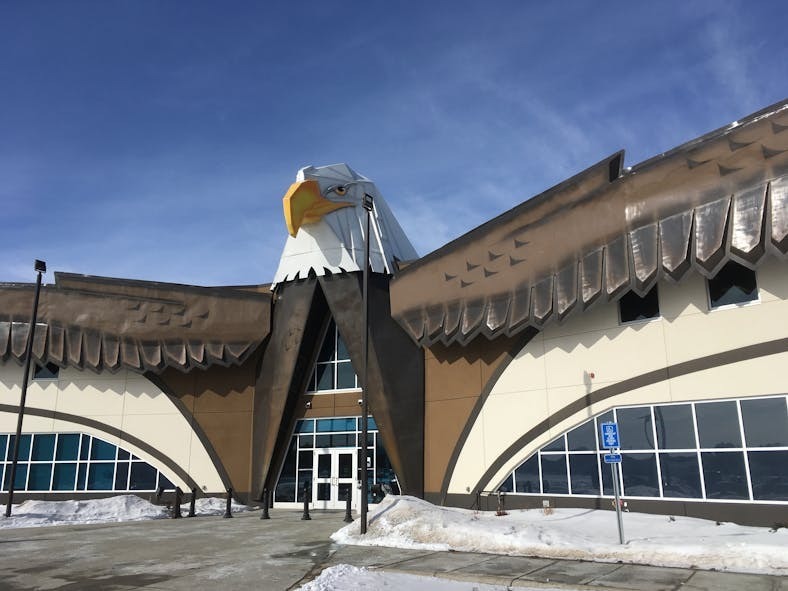 Red Lake Nation College
EDU funding provides pathways for Indigenous students in STEM
Several Tribal Community Colleges in Minnesota and Michigan received NSF funding to help offer more opportunities for Indigenous students to study STEM. Bay Mills Community College in Michigan is expanding its biology and chemistry course offerings and will host summer science camps for local pre-college students. And learn more here about how Red Lake Nation College in Minnesota will invest in health and behavioral sciences, while White Earth Tribal and Community College in Minnesota will create a new associate degree in natural science.
|
|
“Blue Whales: Return of the Giants” recognized at 2024 Beijing International Film Festival
"Blue Whales" received the Best Science Film Award and the Audience Award. The film allows viewers to explore the world of the magnificent blue whale, a species rebounding from the brink of extinction. Following two scientific expeditions, the film is an inspirational story that transforms understanding of the largest animal ever to have lived. Click the image to watch the trailer, and learn more about the film here.
|
ATE Impacts 2024-2025 book now available
The Advanced Technological Education (ATE) program focuses on the education of highly-qualified science and engineering technicians for fields that drive our nation’s economy. For over 30 years, ATE has prepared students for successful technical careers. This booklet provides a snapshot of the thousands of projects that have helped prepare the STEM workforce across the country. Find the book here.
|
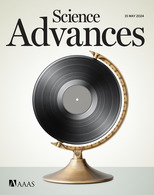
Partnerships and collaboration drive innovative graduate training in materials informatics
Read this Science Advances article that highlights multiple NSF Research Traineeship (NRT) program projects around materials informatics.
|
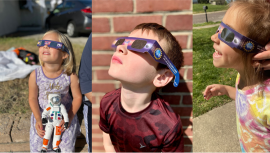
EDU program officer Olivia Long distributed more than 3,000 NSF solar eclipse glasses to students ahead of the total solar eclipse on April 8, 2024. Read more here. NSF, NOAA, and NASA also hosted a viewing event at the Fair Park Cotton Bowl in downtown Dallas, with special guest speakers, Neil deGrasse Tyson and “Ready, Jet, Go!” from PBS.
|

Almost 2,000 years ago, Roman cities, including Pompeii and Herculaneum, were destroyed when Mt. Vesuvius erupted, burning and carbonizing everything. But amid the devastation, something unexpected survived…the Herculaneum scrolls. Watch here to learn how researchers, including recent NSF Graduate Research Fellow, Stephen Parsons at the University of Kentucky, are "virtually unwrapping" these scrolls using artificial intelligence.
|

Since 2007, Detroit's Downtown Boxing Gym has provided a free academic and athletic program to students ages 8-18. So far, they have seen longterm, life-changing impacts and a 100% high school graduation rate. Listen here as NSF chats with Purdue University Associate Professor Amanda Case and Downtown Boxing Gym Executive Director Jessica Hauser.
|
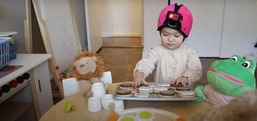
Toddlers teach language to AI
Watch here to learn how EDU-supported researchers are training AI models to learn language through the eyes and ears of a child via a first-person, head-mounted camera.
|
|
|
EDU Divisions
Division of Graduate Education (DGE)
DGE provides funding to support graduate students and the development of novel, innovative programs to prepare tomorrow's leaders in STEM fields.
Equity for Excellence in STEM (EES)
EES promotes activities that strengthen STEM education for underserved communities, broaden their participation in the workforce, and increase knowledge about promoting inclusion. (EES was formerly the Division of Human Resource Development.)
|
Division of Undergraduate Education (DUE)
DUE focuses on strengthening STEM education at two- and four-year institutions by improving curricula, instruction, laboratories, infrastructure, assessment, diversity of students and faculty, and collaborations.
|
|
|
|
|