|
|
Dear Polar community,
I have been continually impressed with the recent reports of substantial progress on large scientific experiments and the communication to the public about NSF-funded research. In early January, the Public Broadcasting System’s NOVA showed an hour-long program called “Arctic Drift,” about the MOSAiC project aboard the German Research Vessel Polarsterne; NSF contributed substantially to the U.S. participation in MOSAiC. In late December, CBS News reported on the NSF Science and Technology Center COLDEX, looking for the oldest ice in Antarctica to study the entrapped gases that record past atmospheric and climate history; I’ve also seen numerous reports on the progress of drilling this Antarctic season. In the Arctic, the last season saw excellent progress by the GreenDrill project studying the history of the Greenland ice sheet. And finally, the first NASA Explorers Program balloon launch from Antarctica, the GUSTO mission, took place at the end of December.
In late November, a delegation of House Appropriations Committee members visited Antarctica, going to both McMurdo Station and the South Pole. One of the outcomes of this visit was a joint op-ed by the NSF Director and Representative Gonzales of Texas. Other House visitors included Representatives Cuellar (TX), Reschenthaler (PA), and Womack (AR).
The short Antarctic summer season is already winding down. The USCG icebreaker Polar Star broke a path through the sea ice to McMurdo Station and the cargo vessel is now being offloaded and the fuel tanker is on its way.
The detailed COVID protocols developed for the Antarctic season have proven successful to date; although there have been cases of COVID on the ice, the combination of vaccination, testing, and isolation when necessary have shown that we can successfully manage COVID with limited impact. Congratulations to all involved in developing these protocols and the deployers and medical personnel who have participated in keeping USAP COVID-safe. As a reminder, information about the Polar Qualification (PQ) process can be found on the recently released PQ website.
 James Ulvestad
Acting Director, Office of Polar Programs
|
|

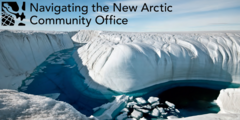
The Arctic tundra is experiencing rapid climate change, including warming temperatures and loss of sea ice, affecting both plants and herbivores. A recent NSF-funded paper uses 15 years of data showing a decline in tundra diversity, and how caribou and muskoxen slowed the decline in the region.
|
Sea ice is critical for Adélie penguins throughout their life cycle, particularly during their annual molting period. Using dive record data between 2017 and 2019, and remote sensing data, NSF-funded researchers saw that sea ice concentration during molting was lower during the study period, and has declined in the area since 1980.
|
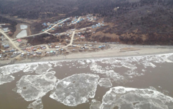
The Arctic and subarctic are being impacted by climate change, but to understand the impacts warming will have on those living in the region, partnering with impacted Indigenous communities in the region is important. A new NSF-funded paper discusses efforts undertaken by the Arctic Rivers Project to conduct ethical and equitable research with Indigenous communities and generate science that is useful to those communities.
|
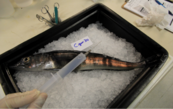
Expression of multiple hemoglobin isoforms with differing physiochemical properties likely helps species adapt to different environmental and physiological conditions. Antarctic notothenioid fishes inhabit the icy Southern Ocean and display fewer hemoglobin isoforms, each with less affinity for oxygen than temperate relatives. NSF-funded researchers analyzed hemoglobin genes from 36 notothenioid genome assemblies and showed that adaptation to frigid conditions shaped hemoglobin gene evolution.
|
Have an NSF-supported research highlight to share? Contact us.
Opinions, findings or recommendations of NSF awardees or their institutions do not necessarily reflect the views of the National Science Foundation.
|
|
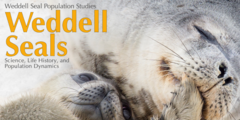 Free Weddell Seal eBook
Download the new ebook Weddell Seals: Science, Life History, and Population Dynamics!
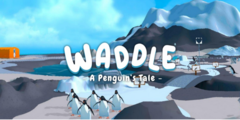 Waddle: A Penguin's Tale
Embody an Adelie penguin living in Antarctica in an educational VR experience.
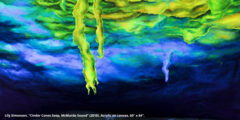 Calling Polar Researchers
Polar STEAM is recruiting researchers for the 2025/26 season to collaborate with educators, artists and writers in broader impacts.
|
|
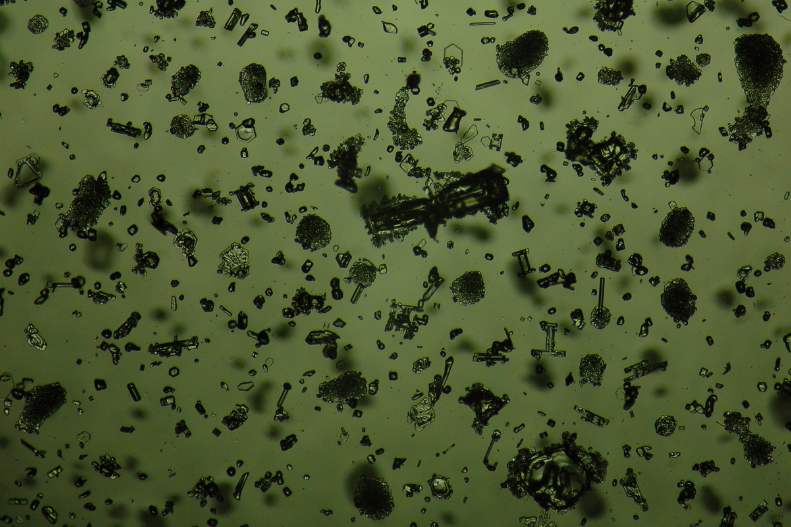 Ice, Ice, Baby! These beautifully complex ice crystals were photographed at Summit Station in December. The winter crew at Summit are supporting data collection for the Walden (2137083) project, which is an international study called the Integrated Characterization of Energy, Clouds, Atmospheric state, and Precipitation at Summit (ICECAPS). The project is taking observations of the atmosphere to advance understanding of cloud properties, radiation and surface energy, and precipitation processes over the Greenland Ice Sheet.
Photo Credit: Rachael Young
|
|
OPP sections
Antarctic Infrastructure and Logistics (AIL)
AILs mission is to provide the operational and logistical platform necessary for the U.S. to conduct world-class science in Antarctica and maintain its active and influential presence on the continent.
Antarctic Sciences (ANT)
ANT supports cutting-edge research across all scientific fields that improves understanding of the interactions between the Antarctic region and global systems; expands fundamental knowledge of Antarctic systems and processes; and uses the unique characteristics of Antarctica as a science observing platform. ANT supports non-fieldwork-based analysis and modeling as well as Antarctic fieldwork for research that must be performed, or is best performed, in Antarctica.
Arctic Sciences (ARC)
ARC supports fundamental research at the forefront of understanding the Arctic, including its human and natural components and its global linkages. The section also works to develop and encourage good Arctic stewardship through education, training, dialogue, and planning. In addition to its scientific programs, ARC also includes a Research Support & Logistics program that improves the efficiency and safety of our research community.
|
|
Front Office Integration Team (FIT)
FIT supports the innovative scientific research, engineering, and education taking place in and about the polar regions. FIT provides administrative, policy, and communications support to the entire polar program, and ensures that research and related activities in the regions are environmentally sound.
Safety and Occupational Health (SOH)
SOH facilitates a culture of safety and health in support of research throughout the Polar regions. The protection of life and property are fostered through a coordinated risk-based approach with all stakeholders. Industrial hygiene and safety activities include research and project safety evaluations, incident reviews and investigations, and field assessments. Oversight of the occupational health and medical system contributes to deployment public health. All of these activities lead to continuous improvement initiatives.
|
|
|
|
|