|
|
Dear EDU colleagues, partners, and supporters:
Warmest greetings! I hope this message finds you renewed, inspired and motivated in 2024. As the Directorate for STEM Education (EDU) rapidly pivots into the new year, it remains laser-focused in its quest to advance STEM education and research in the U.S., as well as democratizing meaningful STEM pathways, experiences, partnerships, collaborations and opportunities that reach individuals all across the Nation. In 2024, there are many exciting things on the horizon that I believe will advance STEM education and research and set the directorate on a trajectory to better mobilize STEM knowledge. But, let me first take a moment to elaborate on some of the directorate’s proudest accomplishments in 2023.
EDU truly had a year to remember. To start, in collaboration with the Directorate for Technology, Innovation and Partnerships, EDU announced the first cohort of ExLENT awardees. Through this new program, the agency expanded practical learning opportunities to unleash and grow STEM talent nationwide. Again, one of EDU’s priorities is investing in projects that opens doors for Americans all around the country to participate in the growing STEM ecosystem.

The directorate ramped up its outreach and engagement efforts in 2023 to reach individuals, communities, territories and regions that are often excluded and/or have minimum access to meaningful STEM pathways, experiences and opportunities. EDU conducted outreach across several EPSCoR states, including Hawaii, Alabama and West Virginia and at K-12 schools and higher education institutions throughout the U.S.
|
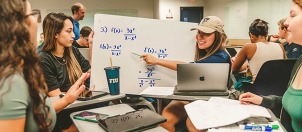
Many of EDU’s supported educators and researchers also made advancements in key areas of STEM education. In December, EDU’s S-STEM program published a report that explores how experiencing a “sense of belonging” plays a role in scholars’ success. And through a gateway course to STEM careers, EDU researchers at Florida International University demonstrated how effective active learning is to helping students understand calculus.
|
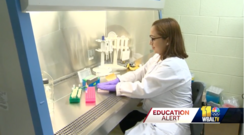
Investigators at Morgan State University are providing hands-on training to graduate students who are researching AI and machine learning solutions to climate change and environmental sustainability.
|

And, to spark STEM interest through informal education, PBS’s “Cyberchase” used text messages and media to engage Latinx families in math and environmental learning.
The agency also initiated the cooperative agreement to establish the Arecibo C3 Center in Puerto Rico. This Center will catalyze new opportunities for STEM learning, exploration, discovery and engagement. And, to increase efforts to address grand challenges in STEM education, EDU made critical investments in emerging technologies by establishing new funding opportunities to harness the potential of AI in the classroom and advance education for the future AI workforce. Moreover, to expand access to the millions of people who are underserved in STEM, EDU issued a new solicitation focused on workplace equity for persons with disabilities.
The directorate invested in other areas of national importance, including $25M in advanced manufacturing, $60M in AI, nearly $9M in biotechnology, $11M in microelectronics and semiconductors, and $10M in quantum. EDU is expecting to build upon its investments in education research, workforce development.
|

And last Fall, EDU had the privilege of hosting a fireside chat with the late, former Congresswoman Eddie Bernice Johnson at NSF’s INCLUDES National Network Convening. In recognition of her life’s work and devotion to STEM, the CHIPS and Science Act authorized NSF to rename the highly regarded INCLUDES Initiative to "NSF Eddie Bernice Johnson INCLUDES Initiative." As you can imagine, my colleagues and I are deeply saddened by her passing but forever grateful for the opportunity to have heard directly from her about her life experience as a STEM advocate.
In closing, I want to thank you for your continued interest and support of EDU and, equally as important, for your unwavering commitment to STEM excellence in research, education and workforce development for all Americans.
Respectfully,
|
 James L. Moore III
|
|

Awardees will dive into cutting-edge technologies, including artificial intelligence, hardware security and other interdisciplinary cybersecurity fields such as psychology and criminology.
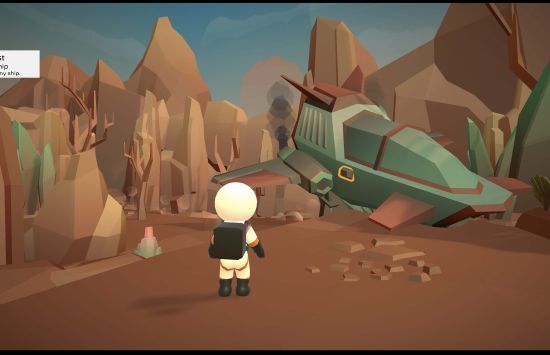
Learn about the agency's rich artificial intelligence portfolio that is having a strong impact in and outside of the classroom.
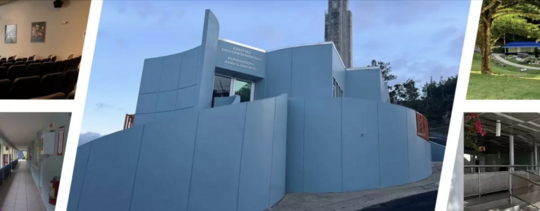
This center will serve as a catalyst for increased and inclusive engagement in a broad range of STEM disciplines, cutting-edge research, and workforce development initiatives by students, teachers, researchers and the public within and outside of Puerto Rico.
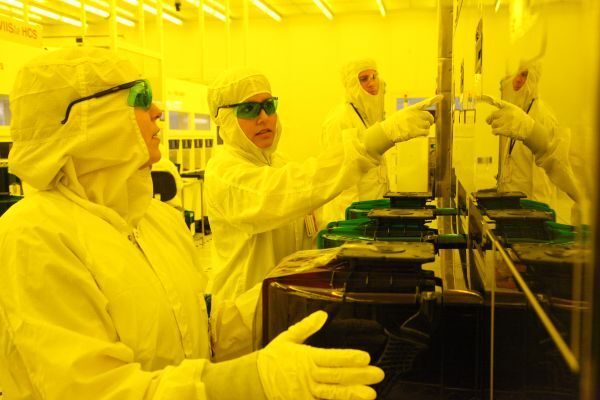
New research and education awards will engage diverse talent in innovative semiconductor design and manufacturing.
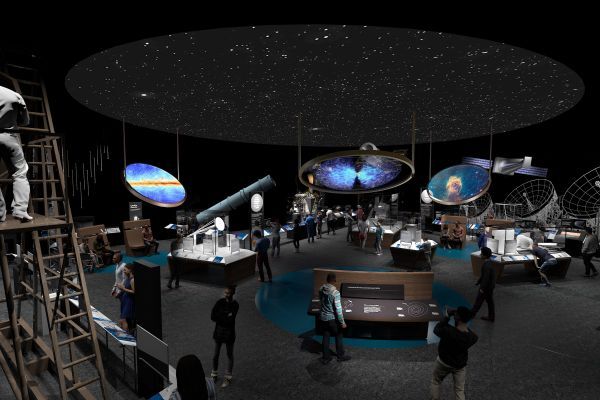
The exhibition will illuminate how the development of new and more precise tools transformed humankind's understanding of the origin, content and fate of the universe.
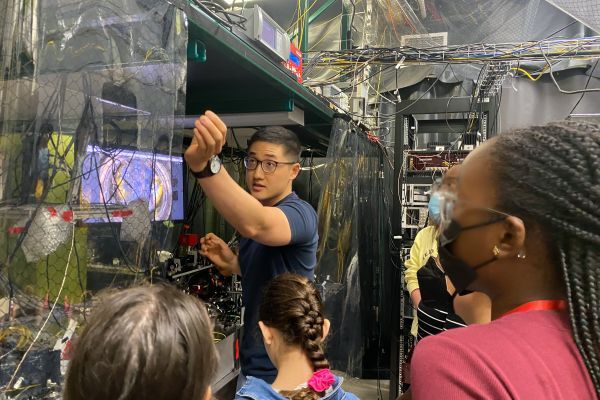
This program will help build capacity and broaden participation in research and education.
The NSF HSI-Net supports the enhancement of undergraduate STEM education, and the recruitment, retention and graduation of students pursuing associate or baccalaureate degrees in STEM.
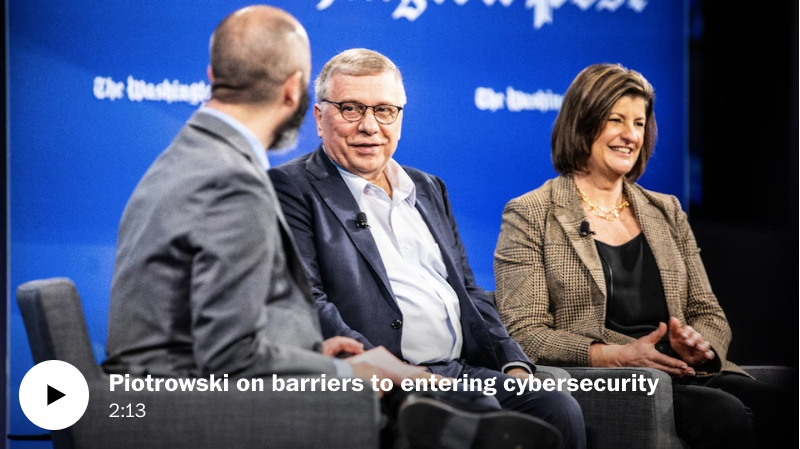
And in October, The Washington Post interviewed EDU Program Director Victor Piotrowski as part of a live session focused on investments in the nation's cybersecurity infrastructure and workforce. Watch here.
|
|
Celebrating 10 Years of EDU Core Research (ECR)
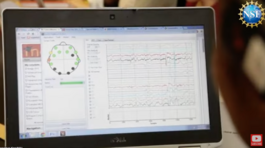
Learn about ECR-funded research at New York University, where researchers have discovered that students whose brainwaves are more in sync with their classmates and teacher are likely to learn better than those with weaker "brain-to-brain synchrony." |
|
 |
|
|
|
NSF's Discovery Files Podcast looks at the latest research, with commentary from the scientists making the discoveries. And Science Now is an NSF video series that goes deep into new innovations in STEM. Check out some of the latest episodes below!
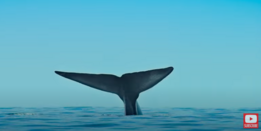
Watch this Science Now video about the stunning IMAX®/Giant Screen film, "Blue Whales: Return of the Giants," featuring Jared Lipworth of HHMI Tangle Bank Studios.
|

Learn more here about MilliMobile, the tiny, self-driving robot powered only by light and radio waves!
|

And learn more here about how NSF Graduate Research Fellow, Nicholas Cecchi, helped develop liquid shock absorbers for football helmets at Stanford University.
|

The HistoryMakers is the world's largest searchable oral history archive, featuring the first-person accounts of over 3,000 African American people from a wide variety of disciplines, including a special subset of STEM community members under a project called "ScienceMakers." Tune in to hear founder Julieanna Richardson discuss the early challenges and memorable moments along the journey and how the Library of Congress is now housing the collection.
|
|
|
EDU Divisions
Division of Graduate Education (DGE)
DGE provides funding to support graduate students and the development of novel, innovative programs to prepare tomorrow's leaders in STEM fields.
Equity for Excellence in STEM (EES)
EES promotes activities that strengthen STEM education for underserved communities, broaden their participation in the workforce, and increase knowledge about promoting inclusion. (EES was formerly the Division of Human Resource Development.)
|
Division of Undergraduate Education (DUE)
DUE focuses on strengthening STEM education at two- and four-year institutions by improving curricula, instruction, laboratories, infrastructure, assessment, diversity of students and faculty, and collaborations.
|
|
|
|
|