|
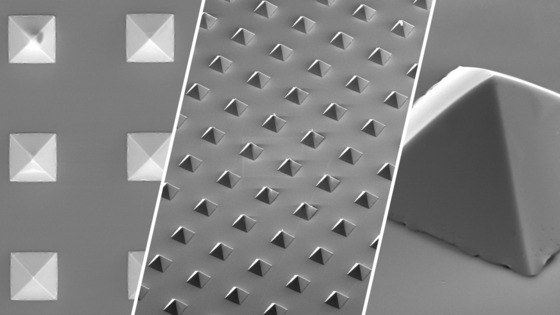 Scientists to reveal the atomic-level workings inside the crushing and grinding of mechanical chemistry, with the potential to scale up their advances to make chemical manufacturing more sustainable and cost-effective.
Understanding the atomic-scale mysteries of "crushing" chemistry is the goal of an expanding research center with a newly awarded $20 million investment from the U.S. National Science Foundation. Managed by Texas A&M University, NSF's Center for the Mechanical Control of Chemistry (CMCC) will conduct the most rigorous exploration yet into how the mechanical application of force can enable new advances in chemistry, with the potential to make industrial processes cheaper and more environmentally friendly.
"Using traditional chemical methods, chemists have discovered many effective ways to create substances that have enhanced human health and prosperity — like the ammonia essential for agricultural fertilizers, which help provide the world's food supply. But such substances could potentially be produced in a more sustainable way through undiscovered techniques of mechanical chemistry," says NSF Assistant Director for Mathematical and Physical Sciences Sean L. Jones. "NSF's Center for the Mechanical Control of Chemistry will focus on providing the insights necessary for innovative minds across America to scale it up."
|
|
 Gravitational waves will 'bring the information from the birth of the universe to us'
A Q&A with astrophysicist and Nobel laureate Kip Thorne about the recently announced findings revealing the gravitational wave background of the universe and what it means for our understanding of the cosmos.
|
|
|
Did someone forward this message to you?
You can subscribe to get NSF news and updates directly to your inbox.
|
|
|
|