|
|
Dear Polar community,
How much the world has changed since our last newsletter! Below are updates pertaining to Arctic and Antarctic Research, our recent Advisory Committee Meeting, and the NSF’s newest directorate Technology, Innovation and Partnerships.
Arctic Research: With the Russian invasion of Ukraine, many Arctic investigators have voiced concern for the fate of their field projects in the Russian Arctic, and present/future collaborations involving the Russian Federation scientists. At present, most activities regarding government-to-government interactions are on pause, and American citizens are advised against traveling to Russia. Individuals contemplating future collaborations involving work in Russia should consider the feasibility of conducting the work given the current state of relations, and whether the proposed research could be conducted in a different setting (location, collaborators, etc). Investigators are advised to consult the U.S. State Department Travel Advisory regarding travel to Russia for changes in status.
Antarctic Research: The field season has ended with substantially more projects supported or completed in 2021-22 relative to the past COVID-impacted summers. While the U.S. Antarctic Program is planning for a full field season next austral summer, the program is mindful of changing circumstances related to COVID-19, and the need to pivot accordingly. Please check the Frequently Asked Questions (FAQs) for Update on COVID-19 Protocols for the Office of Polar Programs (OPP) for additional guidance. Also, be on the lookout for two Dear Colleague Letters, one describing the status of field assets, COVID-19 impacts, and opportunities for fieldwork in future seasons in Antarctica and the Southern Ocean; and another announcing opportunities for organizations to participate in the design, development, construction, and operation of the Antarctic Research Vessel. We hope to release these within the next few weeks.
Closing: Our last Advisory Committee (AC) Meeting in March featured robust discussions on the future of fieldwork in the Arctic and Antarctic, our efforts to increase the diversity and inclusion of underrepresented groups within the Polar Research Community, and the policy framework that guides our presence and research engagement in both Polar Regions. We heard more about the new TIP directorate from Director Panchanathan, and how we can become involved in this exciting effort to accelerate the development of new technologies and products that advance society. Please consider attending future AC meetings (they are virtual, and you can join in!) and providing your input on our collective future.
 Roberta Marinelli
Director, Office of Polar Programs
|
|
One of the great mysteries of late medieval history is why the Norse abandoned successful settlements in southern Greenland in the early 15th century. Researchers are working to answer this question by assessing sediment samples from Lake 578, which is adjacent to a former Norse farm and close to one of the largest groups of farms in the Eastern Settlement.
|
A long-term Antarctic study reveals a clear correlation between warming waters, decreased sea ice, and reduced abundance of Antarctic silverfish in the Southern Ocean. The research, which is part of the Palmer Antarctica Long-Term Ecological Research program, may help answer questions about the decline of Adélie penguins and other marine life.
|
As the Earth's climate changes, the permafrost carbon cycle is expected to accelerate and release greenhouse gases into the atmosphere, creating a feedback loop that could exacerbate climate change. But how much is still unknown. Researchers are expanding the accessibility of permafrost data in the Arctic, hoping to lead to a better understanding of the largely underexplored region.
|
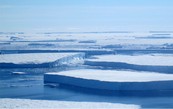
Researchers have documented the evolution of Antarctica's ice sheets from 20 million years ago, showing that the West Antarctic Ice Sheet existed and contributed significantly to the global sea level 8 million years earlier than previously known. The work provides critical data for climate models being used to predict future global sea levels.
|
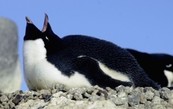
To better understand the foraging behavior of breeding Adélie penguins, researchers used time-depth recorders and RFID tags to track changes in body mass when traveling to and from the ocean to feed their chicks. The results add to a growing understanding that different metrics of foraging success are likely appropriate for different species.
|
Have an NSF-supported research highlight to share? Contact us.
Opinions, findings or recommendations of NSF awardees or their institutions do not necessarily reflect the views of the National Science Foundation.
|
|
OPP sections
Antarctic Infrastructure and Logistics (AIL)
AILs mission is to provide the operational and logistical platform necessary for the U.S. to conduct world-class science in Antarctica and maintain its active and influential presence on the continent.
Antarctic Sciences (ANT)
ANT supports cutting-edge research across all scientific fields that improves understanding of the interactions between the Antarctic region and global systems; expands fundamental knowledge of Antarctic systems and processes; and uses the unique characteristics of Antarctica as a science observing platform. ANT supports non-fieldwork-based analysis and modeling as well as Antarctic fieldwork for research that must be performed, or is best performed, in Antarctica.
Arctic Sciences (ARC)
ARC supports fundamental research at the forefront of understanding the Arctic, including its human and natural components and its global linkages. The section also works to develop and encourage good Arctic stewardship through education, training, dialogue, and planning. In addition to its scientific programs, ARC also includes a Research Support & Logistics program that improves the efficiency and safety of our research community.
|
|
Front Office Integration Team (FIT)
FIT supports the innovative scientific research, engineering, and education taking place in and about the polar regions. FIT provides administrative, policy, and communications support to the entire polar program, and ensures that research and related activities in the regions are environmentally sound.
Safety and Occupational Health (SOH)
SOH facilitates a culture of safety throughout the Polar regions to enhance the success of science by protecting life and property. SOH partners with stakeholders and integrates an effective risk management system through policy development, process and project plan evaluations, incident review and investigations, site safety evaluations, and a deployment medical system implementation.
Polar Programs Advisory Committee (AC)
The AC provides advice and recommendations to the NSF concerning polar research, education, infrastructure and logistics, and activities. Additionally, the AC Sub-Committee on Diversity and Inclusion has been tasked to identify, examine and recommend strategies to pursue enhanced diversity and inclusion in the polar sciences in both the near and long term.
|
|
|
|
|