|
Education and Human Resources |
|
 |
|
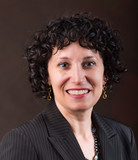
A Message from the Assistant Director for NSF's Education and Human Resources Directorate
|
We are kicking off our Winter/Spring Seasonal Issue by celebrating a couple of milestones. This year marks both the 20th Anniversary of the ADVANCE program and the 30th anniversary of EHR’s Division of Human Resource Development (HRD).
In honor of HRD’s 30th anniversary, every month this year, the division will feature a program to demonstrate both new and established efforts to attract, retain, and empower a talented and diverse STEM workforce. HRD's dedication to sponsoring programs for broadening participation in STEM and conducting research to understand what works in supporting a diverse STEM workforce, are vital for sustaining national prosperity. We invite you to have a look at the first few issues and join us in recognizing HRD’s success – 30 Years of Broadening Participation!
In addition to commemorating HRD, we are sharing outcomes from some of the great work conducted by our research and education community.
Last year challenged us to adapt and innovate in many ways, and the education and research community rose to the occasion and accomplished important and incredible work together. In fact, your work informed the nation on how to best offer continued support to students, teachers, and researchers, while educating our future workforce during these unusual times. The lessons learned can be carried forward to inform new methodologies, disseminate best practices, and prepare us for the next unexpected challenge. In response to what we’ve learned, we recently issued three new funding opportunities that will bolster the community as it continues to conduct the vital work necessary to help guide and ensure a vision for the future of equitable STEM research and education.
What better way to look ahead than by recognizing an LSAMP scholar who played a significant role in developing one COVID-19 vaccine or by celebrating Citizen Science Month and people of all ages who are participating in and advancing scientific research across the nation.
We hope you enjoy this issue, and don't forget to #ThankATeacher next month during Teacher Appreciation Week!
Sincerely,
 Karen Marrongelle
In This Issue:
Division Spotlight
News
SciComm Corner
Events & Announcements
Funding Opportunities
|
|
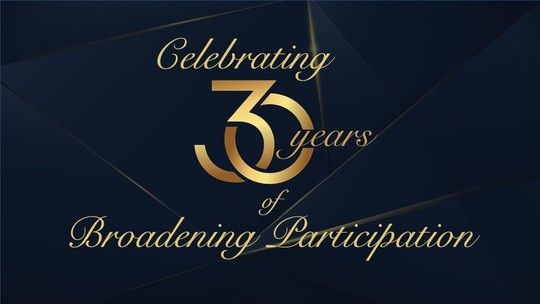 Division of Human Resource Development Celebrates its 30th Anniversary
This year EHR celebrates the 30th anniversary of the Division of Human Resource Development, which has been keenly focused on broadening participation in STEM education and research.
You can read and follow each of HRD's digital monthly newsletters as they are released here.
|
|
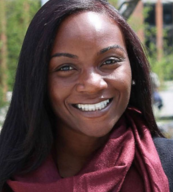
Dr. Kizzmekia Corbett is a senior research fellow working with the Vaccine Research Center strategists in the National Institute of Allergy and Infectious Diseases Viral Pathogenesis Laboratory. A former LSAMP Scholar, Corbett has become a central figure in developing the COVID-19 vaccine.
|
The visioning report identities three priorities for the future of STEM education that are key in ensuring learners are prepared for 21st century STEM careers.
|
NSF is transitioning from FastLane to Research.gov for the preparation and submission of proposals You can learn more about current and future capabilities and explore the Proposal Preparation Demo Site on the Research.Gov About Proposal Preparation and Submission page.
|
In September, the National Teachers Hall of Fame announced 2008 PAEMST awardee Melissa Collins and 2017 PAEMST awardee Jamil Siddiqui as 2020 inductees. In person induction ceremonies are currently planned to take place in June 2021.
|
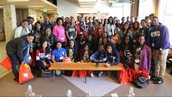
A new study from researchers at Ohio State University suggests that Black students who attend Historically Black Colleges and Universities are statistically less likely to develop health problems than Black students who attend predominantly white institutions.
|

Dr. Natalie King, a trailblazer in the STEM education field, whose work aims to lead to more women in STEM, is an NSF CAREER Awardee. Find her and other EHR CAREER awards here, and learn about applying to the CAREER program here or by attending an upcoming NSF CAREER webinar.
|
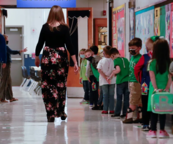
NSF-funded research by the Brookings institute found that across age, income, race, and party, more than 70% of all American adults expressed concern for the academic achievement of K-12 students during the COVID-19 pandemic.
|
Get more Education and Human Resources news
|
|
This informational series for the science and engineering research community answers commonly asked questions for applicants who might be new to applying for NSF funding opportunities and want to know more about how to communicate with NSF.
|

To help mitigate the impact of the coronavirus pandemic on tribal communities, students studying data science spearheaded an internship project focused on collecting and sharing COVID-19 data.
|
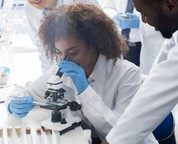
NSF and HBCUs are supporting research that explores HBCU success rates across all STEM fields as a model for broadening participation across higher education.
|
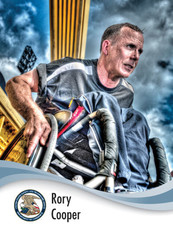
Rory Cooper, a distinguished professor of rehabilitation engineering at the University of Pittsburgh and a senior career scientist for the U.S. Department of Veterans Affairs, has his own USPTO collectible card. Cooper also appeared in the October-November 2020 issue of AARP Magazine.
|
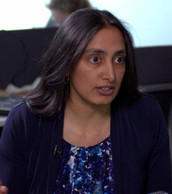
Maithilee Kunda, a computer scientist at Vanderbilt’s Frist Center for Autism and Innovation and an NSF 2026 EAGER awardee, appeared in an episode of 60 Minutes and discussed research that builds on her 2026 Idea Machine entry on neurodiversity.
|
This four-part series uses the lens of social science research to examine the ways that human decision-making relies on a subconscious "autopilot" and how that autopilot can be manipulated for better or worse. Hacking Your Mind premiered in September on PBS.
|
Neuroscientists at Emory University, including GRFP Fellow Amanda Arulpragasam, have provided clear, visual evidence that the brain's ventral striatum kicks in during decision-making to weigh the costs vs. benefits of making a physical effort.
|
Follow our Facebook and Pinterest sites to access educational resources and research support by NSF.
|
|
|
The STEM Education Advisory Panel held its Fall 2020 meeting on December 11, 2020, welcoming four new members.
Read More ›
The National Academies hosted a public symposium funded by NSF in November of 2020 titled, "Imagining the Future of Undergraduate STEM Education."
Read More ›
NSF has announced the 2021 GRFP award offers.
View awardees and honorable mentions here ›
Publications
Undergraduate and Graduate STEM Students’ Experiences During COVID-19: Proceedings of a Virtual Workshop Series
Read Here ›
|
Events
Interest Group for Indigenous Communities Invitational Talks: Institutional Review Boards and Tribal Nations
May 3, 2021 10-11AM (EDT)
Register Here ›
Racial Equity in STEM Education Program Description Webinars
May 4th, 5th, and 7th
Register Here ›
A recording of the Mid-Scale Research Infrastructure-2 Program Webinar is available online.
Watch Here ›
A recording of the Hispanic-Serving Institutions Program Webinar is available online.
Watch Here ›
Recordings from the HBCU-UP/CREST PI/PD meeting held on February 4-5 are available online.
Watch Here ›
On April 6, NSF met with leaders of Tribal Nations with a focus on improving and ensuring the vitality of government-to-government consultations.
Watch Here ›
Stay up to date with events in EHR at NSF.gov
|
|
EHR Divisions
Division of Graduate Education (DGE)
The Division of Graduate Education (DGE) provides funding to support graduate students and the development of novel, innovative programs to prepare tomorrow's leaders in STEM fields.
Division of Human Resource Development (HRD)
HRD programs support and promote activities that seek to strengthen STEM education for underserved communities, broaden their participation in the workforce, and add to our knowledge base about programs of inclusion.
|
Division of Undergraduate Education (DUE)
DUE focuses on strengthening STEM education at two- and four-year institutions by improving curricula, instruction, laboratories, infrastructure, assessment, diversity of students and faculty, and collaborations.
|
|
|
|
|