|
 |
|
Summer Roundup 2020
|
|
|
Education and Human Resources |
|
 |
|
A Message from the Assistant
Director for NSF’s Education and
Human Resources Directorate |
This summer, the National Science Foundation (NSF) released its second issue of the NSF INCLUDES Report to the Nation to mark the continuing progress of NSF INCLUDES. INCLUDES is NSF’s bold initiative focused on broadening participation in science, technology, engineering and mathematics (STEM). The timing of the report could not be more suitable, as we contend with the COVID-19 pandemic and address the impact it is having not only on our health, but on research and education at large. The Coronavirus has exposed and exacerbated inequities in education and reminded us of the continuous, hard work we must do to ensure that there is diversity in STEM research and education. As the nation begins the new school year, we must strive to provide both learning tools and learning environments that are accessible and equitable for researchers, educators and students of all ages.
One of our core values is promoting broadening participation in STEM to ensure that all people have access to the wonders and benefits of science, technology, engineering and mathematics. We will not stray from that mission.
In this first issue of NSF’s newsletter for the research and education community, we will share news and announcements that demonstrate the great work that colleagues across the field are conducting in diversity and inclusion – both success stories and stories that identify areas that require more effort and attention. These stories range from expanding equitable access to STEM opportunities to innovative ways the community is responding to COVID-19.
We hope you enjoy this and future issues of the newsletter, and we welcome your feedback. As always, at any time you can unsubscribe.
 Karen Marrongelle
|
|
 |
|
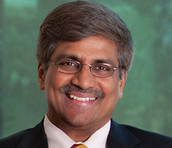
Sethuraman Panchanathan shares his vision for his six-year term, promising a continued push for inclusiveness in science and engineering.
|
 |
|
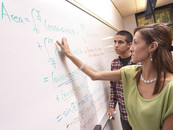
Algebra is considered the gateway to advanced mathematics...But calling a course "Algebra" doesn't guarantee black students are getting equal access to the math content they need to succeed in high school.
|
 |
|
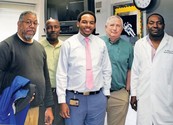
NSF establishes new research center to study successful undergraduate STEM education practices at Historically Black Colleges and Universities.
|
 |
|
This new collaborative network, Cultivating Research and Equity in Sign-related Technology (CREST), is funded through an NSF INCLUDES Planning Grant, and will focus on increasing the inclusion of deaf and hard of hearing students and researchers in the development of sign-related technologies.
|
 |
|
In a recent Chemical & Engineering News article, EHR Program Officer Michelle Claville shares how a supportive atmosphere, diverse faculty, and intense preparation keep Black students in science.
|
 |
|
EHR Program Officer Erika Tatiana Camacho authors an opinion editorial on how NSF's investment in STEM talent changes lives.
|
Get more Education and Human Resources News
|
|
|
White House Honors Newest PAEMST/PAESMEM Awardees Virtually for Their Extraordinary Teaching and Mentorship
Read More ›
NSF Expands Quantum Education to Students Nationwide in Collaboration with Industry and Academic Leaders
Read More ›
NSF Speakers Bureau Accepting Requests for NSF Speakers for Virtual Events.
Read More ›
|
|
 |
|
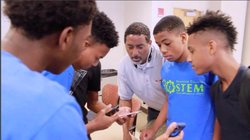
Sylvia James discusses participation for groups historically underrepresented in STEM and the work that still needs to be done to make science inclusive.
|
 |
|
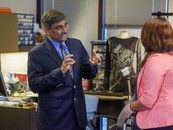
An ally of the research and education community, Panchanathan believes teachers must inspire students. He also believes in enabling people across a range of disabilities to better engage in daily life.
|
 |
|
July Theme of the Month: HBCUs as a Strategic Resource to Advance Diversity in STEM
|
 |
|
David Kirkland welcomes Noyce program PIs and scholars with his keynote speech, "How to Center Equity to Humanize the Process of Coming Back Together: Focusing on Joy and Justice in STEM Education in Perilous Times."
|
|
|
NSF Research Traineeship Program
Students in the NSF Research Traineeship (NRT) program at the University of Arizona, "NRT-INFEWS: Indigenous Food, Energy, and Water Security and Sovereignty" donated 800+ lbs of fresh produce to the Navajo COVID-19 relief efforts.
Read the full story here ›
CyberCorps SFS Scholar Builds Coronavirus Research Tool
A CyberCorps SFS student at the University of Maryland Baltimore County / Montgomery Community College made national news for his work on COVID-19. He created a system that automatically clusters similar articles on the coronavirus together from the OSTP/Zuckerberg dataset.
Watch the video here ›
What Worked This Spring? Well-Designed and -Delivered Courses
"Professors and students alike viewed their remote learning experience most favorably this spring when their courses incorporated more ‘best practices.’ "
This Inside Higher ED article highlights findings and includes a link to the complete study from a Division of Undergraduate Education-funded RAPID grant “Addressing Equity when STEM Teaching and Learning Go Remote.
Two Tribal Colleges are Using Their 3D Printers to Manufacture Protective Face Masks for Local Health Workers
As the coronavirus spreads across Indian Country, two tribal colleges have stepped up to keep frontline responders safe by using their 3D printers to produce face shields and face masks.
Read the full story here ›
Additional NSF-funded research on COVID-19, guidance to the research community, Coronavirus Factsheets, and more information on COVID-19 can be found at NSF's Coronavirus Information page.
If you would like to nominate an EHR-funded project for inclusion in a future newsletter, contact EHR Communications
|
|
EHR Divisions
Division of Graduate Education (DGE)
The Division of Graduate Education (DGE) provides funding to support graduate students and the development of novel, innovative programs to prepare tomorrow's leaders in STEM fields.
Division of Human Resource Development (HRD)
HRD programs support and promote activities that seek to strengthen STEM education for underserved communities, broaden their participation in the workforce, and add to our knowledge base about programs of inclusion.
|
Division of Undergraduate Education (DUE)
DUE focuses on strengthening STEM education at two- and four-year institutions by improving curricula, instruction, laboratories, infrastructure, assessment, diversity of students and faculty, and collaborations.
|
|
|
|
|