|
Happy Friday!
It's been a big week, with devastating news out of Israel. Secretary Austin will visit that country today to underscore the U.S. commitment to Israel's security. This visit comes on the heels of the latest meeting of the Ukraine Defense Contact Group and a gathering of NATO defense ministers.
- Austin assured those at the NATO gathering that the U.S. can and will support both Israel and Ukraine. In his inimitable words, "The United States can walk and chew gum at the same time."
The article from Tara Copp gives a summary of the current U.S. military support for Israel, which includes positioning the Ford and Eisenhower strike carrier groups nearby.
But David Andelman articulates the various challenges the U.S. faces in supporting multiple wars--both the well-known limitations of the defense industrial base and newer concerns, which include increasing political ambiguity for continued support.
In acquisition news, our top story covers how the Army is hoping to expedite the Foreign Military Sales process, reinforcing similar efforts from DoD and the State Department. With each government agency involved in the FMS process, more layers of bureaucracy are added to the already complex defense acquisition system. And it is, of course, central to how we supply partners and allies such as Israel and Taiwan with military supplies.
Rebecca Heilweil summarizes a recent IG report on NASA contracts for robotic space maintenance that have fallen behind schedule and over budget. The IG report puts some blame on the use of firm fixed price contracts for efforts that the contractors underestimated.
In Congress, Representative Joe Courtney penned an opinion piece in Breaking Defense defending the resilience of the submarine industrial base after a critical piece in the Wall Street Journal suggested supply cannot meet demand.
And in ARP news, we are thrilled to officially kick off symposium season with this year's call for proposals. We can't wait to read what you've been working on, and to continue the incredible conversations held in Monterey this May.
This Week's Top Story
Army moves on arms sales reform amid growing interest from Ukraine war Bryant Harris, Defense News
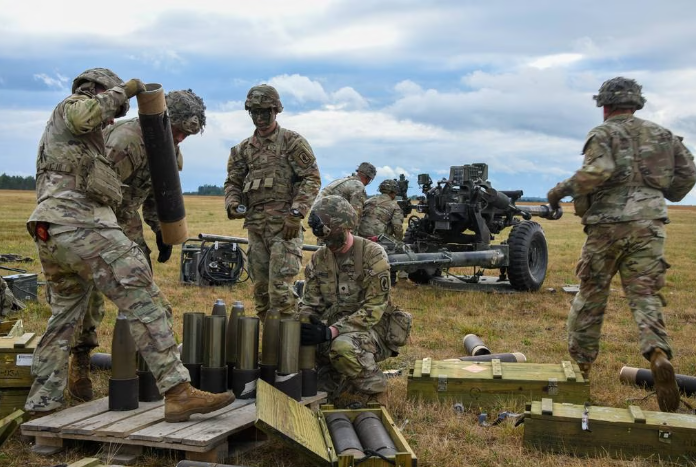
The U.S. Army is trying to rein in the unwieldy Foreign Military Sales process following a series of Pentagon and State Department reforms meant to speed up weapons transfers to allies and partners.
The Army’s equities in the Foreign Military Sales process ballooned from $13 billion in fiscal 2022 to $35 billion in fiscal 2023 amid increased demand following Russia’s invasion of Ukraine, Army Under Secretary Gabe Camarillo said Tuesday at the Association of the U.S. Army’s annual conference.
More than 30 organizations throughout the Army help coordinate that process.
“[T]he Army has pretty good stuff,” Camarillo said. “The industrial base produces the best capabilities, and Army soldiers have systems and tools and platforms that are essentially the envy of many other countries around the world.”
However, he added, “over the last couple of years our processes have become a little bit too complex, too burdensome. They have delayed the transfer of critical capabilities to our partners and allies.”
Camarillo said the Army is “piggybacking” on the Pentagon’s six FMS reform proposals released in June. The State Department, tasked with reviewing and approving arms sales, has also launched a similar effort.
|