NOAA Planet Stewards invites you and your students to participate LIVE with our partners from the International Ocean Discovery Program aboard the research vessel JOIDES Resolution as they explore Iceberg Alley, Subarctic Ice, and Ocean Dynamics in the waters surrounding Antarctica. More information about the expedition and how you can get your students involved is below.
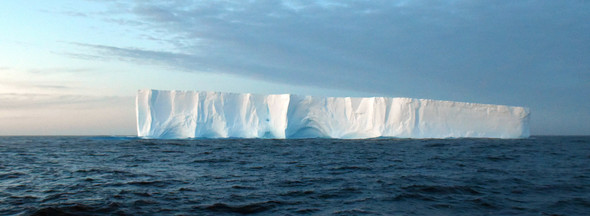
Polar researchers predict that global sea level will rise about one meter (around 3.2 feet) by 2100. Much of this rise will be due to melting of the Antarctic Ice Sheet, the massive layer of ice, on average 1.3 miles thick, that covers the vast continent of Antarctica. But how much will sea level rise and how fast?
Icebergs break, or “calve,” off the edges or margins of the Antarctic Ice Sheet. Most travel counterclockwise around the Antarctic coast and converge in the Weddell Sea. From here, they drift northward through “Iceberg Alley” into the warmer waters of the Antarctic Circumpolar Current, which races clockwise around Antarctica.
As icebergs melt in these warmer waters, the dust, dirt, and rocks they carry—known as “iceberg rafted debris”—fall down through the ocean and are deposited as sediment on the seafloor. The JOIDES Resolution can drill hundreds of meters into this sediment and retrieve long cylinders of mud called cores. These sediment cores will provide a nearly continuous history of changes in melting of the Antarctic Ice Sheet.
Analyzing the iceberg rafted debris can tell us when the ice sheet calved icebergs and even which part of Antarctica they came from. At times when more debris was deposited, we know the ice sheet was less stable. Much shorter cores previously collected at our drilling sites reveal high sedimentation rates, allowing us to observe climatic and ice sheet changes on timescales ranging from just tens to hundreds of years.
Scientists have discovered that episodes of massive iceberg discharge can happen abruptly, within decades. This has huge implications for how the Antarctic Ice Sheet may behave in the future.
The expedition will explore how ocean currents, sea ice, and atmospheric conditions in the past are related to changes in melting of the Antarctic Ice Sheet. As cores are collected to the north and the south of the Drake Passage, the narrow waters between Antarctica and the tip of South America, scientists will be able to see how the Antarctic Circumpolar Current has changed over time. The northern drilling sites will additionally tell us about another historically important ice sheet: the Patagonia Ice Sheet.
Together, all this data will illustrate the long-term climate history of Antarctica, showing how the ice sheets responded to changes in atmospheric carbon dioxide in the past, and how changes in the ice sheet influenced global sea level. This knowledge will help us understand how the Antarctic Ice Sheet may respond in a warming world, better preparing us for future global sea level rise.
Educators and groups can sign up for live video broadcasts from our expedition. Connect your students with our scientists. They can ask questions and even tour our cool drilling ship, the JOIDES Resolution! Even better, it's free. https://joidesresolution.org/live-video-events-with-the-joides-resolution/
You can also follow our journey via social media:
- Twitter (@theJR & @MarloWordyBird)
- Facebook (JOIDES Resolution)
- Instagram (joides_resolution)
We're also having a "name our mascot" competition for kids.
Be sure to sign up to the NOAA Planet Stewards email list to receive information on upcoming webinars, book club meetings, professional development workshops, opportunities, educational resources and more!
|