|
Collaboration with Fishing Industry Contributes to Successful Longfin Squid Assessment
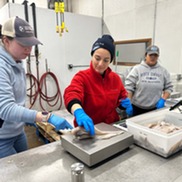
We teamed up with the Northeast fishing industry to better understand longfin squid—an economically important species that is challenging to study. Our partnership with the fishing industry, squid processors, and the Mid-Atlantic Fishery Management Council produced the most comprehensive dataset to date describing the life history of longfin squid, spanning two years of continuous weekly sampling from Massachusetts to North Carolina. This past August, an independent panel of scientists completed the peer review for the Longfin Inshore Squid Research Track Assessment. The data we collected with the industry helped build better models to assess this historically data-poor species, showing the value of sustained cooperative research in supporting science for sustainable management.
|
Fishermen and Scientists Team Up to Follow Shortfin Squid on the Shelf
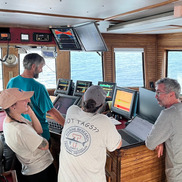
To understand how oceanography drives northern shortfin squid biology and migration, fishermen and scientists from our Cooperative Research Branch recently completed a three year study, sampling across the continental shelf. Each June, the team of biologists, oceanographers, and fishermen spent three days at sea deploying oceanographic equipment, conducting standardized bottom trawls, and measuring a subset of squid they caught. In total, they sampled 43 stations, caught approximately 455,000 pounds of shortfin squid, and measured 8,714 squid for size and maturity. Researchers are now analyzing the data they collected to better understand shortfin squid populations and support sustainable fisheries.
|
New Landing Page for the Northeast Bottom Trawl Survey
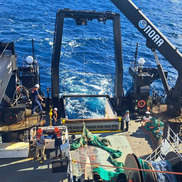
Our longest running fisheries survey has a new landing page! Our Multispecies Bottom Trawl Survey provides more than 60 years of standardized data collected during a time of significant change in the ocean around us. The survey covers a range of bottom habitats from the Scotian Shelf off the coast of Nova Scotia, Canada, to Cape Lookout, North Carolina. It is conducted in the spring and fall of each year to monitor the Northwest Atlantic continental shelf ecosystem. The survey collects fish, acoustic, and oceanographic data that provide critical inputs to regional stock assessments for more than 40 species. These species are managed by the New England and Mid-Atlantic Fishery Management Councils and the Atlantic States Marine Fisheries Commission.
|
New Landing Page and 2026 Summary for the Atlantic Sea Scallop Dredge Survey
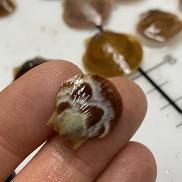
Our Atlantic Sea Scallop Dredge Survey has its own page! In 2026, our Atlantic Sea Scallop Dredge Survey successfully completed 94 percent of planned stations aboard the commercial fishing vessel F/V Selje, making it a fully representative survey. During this year’s mission, our team observed large numbers of juvenile "seed" scallops at multiple stations across Georges Bank! The Atlantic Sea Scallop Dredge Survey has monitored scallop abundance, distribution, and life history from Georges Bank to the Delmarva Peninsula since 1979. This collaborative survey between our science center and the scallop industry collects critical data to support sustainable fisheries. The sea scallop fishery is important to the U.S. economy and is the largest wild scallop fishery in the world.
|
Fall Cooperative Bottom Longline Survey Begins
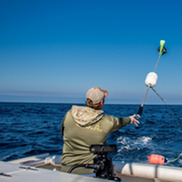
Our fall Cooperative Gulf of Maine Bottom Longline Survey set sail on October 11. Starting in 2014, this partnership with our region’s commercial fishing community collects essential fisheries data in rocky seafloor habitats across the western and central Gulf of Maine. The goal is to collect fisheries data that complements data collected during our annual Bottom Trawl Survey. Rocky habitats are a challenge to sample with trawl survey gear. Our Bottom Longline Survey addresses that concern by using gear more likely to capture species that prefer rough-bottom habitat in the Gulf of Maine. This survey delivers crucial data on commercially and recreationally important fish, while filling key information gaps for data-poor species.
|
Collaborating with Industry to Develop a Regional Industry-Based Bottom Trawl Survey
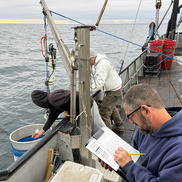
Standardized, fishery-independent surveys of marine resources are critical for supporting sustainable fisheries management and understanding changes in our ocean ecosystems. Our Bottom Trawl Survey collects data that form the backbone of many of our stock assessments. In addition, we need contingency plans to ensure long-term resilience of our survey enterprise. To address this, we are collaborating with the Northeast Trawl Advisory Panel to develop a Regional Industry-Based Bottom Trawl Survey. This project offers a unique opportunity to build on our history of successful industry-based surveys designed with the fishing community, such as the Gulf of Maine Bottom Longline Survey. It will help strengthen and improve our existing survey efforts.
|
Industry-Driven Collaborative Study on Atlantic Mackerel Spawning Seasonality
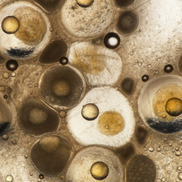
The Atlantic Mackerel Cooperative Research Initiative is an industry-driven collaborative effort between scientists and the fishing industry to address uncertainties about mackerel population dynamics and biomass estimates. One of the initiative’s elements focuses on spawning seasonality. This work will help improve what we know about where and when mackerel spawn in our region. We’re partnering with more than 30 commercial and recreational fishermen, as well as shoreside fish processing facilities and research vessels. We are building a vast network of commercial and recreational fishing partners using a range of gear types to access mackerel anywhere, anytime. Reevaluating and updating what we know about spawning seasonality will help improve the accuracy and confidence of mackerel egg production estimates, and—by extension—stock assessments.
|
Our 2026 NOAA-Supported Education Program Students Share Insights
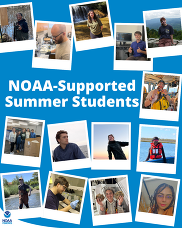
From labs and field work to the classroom: Our summer interns recently started a new school year! This summer, the Northeast Fisheries Science Center was proud to host 22 student interns from 10 states and 11 different colleges and universities. Working alongside NOAA scientist mentors, these students dived deep into critical research—from tracking microplastics and analyzing food web dynamics to studying ocean acidification and protected species. They learned important skills including passive acoustic monitoring, mass spectrometry, GIS, and computer coding. We asked our interns what made their summer special and what they’ll take with them as they head back to school.
|
New Photos Added to Our Large Whale Photo Gallery
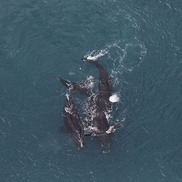
We’ve added new photos highlighting our region’s whales and documenting our Whale Ecology Branch’s important work. We conduct surveys and research to better understand the abundance, distribution, and behavior of several whale species in our region, especially the endangered North Atlantic right whale. Our scientists work closely with partners and collaborators to collect data and biological samples needed to assess and monitor the right whale population in the calving and feeding grounds, track injury rates, identify areas of entanglement and vessel collision risks, and more. They use tools, technologies, aircraft and vessels to study and promote the recovery of whales in our region.
|
Register for the Flatfish Biology Conference
Come celebrate 40 years of the Flatfish Biology Conference this November 16-17 at the Water’s Edge Spa & Resort in Westbrook, Connecticut. Presentations will span the world's oceans and inland recirculating systems, from the Western Pacific Ocean to Kentucky to the Laurentian Channel! First convened by NOAA Fisheries in 1986, the Flatfish Biology Conference provides a forum for scientists, researchers, and students to come together and present their findings, sharing knowledge on all aspects of flatfish research in a supportive environment.
|
Blog: Collaborating with Canadian Scientists on Marine Carbon Dioxide Removal Research
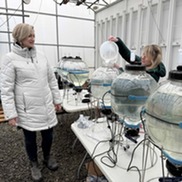
Our Milford Lab in Connecticut recently hosted three Canadian scientists to study the effects of marine carbon dioxide removal strategies and foster international cooperation—using home brewing equipment. In our latest "Field Fresh" blog, Dr. Katyanne Shoemaker highlights a research collaboration between our Milford Lab and Fisheries and Oceans Canada. Working together with the Canadian scientists, the team evaluated how this technique affects phytoplankton communities, the foundation of the marine food web. This project was supported by the NOAA Ocean Acidification Program to engage early-career scientists from U.S. and Canadian fisheries agencies in ocean acidification research.
|
Blog: Exploring the Colors of the Ocean: My NOAA Hollings Internship
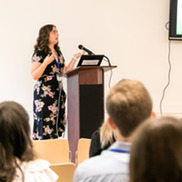
Meet NOAA Hollings Intern Grace Davis! Spending her summer at our Narragansett Lab in Rhode Island, Grace studied satellite oceanography to better understand the timing of phytoplankton bloom cycles off our coast. Why study these microscopic marine organisms? Phytoplankton form the base of the marine food web, so changes in the timing of blooms can ripple all the way up to commercial fisheries. Grace analyzed ocean color satellite data using a computer program, calculated more than 15 individual bloom metrics, and presented her findings at the NOAA Education Science and Education Symposium. Her hard work is creating new tools to help us monitor long-term ocean health!
|
Blog: Evaluating Ocean Acidification and Hypoxia Model Outputs as an Undergraduate Intern
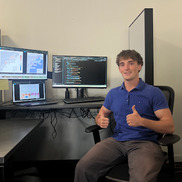
Meet NOAA Hollings Intern Ned Gable! During his summer internship at our Narragansett Lab in Rhode Island, Ned tackled an exciting research project comparing real-world ocean observations with advanced computer models to track ocean acidification and hypoxia across the Northeast U.S. Shelf. He used computer coding to match observational data to model grids, successfully pinpointing where acidification and hypoxia occurred and evaluating model accuracy. Throughout the summer, his NOAA mentor guided him to answer research questions independently, helping him thrive as an early-career researcher. Applications for the NOAA Hollings Scholarship are open now through January 31, 2027!
|
Director's Message
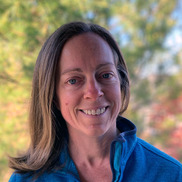
Every October, NOAA Fisheries celebrates National Seafood Month—a tradition that is especially meaningful to me this year. Across our science center, we are highlighting our innovative cooperative research with industry, from studying longfin squid and Atlantic mackerel to breeding better oysters. These initiatives strengthen the science powering sustainable fisheries management and supporting the U.S. seafood industry.
Working in fisheries science, living on Cape Cod, and holding a recreational shellfish license, I am passionate about choosing American seafood. Being part of a seafood co-op and cooking what our local fishermen catch connects me to my coastal community. I enjoy the creative challenge of cooking seasonal catches, including the shellfish I harvest and the fish my son catches. Yet, even here, visiting a grocery store or asking where a fish is from at a restaurant can be a reminder of how rarely local seafood is highlighted.
When you seek out U.S. seafood, you are supporting American fishermen's livelihoods and championing the world's most sustainable fisheries management system. That sustainability is made possible by the hard work of fishermen, including our research partners and those sharing their knowledge on our Fishery Management Councils, combined with rigorous scientific data collected by the Northeast Fisheries Science Center and our partners. It’s a management model we can all be proud of, and something to keep in mind next time you visit the seafood counter asking for fresh, local American seafood.
|
|
|
Upcoming Events
Nov 16—17: Flatfish Biology Conference
Jan 11—13, 2027: 46th Milford Aquaculture Seminar
March 16, 2027: Cooperative Research Summit
Nov 6: Abstracts due for the 46th Milford Aquaculture Seminar
Dec 4: Request for proposals due for Phase II of the Regional Industry-based Bottom Trawl Survey
Dec 4: Waitlist Registration deadline for 2027 Cooperative Research Summit
Dec 12: Last day for group room rate 46th Milford Aquaculture Seminar
Dec 14: Early bird registration deadline for 46th Milford Aquaculture Seminar
Jan 31, 2027: Hollings Undergraduate Scholarship Applications Close
|
|
|
|
|