|
Highlights
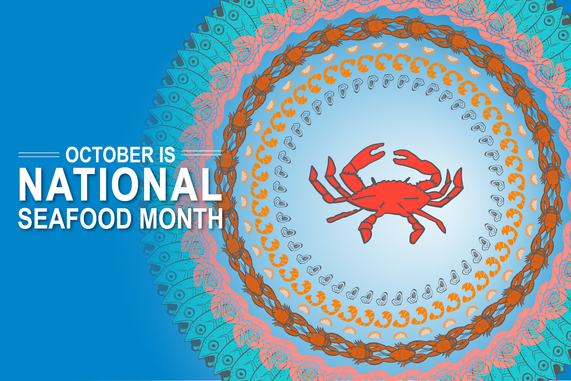
The United States is recognized as a global leader in sustainable seafood for both wild-caught and farmed species. Celebrate National Seafood Month by landing some delicious U.S. seafood on your plate! And join us throughout October to discover the stories behind the seafood you love.
|
|
Last week, NOAA Fisheries celebrated Aquaculture Week 2026. Check out our features to learn how marine aquaculture—or farmed seafood—produces healthy seafood, creates jobs on the water, and supports coastal resilience.
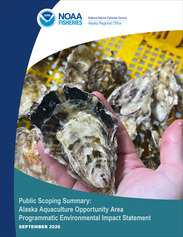
This spring, NOAA Fisheries held a public scoping process to gather input on a planned environmental review considering possible Aquaculture Opportunity Areas in Alaska state waters. A new report summarizes the feedback from tribal entities, members of the general public, non-governmental organizations, and city or borough representatives.
|
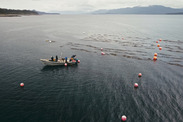
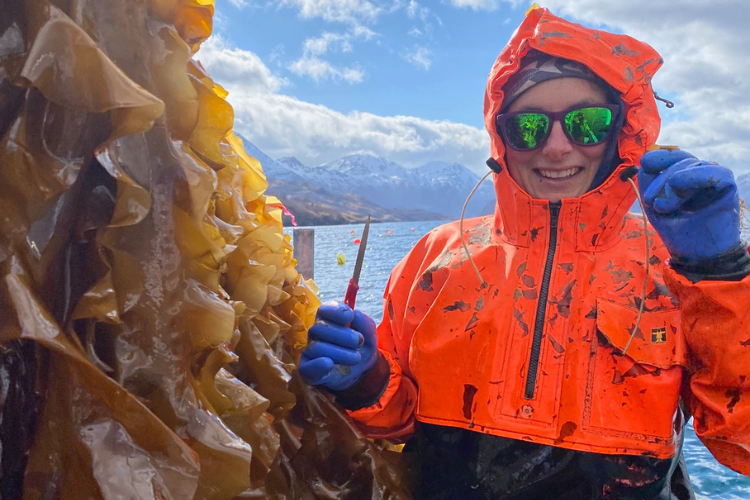
Researchers from the Alaska Fisheries Science Center partnered with Sea Quester Farms to investigate whether seaweed farms provide novel habitat for Alaska marine species. The findings suggest that kelp farms in this area don’t have a measurable impact on either the composition of fish and invertebrates or on water quality conditions.
|
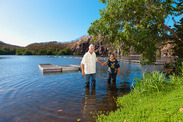
Since the 1970s, married couple Ron and Estralita Weidenbach have operated a family fish farm in a flooded former quarry on Oahu. The farm primarily raises tilapia to sell to local restaurants, combining their fish farming with aquaponics to use the excess nutrients.
|
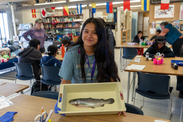
This summer, more than 60 middle and high school students spent 4 days at NOAA’s and Washington Sea Grant’s Aquaculture Science Camp stomping around tidal flats. They surveyed and graded shellfish, identified phytoplankton under microscopes, dissected oysters, explored the relationship between water quality and seafood safety, and met with industry experts. Check out the scene in our photo story.
|
|
|
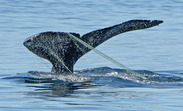
NOAA Fisheries has confirmed 76 large whale entanglement cases nationally in 2025. This is lower than the 95 confirmed large whale entanglement cases in 2024, but slightly higher than the average annual number over the previous 18 years (72.7 cases). NOAA releases the annual report on such entanglements in compliance with the Marine Mammal Protection Act.
|
|
|
Alaska
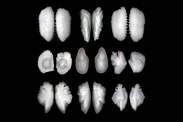
Every year, fisheries observers and scientists aboard research surveys collect thousands of otoliths—ear bones from fish that form annual rings, like tree trunks, that provide a record of a fish’s age. The Alaska Fisheries Science Center recently transferred their 40-year archive of some 2 million otoliths to the Burke Museum and the University of Washington for safer and better organized storage. The collection will remain available to researchers around the globe.
|
|
|
New England/Mid-Atlantic
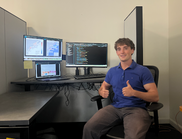
In this science blog post, Hollings Scholar Ned Gable describes the research project he conducted under the mentorship of scientists at the Northeast Fisheries Science Center. His work compared large amounts of observational data across time in the Northeast U.S. Shelf to model outputs of acidification and hypoxia. Ned describes his Hollings experience as “transformative.”
|
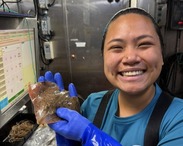
In mid-September, Teacher at Sea Melina Vella, an environmental educator from Delaware, joined scientists aboard NOAA Ship Henry B. Bigelow for the first leg of the Northeast autumn bottom trawl survey. In this post, she walks through learning to identify similar-looking species under the mentorship of seasoned scientists.
|
|
|
Pacific Islands
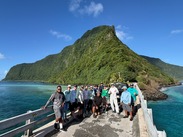
Historically, scientists have assessed American Samoa’s bottomfish species together as a multi-species complex to determine population health and fishing limits. But there is a need for more species-specific data. This year, NOAA Fisheries scientists, local fishermen, and the American Samoa Department of Marine and Wildlife Resources joined forces to collect critical life history data on these commercially and culturally important species.
|
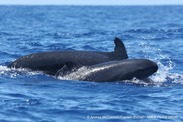
NOAA research partners spotted two endangered main Hawaiian Islands insular false killer whale calves this year, and they’re starting to grow up! This is a rare and exciting discovery for this small, resident population of only about 140 individuals. The first 6 months are an especially vulnerable time for calves, so seeing them swimming strong at roughly 8 months is encouraging.
|
|
|
Southeast
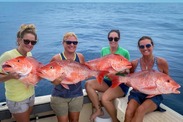
NOAA Fisheries announced the 2026 federal recreational red snapper fishing season in the South Atlantic. It will open for 3 days this year, from October 9 through October 11. In addition, NOAA Fisheries has issued three exempted fishing permits to Florida, Georgia, and South Carolina authorizing extended recreational red snapper fishing seasons for eligible participants from October 9 through October 22.
|
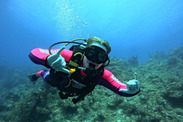
Read an interview with Ellie Vieira, an undergraduate student from the University of Georgia serving as a communications intern for the Southeast Fisheries Science Center.
|
|
|
West Coast
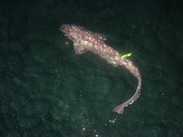
Bluntnose sixgill sharks are something of an enigma. Typically researchers see and catch only younger animals in relatively shallow, nearshore habitats, encountering adult sixgills only through unusual events. Using data collected over more than 20 years, scientists have learned that the Salish Sea, including Puget Sound, comprises one of the world’s few known pupping grounds for the species.
|
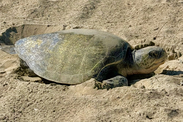
An olive ridley sea turtle was observed digging a nest and laying eggs on a California beach on September 16, 2026. This is the first-ever recorded nest for any sea turtle species on the U.S. West Coast. Due to forecasted high surf resulting from tropical storms off Mexico, a team of scientists from federal and state agencies collected the eggs and transferred them to the Aquarium of the Pacific in Long Beach on September 25. Check out our photo gallery of the nesting sea turtles.
|
|
|
Upcoming Deadlines
October 2: Applications due for potential Northeast groundfish sector monitoring providers for fishing year 2027
October 5: Pre-proposals due for 2026/2027 Bycatch Reduction Engineering Program
October 13: Comments due for a proposed rule for Atlantic Highly Migratory Species Fisheries
October 13: Comments due for a proposed rule for a framework action under the Fishery Management Plan for the Reef Fish Resources of the Gulf
October 16: Public input due for a scoping period in preparation for an environmental analysis assessing potential modifications to the Atlantic Large Whale Take Reduction Plan
View more news and announcements
|
|
Upcoming Events
October 5–13: North Pacific Fishery Management Council meeting in Anchorage, AK
October 5–6: Permanent Advisory Committee meeting to advise the U.S. Commissioners to the Western and Central Pacific Fisheries Commission, hybrid in Honolulu, HI
October 6–8: Mid-Atlantic Fishery Management Council meeting in Duck, NC
October 14: Safe Handling, Release, and Identification Workshop in Warwick, RI
October 14: Atlantic Large Whale Take Reduction Team webinar on WHALE Decision Support Tool Web Application
October 19: Atlantic Shark Identification Workshop in Wilmington, NC
October 20: Documentary Screening of "The Hidden Gulf" in Port St. Joe, FL
October 27–29: Gulf Fishery Management Council meeting in Galveston, TX
October 28: Atlantic Large Whale Take Reduction Team webinar on Vessel Tracking Data
November 2: Safe Handling, Release, and Identification Workshop in Kitty Hawk, NC
November 11: Atlantic Shark Identification Workshop in Largo, FL
November 13–18: Pacific Fishery Management Council meeting in Garden Grove, CA
View more events
|
|
|
|
|