|
|
Hello my friends,
The 2025-2026 fiscal year has come to a close and it was certainly one for the books! Despite having lost one third of our team, the Southeast Fisheries Science Center still managed to maintain nearly all of our essential services through a variety of process improvements, leveraging non-federal partnerships, and—most importantly—the hard work and dedication of our team. Not only that, we made some major gains in support of the President’s executive orders. Here are just a few.
In support of Executive Order, “Restoring American Seafood Competitiveness,” the center successfully applied a large-scale close-kin mark-recapture study to show that western Atlantic bluefin tuna were more abundant than traditional methods indicated. This led to a 17 percent increase in total allowable catch for U.S. fishermen—the largest single-year jump in the history of the International Commission for the Conservation of Atlantic Tunas. The Shrimp Futures Initiative released a report detailing for the first time the economic pressures facing the Gulf shrimp fishery. Additionally, the initiative has driven stakeholder engagement workshops and sought to coordinate a whole-of-government approach under the NOAA Fisheries National Seafood Strategy. By conducting over 100 stakeholder interviews across seven states and establishing baseline economic assessments, the team revealed a >50% drop in Gulf shrimp revenues due to foreign imports, providing critical data that industry partners leveraged for state legislative efforts like Texas HCR 76 and advancing collaborative action.
In support of Executive Order, “Unleashing Prosperity through Deregulation,” we used management strategy evaluations to show that the dolphinfish (Mahi mahi) fishery would not be substantially impacted by the regulations being proposed, leading the Council to vote to discontinue work on Regulatory Amendment 3. Following court rulings on state recreational red snapper exempted fishing permits in the South Atlantic, our staff worked with our partners at the regional office and the states to develop alternative catch-level calculations that would prevent overfishing while allowing the states to test the hypothesis that longer seasons would reduce the derby effect apparent with recent two-day seasons. As a result, NOAA granted new exempted fishing permits to three states to test new management strategies for South Atlantic red snapper this fall.
Recently, the Executive Order, “Restoring American Saltwater Angling And Recreation” provided directives to modernize data collection infrastructure for recreational catch-and-effort estimates, restore integrity to fisheries science and data, and address shark depredation. By proactively aligning our work with these initiatives, we are well-positioned to carry this momentum directly into Fiscal Year 2027.
I am also happy to report that funding was approved to rebuild the historic NOAA science laboratory in Beaufort, North Carolina. Established in 1899, this facility currently houses 34 of Southeast Fisheries Science Center staff and serves as a research hub to support South Atlantic fisheries management and stewardship of marine resources. Demolition of Building 2 is complete, and an upcoming staff celebration is scheduled for October 13–14, 2026.
 |
|
Thank you for your continued support and interest, and keep reading!
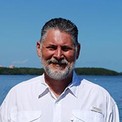
Clay Porch, Ph.D
Southeast Fisheries Science Center Director
clay.porch@noaa.gov
|
|
|
Dr. Craig Brown is the current chair of the International Commission for the Conservation of Atlantic Tunas Standing Committee on Research and Statistics. In celebration of ICCAT’s 60th anniversary, this article highlights reflections and successes during his tenure.
Credit: Thomas Horig/Ocean Image Bank
|
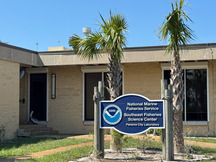
It is not every day a patient knocks directly on the doctor's door, but for one clever seabird, desperate times called for an unusually precise house call.
|
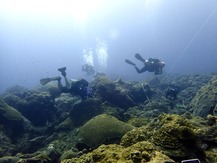
In a successful mission, 26 divers from NOAA and partnering organizations assessed and recorded the status of coral reefs and fish communities in the sanctuary.
Credit: Karl Teague, National Park Service
|
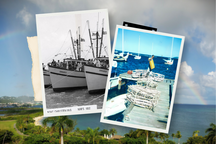
Sustainably managing the diverse resources and distinct regions across the Caribbean relies on careful collaboration, local expertise, and flexibilities provided by the Magnuson-Stevens Act.
See story for photo credit.
|
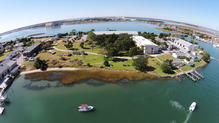
New North Carolina facility will continue to provide world-class NOAA science nationwide.
|
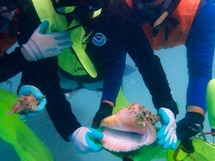
NOAA Fisheries scientists partnered with Texas A&M University students in Puerto Rico to survey queen conch and gain hands-on marine science experience.
|
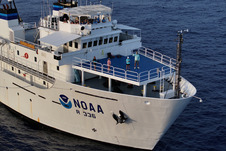
In this science blog—complete with videos—Dr. Melissa Cook describes how a team used drones to study endangered sperm whales in the Gulf of America. |
|
 |
|
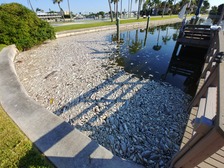
A new paper summarizes the complex challenges of considering red tide in fisheries stock assessments and fisheries management decisions, and offers a roadmap for the future.
Credit: Meaghan Emory
|
|
 |
|
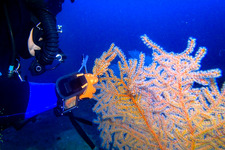
Successfully restoring mesophotic corals requires a unique blend of traditional and innovative methods—marrying expert technical diving with cutting-edge tools forged in NOAA Fisheries laboratories. Check out the video, too!
Credit: NOAA/Dave Witting
|
|
 |
|
In the Gulf region, federal and state managers have collaborated for decades to sustain fisheries, innovate data collection, and support coastal communities for the future.
Credit: Mississippi Alabama Sea Grant
|
|
 |
 |
|
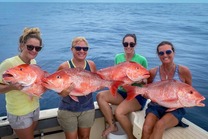
The federal recreational red snapper fishing season in the South Atlantic will open from October 9 through October 11. NOAA Fisheries also issued exempted fishing permits to Florida, Georgia, and South Carolina authorizing extended recreational red snapper fishing seasons.
Credit: Grayson Shepard
|
 |
|
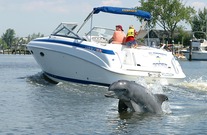
As you enjoy the outdoors, remember to “Share the Shore” with marine mammals, sea turtles, and other wildlife. Learn more about proper marine life viewing guidelines to safeguard animals and people.
Credit: Marine Mammal Stranding Center
|
 |
|
NOAA Fisheries Assistant Administrator Eugenio Piñeiro Soler announces prioritized agency actions in support of the Executive Order on Restoring American Seafood Competitiveness.
Credit: iStock
|
 |
|
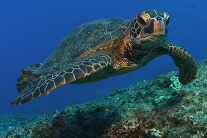
Learn what actions you can take to help keep sea turtles safe. |
 |
|
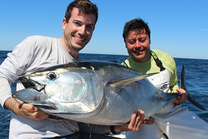
Quota increases for bluefin tuna, North and South Atlantic swordfish, and North Atlantic albacore, will create new fishing opportunities for U.S. fishermen.
Credit: Willie Goldsmith
|
 |
|
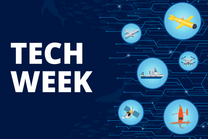
Tech Week took place August 17–21 to celebrate the technologies our scientists use to fulfill our mission! |
|
|
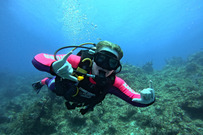
As part of the Faces of the Southeast Fisheries Science Center series, meet Ellie Vieira. |
|
 |
|
|
Mark Your Calendar
-
October 2, 2026: SEDAR 90 South Atlantic Red Snapper Assessment Webinar 11 – virtual
-
October 6–8, 2026: South Atlantic Council Snapper–Grouper Advisory Panel Meeting – North Charleston, South Carolina & virtual
-
October 12–15, 2026: Gulf States Marine Fisheries Commission 77th Annual Meeting – Miramar Beach, Florida
-
October 14, 2026: Gulf Council Law Enforcement Technical Committee Meeting – Miramar Beach, Florida
-
October 15, 2026: Gulf Council Shrimp Advisory Panel Meeting – virtual
-
October 20, 2026: Public Hearings: Gulf Reef Fish Amendment 55/South Atlantic Snapper Grouper Amendment 44 – virtual
-
October 20–22, 2026: South Atlantic Council Scientific and Statistical Committee Meeting – virtual
-
October 26, 2026: South Atlantic Executive Committee Meeting – virtual
-
October 26–29, 2026: Gulf Council Meeting – Galveston, Texas & virtual
-
November 4, 2026: South Atlantic Council Wreckfish Advisory Panel Meeting – virtual
-
November 4–5, 2026: South Atlantic Council Shrimp Workgroup Meeting – Charleston, South Carolina & virtual
-
November 9, 2026:South Atlantic Council Citizen Science Projects Advisory Panel Meeting – virtual
-
November 9–10, 2026: Shrimp Futures Scenario Planning Workshop: South Atlantic Part 1 – Charleston, South Carolina
-
November 9–12, 2026: Atlantic States Marine Fisheries Commission Annual Meeting – Newport, Rhode Island
-
November 14–15, 2026: ICCAT Third Intersessional Meeting of Panel I – Vilamoura, Portugal & virtual
-
November 16–23, 2026: 25th Special Meeting of the International Commission for the Conservation of Atlantic Tunas – Vilamoura, Portugal & virtual
-
November 19, 2026: South Atlantic Council Citizen Science Operations Advisory Panel Meeting – virtual
-
December 1–2, 2026: Shrimp Futures Scenario Planning Workshop: Gulf Part 1 – Baton Rouge, Louisiana
-
December 1 & 3, 2026: Caribbean Fishery Management Council Scientific and Statistical Committee Meeting – hybrid
-
December 9–10, 2026: Caribbean Fishery Management Council Meeting – hybrid
-
December 7–11, 2026: South Atlantic Council Meeting – Beaufort, North Carolina & virtual
|
|
|
The mission of NOAA's Southeast Fisheries Science Center is to provide the scientific advice and data needed to effectively manage the living marine resources of the Southeast region and Atlantic high seas.
Visit our website
|
|
|
|
|