|
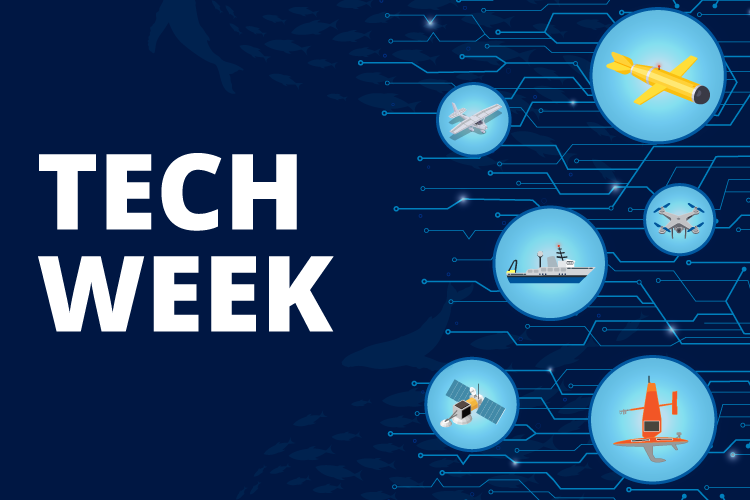
NOAA scientists rely on cutting-edge technology to collect and analyze the data needed to manage our ocean resources and habitats. Because some ocean creatures live in remote areas and have complex life cycles, better understanding them requires unique tools. Join us for Technology Week (August 17–21, 2026) as we showcase the amazing array of tools and innovations we use to carry out our mission!
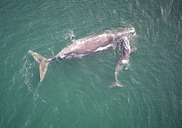
Last winter, North Atlantic right whale moms gave birth to the most calves in nearly two decades. While they are feeding in the Northeast this summer, our scientists and partners are monitoring them using advanced technology.
 |
|
Scientists identify the calls right whales use to communicate with each other, alerting them to their presence. Real-time passive acoustic technologies, including moored surface buoys and autonomous gliders, can detect right whales almost instantaneously. |
 |
|
The Northeast Fisheries Science Center’s aerial survey team conducts right whale surveys aboard a NOAA Twin Otter aircraft. Aerial teams saw 19 of the 23 mother-calf pairs in the Northeast United States this spring. |
 |
|
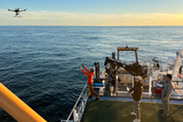
Using research vessels and innovative drone technology, we are improving our understanding of right whale health and distribution. Discover how these data help reduce risks to right whales and how you can help. |
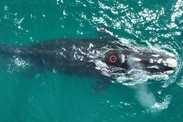
A NOAA-affiliated research scientist pioneered a smaller, longer lasting satellite tag design that anchors safely in the blubber layer of a whale. This engineering breakthrough improves scientists’ monitoring of baleen whale species.
|
|
|

Enforcement officers from NOAA Fisheries’ Office of Law Enforcement have successfully wrapped up deployments for Operation North Pacific Guard. This annual mission, conducted with international partners, targets illegal, unreported, and unregulated fishing on the high seas. IUU fishing threatens global fish stocks and the broader ocean ecosystem and impacts economic and food security. It also puts law-abiding fishermen and seafood producers—in the United States and abroad—at a disadvantage.
|
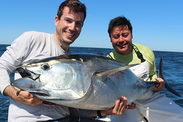
NOAA Fisheries is implementing increased bluefin tuna quotas after historic negotiations by the United States at the 2025 annual meeting of the International Commission for the Conservation of Atlantic Tunas. Today’s action—alongside additional quota increases for bluefin tuna, North and South Atlantic swordfish, and North Atlantic albacore—will dramatically expand access, create new fishing opportunities, and provide greater flexibility for U.S. fishermen.
|
|
|
Alaska
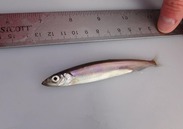
Pacific capelin are a major forage species for marine mammals and commercially important groundfish species in the North Pacific. They are short-lived and their abundance fluctuates wildly in changing environments. It was thought that, like salmon, they spawn only once and then die. A new study found that some capelin are capable of spawning multiple times.
|
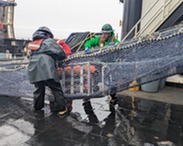
This month, Teacher at Sea Jo Slavitz returned home after spending 22 days helping scientists aboard NOAA Ship Oscar Dyson survey Alaska pollock in the Eastern Bering Sea. In this blog post, she reflects on the value of underwater photography for helping scientists understand the Bering Sea ecosystem and gather data to inform management decisions. She highlights some of the specialized technology invented by NOAA scientists for this survey.
|
|
|
New England/Mid-Atlantic
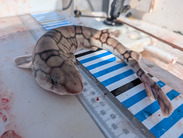
Every year in the spring and the fall, NOAA Fisheries partners with two commercial fishing vessels to conduct the Gulf of Maine Bottom Longline Survey, which focuses on the rocky bottom habitat in the Gulf of Maine. In this blog post, Field Biologist Ben Church describes encountering a new species for the survey: the first chain dogfish ever seen in 12 years of sampling the region.
|
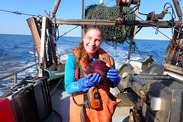
A fisheries observer's job is full of challenges, but one of its greatest rewards isn't found in the catch—it's the people you meet along the way. Read observer Sophie Brager’s story about the friendships, support, and connections that make life at sea a little easier.
|
|
|
Southeast

Recently, Teacher at Sea Cheyanne Vanderdonckt returned home after 17 days aboard NOAA Ship Oregon II. She gained first-hand experience helping scientists survey sharks and snapper species off the eastern coast of Florida. In this blog post, she explains the methods for measuring and tagging sharks that are too large to bring on board the ship.
|
|
|
West Coast
Restoring California’s Prairie Creek Supports Salmon Recovery and Local Community
For more than a decade, NOAA Fisheries and a broad coalition of partners worked to transform degraded fish habitat on California's Prairie Creek into a thriving floodplain ecosystem for juvenile salmon and steelhead. Read our two-part series to learn more about the restoration work, led by members of the Yurok tribe who will continue to steward the restored land, and about monitoring efforts to gauge the project’s success for recovering fish species.
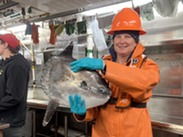
Recently, Teacher at Sea Stacey Morris returned home after 16 days at sea aboard NOAA Ship Reuben Lasker helping scientists survey pelagic fish species off the West Coast. In this blog post, she catalogs the many fish species observed during the trawl sampling. Stacey helped sort out the target species—northern anchovies, Pacific sardines, Pacific mackerel, and jack mackerel—for measuring and biological sampling.
|
|
|
Upcoming Deadlines
August 21: Applications due for the Western Pacific Regional Fishery Management Council's Advisory Panel and Fishing Industry Advisory Committee
August 21: Comments due on the Proposed Rule for Framework Amendment 14 to Modify the Catch Limit and Accountability Measure for Gulf of America Spanish Mackerel
August 24: Comments due on Amendment 22 to the Coastal Pelagic Species Fishery Management Plan
August 31: Applications due for the Department of Transportation's United States Marine Highway Grant Program
September 4: Applications due for NOAA Great Lakes Fish Habitat Restoration Partnership Grants
September 14: Public input due regarding siting considerations for Aquaculture Opportunity Areas
October 13: Comments due on a proposed rule for Atlantic Highly Migratory Species
View more news and announcements
|
|
Upcoming Events
August 21: Annual meeting of the Northwest Atlantic Fisheries Organization Consultative Committee, virtual
August 24–27: Gulf Fishery Management Council meeting in Biloxi, MS
August 31: Public listening session to gather input on Aquaculture Opportunity Areas
August 31: Public webinar on the proposed rule for Atlantic Highly Migratory Species
September 9–10: Atlantic Highly Migratory Species Advisory Panel Meeting in Silver Spring, MD, hybrid format
September 12: Milford Lab Open House in Milford, CT
September 14–18: South Atlantic Fishery Management Council meeting in North Charleston, SC
September 15–17: New England Fishery Management Council meeting in Plymouth, MA
September 15–17: Western Pacific Fishery Management Council meeting, held virtually.
September 16: Safe Handling, Release, and Identification Workshop in Kenner, LA
September 17–21: Pacific Fishery Management Council meeting in Vancouver, WA
September 27: Pacific States Marine Fisheries Commission Annual Meeting in Kona, HI
October 5–13: North Pacific Fishery Management Council meeting in Anchorage, AK
October 6–8: Mid-Atlantic Fishery Management Council meeting in Duck, NC
View more events
|
|
|
|
|