|
MOM6 Model Forecast Debuts in 2026 State of the Ecosystem Reports
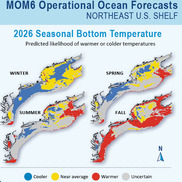
Resource managers have long sought forecasts to predict future ocean conditions, and we are delivering them. The first operational seasonal and decadal ocean forecasts for U.S. coastal fisheries regions debuted in the 2026 Mid-Atlantic and New England State of the Ecosystem reports. The Modular Ocean Model (version 6; MOM6) seasonal and decadal forecasts provide fisheries managers with forward-looking predictions of ocean conditions for proactive, informed decision making. These forecasts predict future marine ecosystem conditions that could impact the availability of commercial and recreational fisheries species and protected resources. As our ecosystems continue to change, these ocean forecasts can help resource managers make more informed decisions about the future.
|
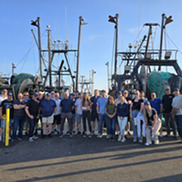
First International Cooperative Research Gathering a Success
Northeast Spring Bottom Trawl Survey Completed
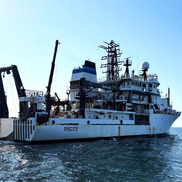
Our Bottom Trawl Survey is among the longest running of its kind in the world. It provides more than 60 years of standardized data collected during a time of significant change in the ocean around us. The data collected are foundational to the management of more than 50 fisheries. This spring, we successfully transitioned the survey to the NOAA Ship Henry B. Bigelow’s sister ship, the NOAA Ship Pisces, to prepare for seasons when the Bigelow is not available because of its midlife repair period. Though survey operations faced initial headwinds, vessel and science crews worked tirelessly to complete representative tows and oceanographic sampling at 73 percent of the planned stations and plankton sampling at 83 percent of planned stations.
|
Meet Our HabCam Survey
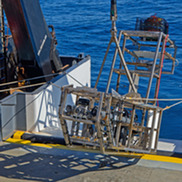
How do we monitor Atlantic sea scallops? Meet our Habitat Camera (HabCam) Survey! We tow a specialized camera sled system to capture millions of seafloor images across the Mid-Atlantic and Georges Bank. This technology helps us monitor the abundance and distribution of sea scallops, a fishery valued at nearly $360 million in 2023. HabCam samples over a larger area than traditional survey methods. It also collects data about a number of other species and ecosystem features. We use the data in the species’ stock assessment for a more complete picture of how stock size and composition has changed over time. These data help better manage fisheries for the future.
|
Whale Entanglement Response Training Held in New Jersey
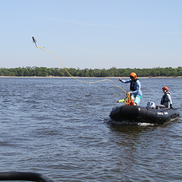
We recently partnered with organizations in New York and New Jersey to train responders in safely addressing large whale entanglements. Whale entanglements are complex and dangerous for the responders, as well as for the animal. Through hands-on exercises, case study reviews, and a drill, teams strengthened their ability to protect whales while keeping responders and animals safe. Only experienced, trained, knowledgeable people with proper support and equipment—working under NOAA Fisheries permit—may respond to entangled whales. To report a live, entangled whale between Maine and Virginia, call NOAA’s 24-hour stranding hotline at (866) 755-6622 or hail the U.S. Coast Guard on Channel 16. All entanglement responses conducted in the United States are authorized under NOAA’s Marine Mammal Health and Stranding Response Program (Permit #24359).
|
Updated Proposal for On-Demand Fishing Data Specifications Released
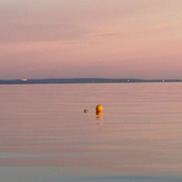
We published a new data specifications proposal to support alternative fishing gear marking systems in June 2026. A Proposal for Functional Data Specifications of On-Demand Fishing Gear, version 2, incorporates feedback received following the release of version 1 in May 2025. This document is a springboard for discussion and we expect to gather additional input from management partners, on-demand gear manufacturers, and other interested parties.
|
Peer Review of Longfin Inshore Squid Stock Assessment
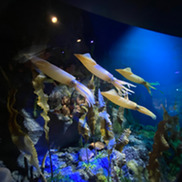
On August 3—7, an expert panel will review new stock assessment models developed by the Longfin Inshore Squid Research Track Working Group. The public is invited to attend the presentations and discussions between the panel and our scientists. After this rigorous scientific review, our goal is to use the improved stock assessment in a management track assessment this fall to provide fishery managers with the latest population health check for longfin inshore squid.
|
Scup Fishermen: We Need Your Expertise!
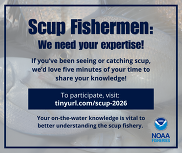
If you’ve been seeing or catching scup, we’d love to hear from you. We’re working to better understand both scup behavior and the practices of the people who know the fishery best—the fishermen, watermen, and anglers out on the water. Your knowledge can help us improve the scup stock assessment process, provide insight into fishing practices and local changes, and support better fishery management. It only takes about five minutes to share your perspective, and your input can make a difference. Thank you for helping us build a better understanding of the scup fishery!
|
2026 Biological Port Sampling Request List Now Available Online
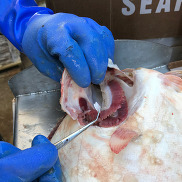
Our Biological Port Sampling Program continues to make strong progress, supporting the collection of critical biological data to inform fisheries science and management. To improve transparency and accessibility, the 2026 Sample Request List is now available on our website. It provides stakeholders with insight into sampling priorities. Additionally, we published the final report from the September 2025 Northeast Regional Coordinating Council State and Federal Biological Sampling Workshop. These resources support continued engagement with our stakeholders and provide important information on the program’s work to enhance biological data collection across the region.
|
Blog: Take Nothing But Pictures—The HabCam Experience
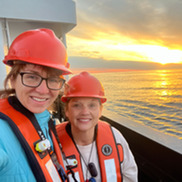
Our communications specialist, Kristen Jabanoski, set sail on the second leg of our Habitat Camera, or HabCam, Survey. This annual survey helps scientists understand the abundance and distribution of Atlantic sea scallops and other bottom-dwelling species across New England and the Mid-Atlantic. What animals did they capture on camera? Did they manage to dodge the boulders and sandwaves and complete their track lines around Nantucket Lightship, Great South Channel and Georges Bank?! Find out in her new science blog!
|
Director's Message: Welcome Acting Director Nicole Cabana

It is a privilege to address you as the Acting Director of the Northeast Fisheries Science Center, a role that I will serve in for 3 months. During this time, Dr. Jon Hare is serving as the Acting Director of Science and Technology for NOAA Fisheries in Silver Spring, Maryland.
In my eight years at the Northeast Fisheries Science Center I have experienced firsthand the dedication, excellence, and resilience that science center staff bring to our mission every day. We achieve our mission, “providing the scientific information and tools necessary for productive, sustainable, and healthy marine ecosystems and coastal communities in our region” by collaborating with our partners and working closely with the Councils and fishing industry.
While Acting Director, my primary objective is to provide leadership and support to the science center while remaining committed to our core values of people, science and service. I look forward to guiding us through a busy and productive time of year completing planned summer activities and preparing for the next fiscal year, which begins October 1. Thank you for engaging with our science center. I am excited for what we will achieve together over the coming months!
In addition to our science mission, we look forward to connecting with our local communities. I hope you will join us on Saturday, August 8, for the Woods Hole Science Stroll. This is a family-friendly annual celebration of the world-class ocean science happening in Woods Hole, Massachusetts! I hope to see you there!
|
|
|
Upcoming Events
Aug 3—7: Longfin inshore squid research track peer review meeting
Aug 8: Woods Hole Science Stroll
Sept 12: Milford Lab Open House
Nov 16—17: Flatfish Biology Conference
|
|
|
|
|