|
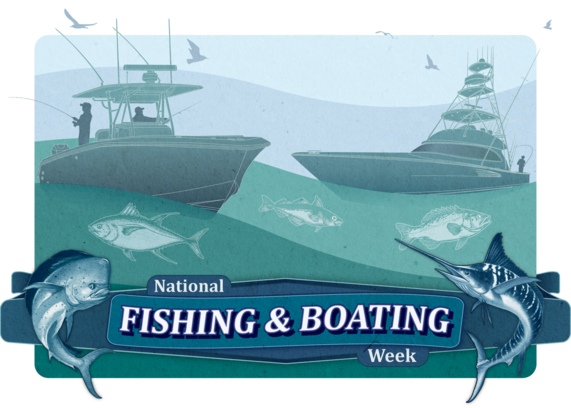
Marine recreational fishing is a cherished American pastime and draws millions of anglers to support our coastal communities. Celebrate our nation's love for fishing and boating during National Fishing and Boating Week.
National Fishing and Boating Week is the perfect time to celebrate this cherished outdoor tradition and recognize the millions of saltwater anglers who serve as stewards of our marine resources and coastal ecosystems.
|
Through the National Fish Habitat Partnership, NOAA Fisheries supports projects that restore habitat in collaboration with recreational anglers. In this update, partners in Alaska, Hawaii, and Maryland report progress on several ongoing projects that actively engage local communities and recreational anglers to conserve fish habitat.
|
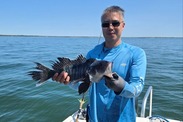
Setting effective and fair regulations for recreational fisheries has always been a complex challenge. Now, a cloud-based Decision Support Tool is transforming this process by putting cutting-edge science and decision-making power directly into the hands of recreational fishing advisors and managers.
|
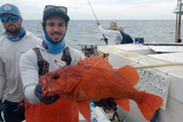
NOAA Fisheries’ West Coast Region partners with anglers and fisheries managers to promote recreational fishing opportunities and stewardship. The California Collaborative Fisheries Research Program, for example, pairs scientific expertise of university researchers and NOAA Fisheries with anglers’ on-the-water experience to monitor fish populations.
|
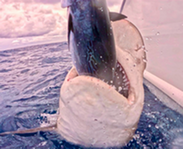
Shark depredation occurs when a shark bites or steals a fish hooked by an angler before it can be brought to the boat. A new study by NOAA Fisheries scientists and university partners reveals the breadth of shark depredation in recreational fisheries in the waters from Maine to Texas and the U.S. Caribbean over the past 100 years.
|
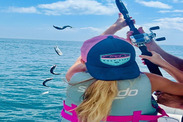
The first component of the Northeast Fisheries Science Center’s new Atlantic Mackerel Cooperative Research Initiative has a fun acronym. The new Sampling Program for Atlantic Mackerel, or SPAM, will compensate participating fishermen for collecting and contributing whole mackerel caught in coastal waters from North Carolina to Maine.
|
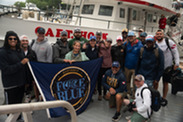
NOAA Fisheries, NOAA Sanctuaries, and other partners teamed up with nonprofit FORCE BLUE to provide U.S. military veterans the opportunity to fish and learn safe release techniques at Gray’s Reef Marine Sanctuary. This event is part of the multi-year Sanctuaries Tour of Duty campaign, which engages veterans in marine conservation.
|
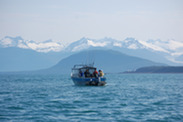
If you’re going charter fishing in Alaska this year, you'll need a charter halibut stamp if you plan on bringing halibut home. Beginning in 2026, adult anglers fishing aboard a charter vessel need a charter halibut stamp for each day they intend to catch and retain halibut. Money collected from halibut stamps will support the charter industry.
|

A whale breaching or feeding is a thrilling sight for those at sea, but it also poses a serious risk. A free online course—offered through the See a Spout? Watch Out! program—has been helping ocean users in New England and the Mid-Atlantic safely view and navigate around whales since 2022. Now, the course is expanding to include versions for the West Coast and Hawaiʻi.
|
|
|
New England/Mid-Atlantic
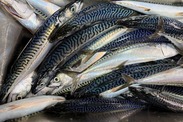
NOAA Fisheries launched a new Atlantic Mackerel Cooperative Research Initiative, partnering with the Northeast fishing industry. With $2.3 million in funding this fiscal year, the project will engage more than 50 fishing vessels to collect and analyze data to improve our understanding of the Atlantic mackerel stock. This research initiative builds upon the Northeast Fisheries Science Center’s 20-year model of success with cooperative research.
|
Our Tide to Table series profiles members of the aquaculture community who provide valuable jobs and access to fresh, sustainably sourced American seafood. The latest installment features Brenden Doyle, a Gloucester native who operates an oyster farm in the heart of the largest contiguous salt marsh in New England.
|
|
|
Southeast
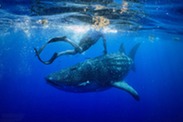
Last year, a team of researchers deployed satellite tags on whale sharks off the coast of Tampa Bay, Florida. One shark in particular, a 26-foot-long male nicknamed “Larry,” has now provided researchers with more than a year’s worth of location data points, documenting his extensive travels. Researchers hope to tag more whale sharks this season.
|
|
|
West Coast
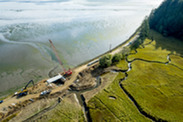
NOAA Fisheries supports one of the most ambitious salmon restoration projects on Oregon’s coast: the Salmon SuperHwy. Led by Trout Unlimited, a suite of partners is working to open up streams for migratory fish across coastal Oregon watersheds. This work, now 75 percent complete, is helping threatened Oregon Coast coho rebound while supporting local communities.
|
|
|
Upcoming Deadlines
June 15: Comments due on proposed listings and 12-month determinations for tope sharks under the Endangered Species Act
June 15: Applications due for USDA National Institute of Food and Agriculture’s Special Research Grants for Aquaculture Research
June 20: Applications due for Species Recovery Grants to States
June 29: Applications due for the Pacific Coastal Salmon Recovery Fund
View more news and announcements
|
|
Upcoming Events
June 12–15: Pacific Fishery Management Council meeting in Spokane, WA
June 16–18: Mid-Atlantic Fishery Management Council meeting in Alexandria, VA
June 23–25: New England Fishery Management Council meeting in Mystic, CT
June 29–30: Peer Review: 2026 June Management Track Assessments, in Woods Hole, MA
View more events
|
|
|
|