|
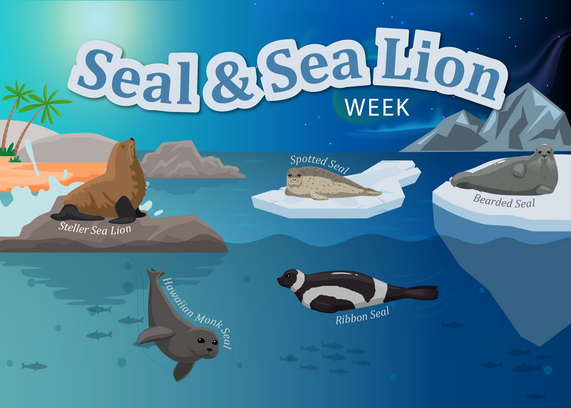 Last week was Seal and Sea Lion Week! From March 23–27, we celebrated these profound pinnipeds, which have been around for about 30 million years and are indicators of ocean health. Visit our splash page and explore the features below for seal and sea lion facts and to get the scoop on our conservation efforts.
New research on haul-out behavior helps to more accurately estimate the number of ice seals in the Arctic, and improve our efforts to conserve and monitor their populations.
|
Last spring, scientists flew more than 24,000 miles over sea ice to study the abundance and distribution of ice seals off the coasts of western and northern Alaska. This survey used multispectral camera systems enabled with artificial intelligence to detect and document seals hauled out on the spring sea ice. This was the first time the seals’ entire geographic range in U.S. waters was surveyed in one season.
|
Just days before Christmas, staff at Westward Seafoods in Unalaska, a city in the Aleutian Islands, encountered an unexpected holiday guest: an endangered Steller sea lion pup. Follow the journey of a resilient endangered pup who found a second chance after a life-saving trip from Alaska to California.
|
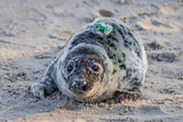
Join Northeast Fisheries Science Center seal researchers Kimberly Murray and Ellie Heywood, their Tufts University collaborator Wendy Puryear, and several other partners on a balmy 40° January day sampling and tagging gray seals on Nantucket, Massachusetts.
|
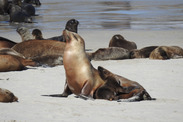
For more than 50 years, NOAA Fisheries has conducted vital research on seal and sea lion populations at a remote research station on San Miguel Island, California. The long-term dataset provides clues to help us understand what environmental conditions lead to malnourished California sea lion pups and increased stranding levels.
|
|
|
National
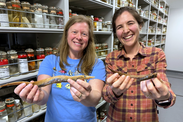
Barracudina—which means “little barracuda”—are a diverse but understudied group of fish found across the globe. Fisheries biologists recently described a new species of barracudina found in U.S. waters in the North Atlantic. Their research advances our understanding of this little-known but important group, which is a key source of prey for commercially and recreationally important fish species like tuna and billfish.
|
|
|
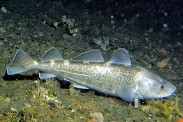
A study by Alaska Fisheries Science Center biologists sheds light on the predator-prey dynamics between Pacific cod and commercially important snow and Tanner crabs. The research indicates that the total amount of crabs consumed by Pacific cod is most strongly driven by the overall size of the Pacific cod population. Understanding what drives crab consumption is a critical first step toward managing these interconnected resources.
|
|
|
Pacific Islands

Dr. Selene Fregosi supported NOAA Fisheries’ undersea glider challenge in Hawaiʻi in early 2026. The challenge assessed glider performance and capabilities in field conditions off Oʻahu. Now that it’s wrapped up, Dr. Fregosi is sharing what the challenge looked like behind the scenes—how they “flew” underwater gliders, coordinated multiple teams, and a bit of what they learned along the way.
|
|
|
Southeast
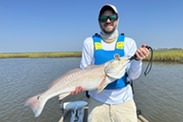
One year after creating 1,170 acres of wetland habitat in Louisiana’s Barataria basin, key species like white shrimp, blue crab, and red drum are returning. As the marsh stabilizes and the food web matures, it will serve as a thriving home for wildlife while supporting local economies and vital fisheries.
|
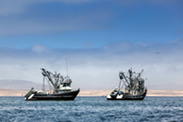
NOAA Fisheries’ Office of Law Enforcement conducted two multi-year investigations resulting in significant civil penalties and halting improperly labeled tuna from entering U.S. commerce. Following successful investigations, multiple seafood importers were issued thousands of dollars in fines for improperly labeling tuna cans as "dolphin safe" products.
|
|
|
West Coast
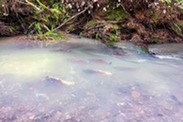
Endangered Central California Coast coho salmon saw a record-breaking return to Mendocino Coast rivers during the 2024–2025 spawning season, with more than 30,000 adults returning—double the previous season's record. These back-to-back record spawning seasons suggest that efforts to reconnect tributaries and restore salmon habitat, including more than 100 NOAA-funded projects, are successfully supporting population growth.
|
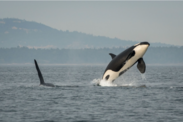
A new study challenges what we know about endangered Southern Resident killer whales. Although the 74 whales live in tight-knit, isolated family groups, their survival may depend on interacting with other killer whale populations. Scientists say these encounters—through shared habitat, competition, or even interbreeding—could influence the future of this small, at-risk Distinct Population Segment.
|
|
|
Upcoming Deadlines
April 7–9: Mid-Atlantic Fishery Management Council meeting in New York City
April 7–9: Gulf Fishery Management Council meeting in Mobile, AL
April 9: NOAA Fisheries West Coast Recreational Fisheries Roundtable
April 10–16: Marine Resource Education Program Federal Fisheries Science & Management Workshop in Honolulu, HI
April 14–16: New England Fishery Management Council meeting in Portland, ME
April 15: Juneau Aquaculture Opportunity Areas Atlas Workshop in Juneau, AK
April 15: Atlantic Shark Identification Workshop in Vero Beach, FL
April 17: Kodiak Aquaculture Opportunity Areas Atlas Workshop in Kodiak, AK
April 21–22: Caribbean Fishery Management Council hybrid Meeting in St. Croix, USVI
May 12: Atlantic Highlight Migratory Species Advisory Panel Meeting in Silver Spring, MD
May 17: Ocean Fun Days 2026 in Sandy Hook, NJ
View more news and announcements
|
|
Upcoming Events
April 10: Comments due on 2026-2028 Specifications for the Northeast Skate Complex Fishery Management Plan
April 14: Comments due on Proposed 2026 Blueline and Golden Tilefish Specifications
April 15: Pre-Proposals due for Northwest Fish and Wildlife Foundation’s Vessel Strike Avoidance Fund Request for Proposals
April 22: Applications due for United States Department of Agriculture’s Value-Added Producer Grants
May 4: Comments due on Proposed Amendment 58B to the Reef Fish Fishery Management Plan: Modifications to Gulf of America Deep-Water Grouper Management Measures
May 11: Applications due for the U.S. Department of Transportation Maritime Administration’s Small Shipyard Grants
June 2: Deadline to provide feedback to support improvements to vessel speed regulations
June 26: Applications due for the U.S. Department of Transportation Maritime Administration’s Port Infrastructure Development Program Discretionary Grant Opportunity
View more events
|
|
|
|