|
Seeking Input on Management Track Stock Assessments
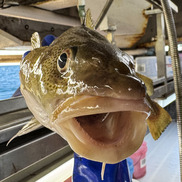
We’re looking for commercial and recreational fishing industry members, state agency scientists, academic researchers, and interested members of the public to help guide the development of the 2027 management track stock assessments. We’re soliciting information on:
- Atlantic cod
- Atlantic mackerel
- Bluefish
- Black sea bass
- Scup
- Summer flounder
Your input on these questions will help our assessment scientists better understand what is happening on the water and improve the science in the assessment. Please share your comments using our community input form by April 30, 2026. We thank those who were able to attend and provided input during the virtual meeting on March 18.
|
New Research Reveals Broad Bluefin Tuna Spawning Distribution
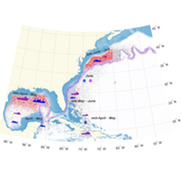
Working with partners, scientists from our science center did a deep dive into bluefin tuna spawning patterns. They compiled a large dataset from fisheries surveys, archive and museum specimens, and research cruise reports going back to the 1950s. Their analysis included more than 35,000 plankton tows, and they examined nearly 5,000 individual tuna larvae. The results, published in Progress in Oceanography, indicate that bluefin tuna have a much broader spawning distribution than previously recognized.
|
2025 Summary on Ship-Based Surveys
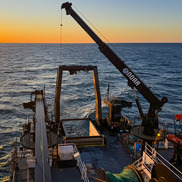
In fiscal year 2025—October 2024 through September 2025—we worked with the officers and crew of NOAA ships and charter vessels to conduct fisheries surveys in our region. Together we were able to log more than 300 days at sea and complete 16 planned ship-based surveys. Our surveys collect data that supports research across our scientific mission. In many cases, our surveys continue decades-long data collection efforts. They’re the main reason the Northeast U.S. Shelf ecosystem is one of the best understood marine ecosystems in the world. Our surveys also support fishery and protected species management in the region, which directly affects some of the nation’s most valuable fisheries and endangered species.
|
Fall 2025 Bottom Trawl Survey Results
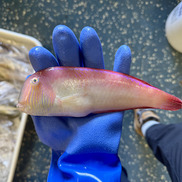
Weather, mechanical, and other issues impacted station completion rates for our fall 2025 Bottom Trawl Survey. The team worked with our Population Dynamics Branch to pivot and prioritize spatial coverage to obtain samples from 100% of the strata and substrata. Taking this approach and collecting samples from 100% of the strata allows assessment scientists to better understand what may be happening in our region.
|
New Cross-Training Expands Opportunities for Fisheries Observers
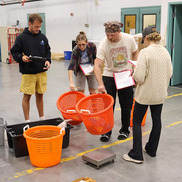
In February 2026, our Fishery Monitoring and Research Division successfully launched its first industry-funded scallop specialized cross-training for fishery observers. The new training allows observers currently certified in the At-Sea Monitoring Program to expand their qualifications through a streamlined cross-training course. By building on observers’ existing experience, the training significantly reduces the overall in-class time required while maintaining program standards. This milestone increases workforce flexibility and creates more opportunities for observers to participate in trips across programs. The cross-training approach also offers a cost-effective way to prepare qualified observers while strengthening our ability to support monitoring needs.
|
More EcoMon Survey Data Now Available
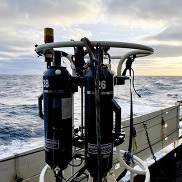
In 2024, we welcomed the return of our winter Ecosystem Monitoring Survey. It’s one of the four new ocean chemistry data sets just added to our hydrographic and plankton survey directory. The new data sets are:
- Spring EcoMon Survey (HB2403)
- Winter EcoMon Survey (HB2401)
- Summer EcoMon Survey (HB2406)
- Fall EcoMon Survey (PC2406)
In addition to the 15 sets of hydrographic and plankton data on the Northeast U.S. Continental Shelf from 2024, we’ve added chlorophyll, dissolved inorganic carbon, nutrients, and oxygen measurements for those four surveys. Our EcoMon Survey is one of the most comprehensive, ongoing programs exploring marine resources and oceanographic conditions in the Northwest Atlantic. Data analyses inform local and international fisheries management, protected species research, and climate science.
|
Using Camera Systems to Collect Golden Tilefish Lengths
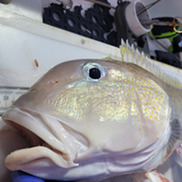
Our collaborative tilefish length monitoring project is currently midway through a two-year data collection phase. Using onboard camera systems, this project generates length estimates for individual golden tilefish. This work explores if and how this technology can support broader data collection and would help make stock assessments more resilient to fluctuations in traditional portside sampling. To date, the project has recorded over ten trips, generating more than 7,000 length estimates. While scientifically promising, industry interest remains mixed as camera systems on vessels are not universally welcomed. This feedback remains critical as the project evaluates future technological integration.
|
Blog: Teamwork Makes the Dream Work!
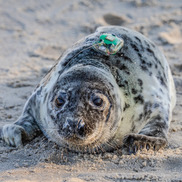
Successful science requires collaboration. New blog by science center seal researchers Kimberly Murray and Ellie Heywood and their Tufts University collaborator Wendy Puryear shares what a day in the field is like sampling and tagging gray seals with satellite tags at Great Point on Nantucket, Massachusetts. It included 11 scientists from nine institutions, 3 field trucks, 4 research permits, 6 gray seals sampled, 3 gray seal pups tagged with satellite tags, and an incredible amount of coordination! Their blog is highlighted on NOAA Fisheries’ Seal and Sea Lion Week splash page!
|
Director's Message
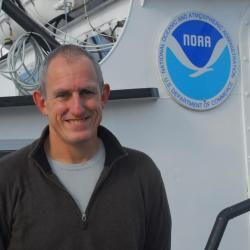
I and others from our science center and NOAA Fisheries attended the Maine Fishermen’s Forum March 5–7, in Rockport, Maine. We joined with many others to:
The forum is always a great opportunity to connect with our region’s commercial fishing industry and it’s something we look forward to each year.
At the Open Forum with Federal Fisheries Leadership, I joined Eugenio Piñeiro Soler, NOAA Fisheries’ Assistant Administrator, Michael Pentony, Regional Administrator for our Greater Atlantic Regional Fisheries Office, Cate O’Keefe, Executive Director for the New England Fishery Management Council, and Dan Salerno, Chairman for the New England Fishery Management Council. Together, we discussed topics and answered participant questions ranging from on-demand fishing gear and North Atlantic Right Whales, to fisheries science and management actions.
Mike and I continued to make the point that NOAA’s interest in on-demand gear is to facilitate the development of options for the lobster fishery and not to develop requirements for the lobster industry. To this end, our collaborative work with on-demand gear continues as part of an experimental fishery within otherwise closed fishing areas for its fourth year.
In 2025 on-demand fishing gear trials, the success rate of the gear was 95%, the retrieval rate was close to 100%, and no safety issues were reported. There have been some gear interactions and we learn from each one. If you are interested in learning more please see the annual reports from our 2023, 2024, and 2025 on-demand gear trials.
|
|
|
Upcoming Events
Apr 2: Cooperative Research Summit
Apr 2: Longfin Squid Research Track Working Group Meeting
Nov 16–17: Flatfish Biology Conference
|
|
Upcoming Deadlines
Mar 31: 2026 Atlantic Highly Migratory Species student art contest
Apr 30: Community input on 2027 Management Track assessments
Jul 1: Poster and oral presentation titles for Flatfish Biology Conference
|
|
|
|
|