|
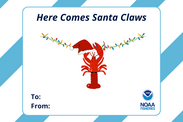
It’s the most wonderful time of year ... It’s time for NOAA Fisheries holiday cards! We’ve got lots of pun-filled cards, many inspired by some of our favorite holiday songs. Share these cards with your friends and family to let them know you're thinking about them—and marine life—this holiday season.
|
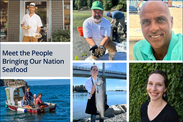
Need a spark of holiday cooking inspiration? Explore these practical tips from seafood pros—and discover the stories of the families and communities behind America’s sustainable seafood.
|
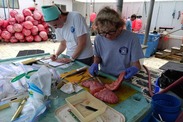
NOAA scientists traveled to the Slope Sea with commercial fishermen to answer longstanding questions about Atlantic bluefin tuna stock structure and spawning. The sampling survey confirmed that younger, smaller Atlantic bluefin tuna are spawning in the Slope Sea—filling a key gap in understanding their reproduction and stock structure. Their data, collected with industry partners, will improve science-based management and offer new insights into the iconic species’ life history.
|
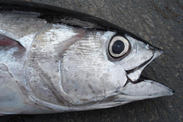
In early December, the United States delivered key tuna management and technology wins at the 22nd annual Western and Central Pacific Fisheries Commission meeting in the Philippines. The U.S. delegation implemented measures to support the nation’s seafood industry by ensuring robust opportunities for commercial fishing communities while enhancing conservation of our shared fishing resources. Key outcomes of the meeting will strengthen U.S. tuna competitiveness, drive international technology adoption for accountability, and combat illegal, unreported, and unregulated fishing.
|
|
|
Alaska
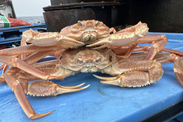
A new study addresses one of the largest mass mortality events in recent marine history—the abrupt collapse of the snow crab population in the eastern Bering Sea. The research team was led by NOAA Alaska Fisheries Science Center fishery biologist Erin Fedewa. They set out to identify potential factors driving the increased mortality, population collapse, and recovery potential of Bering Sea snow crabs.
|
|
|
New England/Mid-Atlantic
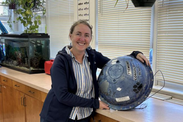
A NOAA Teacher at Sea’s satellite-linked drifting buoy made an unexpected return ashore nearly a year later. It was an exciting find for her students and an example of how drifters track ocean conditions. The recovered buoy—which spent the year collecting data on sea surface temperature and ocean currents—now serves as a hands-on classroom tool and connects students directly to scientific research.
|
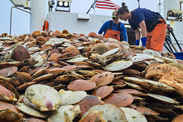
The Atlantic sea scallop fishery—one of the nation’s most valuable seafood industries—is facing growing challenges from ocean warming and acidification. A NOAA-funded research team is working with fishermen, seafood dealers, and coastal communities to develop science-based, adaptive management strategies. It’s part of a $3 million investment from NOAA’s Ocean Acidification Program into regional vulnerability and resilience assessments. Their project aims to strengthen resilience, protect livelihoods, and sustain scallop fisheries as changing ocean conditions reshape where and how scallops grow.
|
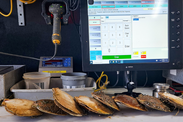
Survey scientists captured some fascinating sights and scenes from the 2025 Atlantic Sea Scallop Dredge Survey. Their year in photos gives a peek at our survey, its operations, interesting and often overlooked marine invertebrates, and more.
|
|
|
Southeast
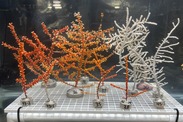
Scientists collected coral fragments from the Gulf seafood, which gets little-to-no sunlight. After raising and spawning the corals in the lab, they were successfully returned to the seafloor as part of efforts to restore habitats injured by the Deepwater Horizon oil spill. Returning corals back to the same area where they were collected, after a short period of time in the lab, helps ensure these communities continue to grow and thrive. Scientists will monitor the corals over the coming years to understand the success of different coral propagation methods.
|
|
|
West Coast
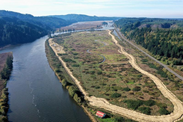
Most Pacific coast salmon and steelhead listed under the Endangered Species Act have increased in abundance over the past 25 years, helping halt earlier declines and showing progress toward recovery. Populations protected under the Act grew faster than unprotected populations, illustrating the value of habitat restoration and conservation partnerships.
|
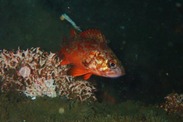
New monitoring shows the Palos Verdes Reef restoration project has increased fish biomass by more than 150 percent just 4 years after construction—demonstrating how restoration can bring marine ecosystems back to life. Outplanted rock structures revived reef habitat once lost to pollution and sediment, supporting kelp, invertebrates, and commercially and recreationally important species.
|
|
|
Upcoming Deadlines
December 25: The Western Pacific Regional Fishery Management Council has a number of funding opportunities open for research and development support
December 31: Apply for the Gulf Council’s Fisheries Outreach Specialist Position
January 7: Public Comment Period Closes for Proposed Rule: Framework 69 to the Northeast Multispecies Fishery Management Plan and Other Measures Necessary to Manage the Groundfish Fishery
January 8: Nomination packages due for the Atlantic Highly Migratory Species Advisory Panel
January 14: Apply for 2026 Shark Research Fishery Permits
January 16: Nomination packages due for the Mid-Atlantic Fishery Management Council’s Scientific and Statistical Committee
View more news and announcements
|
|
Upcoming Events
December 16–18: Mid-Atlantic Fishery Management Council Meeting in Washington, DC
January 7–9: Northeast Aquaculture Conference and Expo in Portland, ME
January 12–16: The 2026 Marine Resource Education Greater Atlantic Workshop in Falmouth, MA
February 26: Northeast Cooperative Research Summit in Riverhead, NY
March 15–17: Seafood Expo North America in Boston, MA
April 10–16: Marine Resource Education Program Federal Fisheries Science & Management Workshop in Honolulu, HI
View more events
|
|
|
|