|
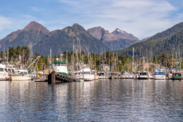
In April, the President signed an Executive Order on Restoring American Seafood Competitiveness. In response, the Department of Commerce, through NOAA Fisheries, launched a bold, coordinated effort to revitalize the U.S. seafood sector. This call for public comments is a critical step in our efforts to fulfill the President's vision of making the United States the world's dominant seafood leader. Comments are due October 14.
|
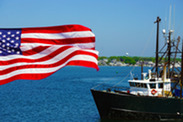
While U.S. fishermen already comply with strict bycatch mitigation rules, the Marine Mammal Protection Act import provisions extend these protections worldwide. Foreign fisheries must meet similar standards to protect marine mammals in order to trade with the United States. NOAA Fisheries has released updated comparability findings for fisheries from 135 nations, determining which fisheries will be eligible to export fish or fish products to the United States starting January 1, 2026.
|
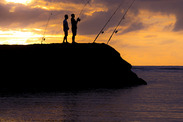
Over the past year, NOAA Fisheries developed, refined, and launched a strengthened procedure for review of recreational fishing catch and effort estimates. We conducted this effort in close collaboration with our state and interstate marine fishery commission partners. This new process augments our existing internal data review quality checks.
|
|
|
Alaska
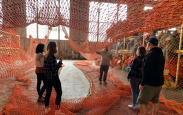
As ocean conditions shift and technology evolves, the Alaska Fisheries Science Center is modernizing its fishery-independent bottom trawl surveys in Alaska. Meet two NOAA team members leading the effort to enhance efficiency, preserve long-term data continuity, and improve the quality of information used in assessments to manage valuable fish stocks.
|
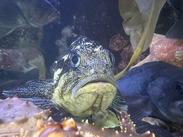
A new environmental DNA tool analyzes DNA collected from water samples, providing unprecedented accuracy in identifying a wide range of rockfish species. It offers a more accurate and efficient way to monitor these commercially important fish, including species that are hard to tell apart using previously available genetic methods.
|
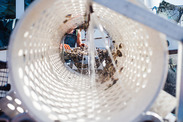
NOAA Fisheries scientists and partners conducted a 3-year study at a Pacific oyster farm near Juneau. They explored how the cold, nutrient-rich waters of Southeast Alaska influence oyster growth and quality. The findings suggest that Alaska’s subarctic environment offers both surprising benefits and potential challenges for oyster farmers.
|
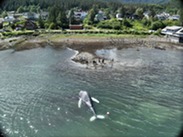
A humpback whale calf washed ashore near a popular beach in Juneau. NOAA Fisheries biologists, Stranding Network partners, and the U.S. Coast Guard worked to relocate the carcass to a more remote location for an autopsy.
|
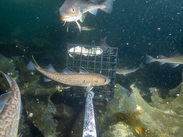
In this latest post of the Alaska Fisheries Science Center’s education blog, undergraduate intern Ella Kelly describes the baited camera research that fisheries biologist Katherine Miller is conducting during the juvenile Pacific cod survey in the Gulf of Alaska.
|
|
|
West Coast
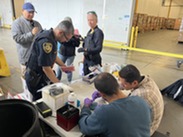
NOAA Fisheries law enforcement officers used a rapid polymerase chain reaction device to detect fraudulent seafood labeling at import facilities in Long Beach, California. They identified false labeling of imported bigeye, yellowfin, bluefin, albacore, and other tuna species. They also identified legal fish filets mistakenly labeled as endangered species, sparing those importers unnecessary investigations.
|
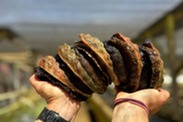
Our latest “Tide to Table” profile features The Cultured Abalone Farm in Santa Barbara, California. Both commercial and recreational fishing for abalone are now prohibited due to declining populations. The Cultured Abalone Farm helps preserve California’s culinary heritage by raising red abalone to supply restaurants along the coast. Staff from the farm partner with NOAA Fisheries on aquaculture education and abalone restoration efforts.
|
|
|
Pacific Islands

Earlier this year, a team of local fishermen and NOAA scientists worked together to develop the first-ever standardized, fishery-independent bottomfish survey in the Commonwealth of the Northern Mariana Islands. Combining different skill sets, both groups gained valuable insights into the fishery, fish behavior, and biology.
|
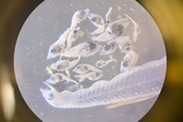
In summer 2025, a small team of NOAA scientists and local fishermen traveled to the Mariana Archipelago for a cooperative fish population and life history survey. Get a glimpse at their accomplishments in this photo gallery.
|
|
|
Southeast
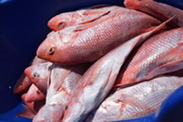
NOAA Fisheries is launching a brand new Individual Fishing Quotas Marketplace within the Southeast Gulf Catch Shares online system. This tool will allow participants to advertise IFQ allocation or shares they wish to sell or buy. This optional tool provides an easy-to-use platform connecting participants to available quota.
|
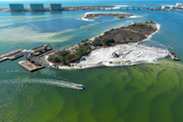
After years of storm damage, erosion, and oil spill impacts, the Lower Perdido Islands off the coast of Alabama are rapidly diminishing. A new project funded by the NOAA Fisheries Office of Habitat Conservation and the Deepwater Horizon Alabama Trustee Implementation Group restored 30 acres of varied habitats on Walker and Robinson islands.
|
|
|
Upcoming Deadlines
September 5: Proposals due for NOAA Great Lakes Fish Habitat Restoration Partnership Grants
September 5: Proposals due for NOAA’s Cooperative Institute Fostering Aquaculture Research and Marketing
September 5: Proposals due for the Northeast Fisheries Science Center and the Atlantic States Marine Fisheries Commission’s pilot regional industry-based bottom trawl survey
September 10: Applications due for the Department of Transportation Maritime Administration’s 2025 Port Infrastructure Development Program
October 1: Abstracts due for the 2026 Northeast Aquaculture Conference & Exposition and the Milford Aquaculture Seminar
October 1: Applications due for U.S. Department of Transportation’s Build America Bureau Innovative Finance and Asset Concession Grant Program
View more news and announcements
|
|
Upcoming Events
September 6: Mariana Archipelago Fishery Ecosystem Plan-Guam Advisory Panel Meeting in Hagatña, Guam
September 9–10: 157th Western Pacific Fishery Management Council Scientific and Statistical Committee Meeting in Honolulu, HI
September 15: Western Pacific Fishery Management Council Executive and Budget Standing Committee Meeting in Honolulu, HI
September 15–19: South Atlantic Fishery Management Council meeting in North Charleston, SC
September 16–17: 204th Western Pacific Fishery Management Council Meeting in Honolulu, HI
September 17–24: Pacific Fishery Management Council meeting in Spokane, WA
September 20: Milford Lab Open House in Milford, CT
September 23–25: New England Fishery Management Council meeting in Gloucester, MA
September 26: 2025 U.S. Pre-Transboundary Management Guidance Committee Meeting
September 29–October 9: North Pacific Fishery Management Council meeting, held virtually
View more events
|
|
|
|
|