|
Uncrewed Vehicle Helps Fill Data Gaps in Northeast’s Difficult-to-Reach Areas

This spring, our science center used an uncrewed surface vehicle called a DriX to collect mission-critical data throughout southern New England. The DriX could complement long-term surveys by filling data gaps in places NOAA vessels and aircraft can’t access. It operated nearly 24/7 for 20 days. The DriX collected data to characterize fish and plankton, including within five wind energy areas at various stages of development. It traveled 1,678 nautical miles and sampled as close as 65 feet from wind turbines. It also sampled areas where North Atlantic right whales have been documented foraging to help us better understand how they use habitats.
|
Report Sharks Washed Ashore
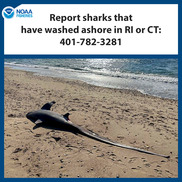
There have been several recent reports of sharks washing ashore in Rhode Island. Summer is an active time for our region’s coastal areas. Many people flock to the water to enjoy swimming, boating, fishing, paddleboarding, and more. It’s also peak time for some migratory sharks to appear in our region. While sharks can wash ashore because of illness and other natural causes, they can also wash ashore from injuries and mortalities caused by human activities and interactions. If you see a shark washed ashore, please take a few photos and report the shark by calling 401-782-3281. Scientists from our Apex Predators Program collect important data and biological samples from reported sharks that help us better understand shark biology and ecology.
|
2025 Spring EcoMon Survey Completed
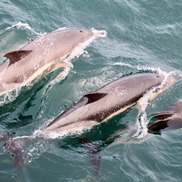
The shortened 2025 Spring Ecosystem Monitoring Survey sailed from May 27—June 6. The science team prioritized sampling areas important to the Atlantic mackerel egg index, data that is crucial for stock assessment. Scientists conducted 86 bongo net tows to study plankton and larval fish and collected physical oceanography data by deploying a conductivity, temperature, and depth instrument at 111 stations. They collected water samples for carbon analysis at 23 stations to support ongoing research on marine carbon cycling and ocean acidification. The science center’s Ecosystem Monitoring Survey, or EcoMon, helps understand and predict changes in the Northeast shelf ecosystem throughout the year, which influence the productivity of fisheries.
|
2024 Fall and 2025 Winter Ecomon Surveys Completed
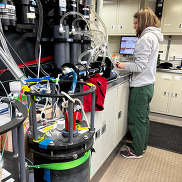
The 2024 Fall EcoMon Survey collected samples at 81 stations between October 27 and November 13, 2024. Sampling was limited to the Mid-Atlantic Bight and Southern New England. The Winter EcoMon Survey sailed from February 14—19, 2025, and had 2 days of ideal sampling weather. During that time, scientists and crew completed 24 plankton and hydrographic tows with Bongo nets and conductivity, temperature, and depth instruments. The EcoMon Survey is the most comprehensive, ongoing program exploring marine resources and oceanographic conditions in the Northwest Atlantic.
|
Science Center Launches Marine Development GIS Data Hub
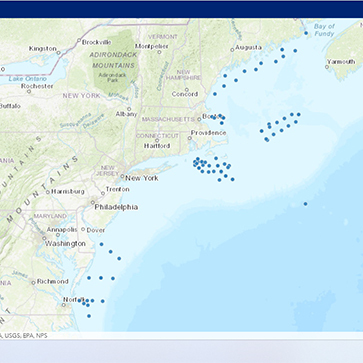
The science center’s Marine Development and Ecology Branch launched a new GIS Data Hub. It is a publicly available resource for spatial data on NOAA Fisheries trust resources and marine development. This centralized hub, built using the NOAA GeoPlatform and powered by Esri's ArcGIS Online, provides a user-friendly way to access and visualize important data. The hub includes a collection of feature service datasets and interactive maps, making it a valuable tool for researchers, managers, and the public to better understand the intersection of marine development and living marine resources.
|
Collaborative Squid Size Monitoring Expands to Include Longfin Squid
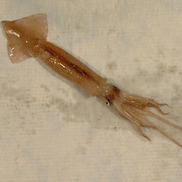
We recently expanded our region-wide program collecting size and weight data for shortfin squid to include longfin squid. The goal of Collaborative Squid Size Monitoring, or SQUISM, is to better understand the cohort and population structure of these valuable, dynamic squid species. We worked with the industry to develop an efficient electronic system to collect standardized squid size and weight data. In 2021, we installed electronic data collection systems at six processing facilities across the region. When fishing vessels land at a facility, a subsample of squid have their paired mantle length and whole weight recorded using the electronic data collection system. These data help scientists better understand the size composition of shortfin and longfin squid populations, which is key to advancing the assessment and management of these species.
|
Gear up for the 2026 Northeast Cooperative Research Summit!
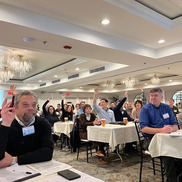
Gear up for the 2026 Northeast Cooperative Research Summit! The science center’s Cooperative Research Branch will host this annual event on Long Island, New York, on a date to be determined in February 2026. This summit brings together our region's fishermen, scientists, managers, and industry representatives to share new initiatives and inspire collaboration on emerging research priorities. Join us for a full day of shared knowledge, innovation, and partnership. You'll have the chance to network with peers, explore new research avenues, and help shape the future of cooperative research in New England. Stay tuned for more details!
|
Northeast Fisheries Programs Merge to Improve Efficiency
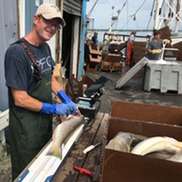
Our science center is leading the merger of two fisheries monitoring programs: the Northeast Port Biological Sampling Program, currently managed by the Greater Atlantic Regional Fisheries Office, and the Northeast Fisheries Observer Program, managed by the science center. The goal is to combine these programs into one streamlined, more efficient program under a single science center contract, enhancing the collection of biological samples both at sea and shoreside. This initiative will reduce duplication, improve coordination, and increase overall efficiency. The transition to the new merged Biological Port Sampling Program is expected to begin on October 1.
|
Director's Message
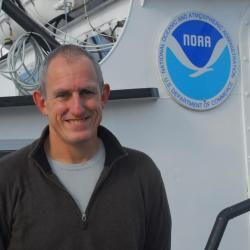
Science is a process that produces understanding in the form of data, assessments, papers, technologies, and new approaches. These products are produced at points in time and science continues to improve and produce better products. This is at the heart of NOAA Fisheries Best Scientific Information Available (pdf 5 pages) and our science center’s goal to continually improve the science we provide. There are many examples of improving our science in the above newsletter: the DriX survey, SQUISM, the EcoMon Survey, a new GIS Data Hub, and the NPBSP-NEFOP merger to “acronym” a few.
As important as the improvements we make to our science, is how we make improvements in our science. At the science center, we strive to make improvements through collaboration and working with those who will be affected by our products, be they other scientists, managers, fishermen, or offshore wind developers. Again there is an example in this newsletter: the upcoming 2026 Northeast Cooperative Research Summit. The challenges of marine resource management are large and ever changing. We need science to inform decision-making and we need to continually improve our science. Both are best done working together: scientists, decision-makers, and those affected by decisions.
|
|
|
Upcoming Events
Sept 2-5: American Lobster Research Track Assessment Peer Review Meeting
Sept 15-18: Management Track Assessment Peer Review Meeting
Sept 20: Milford Lab Open House
Sept 22-23: State-Federal Commercial Landings Sampling Workshop
|
|
Upcoming Deadlines
Sept 5: Proposals due for the Northeast Fisheries Science Center and the Atlantic States Marine Fisheries Commission’s pilot regional industry-based bottom trawl survey
|
|
|
|
|