|
 July is Habitat Month at NOAA Fisheries! All month long, we’re sharing how we protect and restore habitat to sustain our nation’s fisheries, recover endangered species, and support coastal communities.
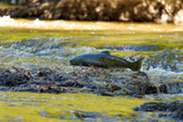
With support from NOAA Fisheries’ Office of Habitat Conservation, the Confederated Tribes of the Umatilla Indian Reservation are implementing nine restoration projects in eastern Oregon. These projects, which are backed by strong relationships with private landowners and agricultural communities, are removing barriers and reconnecting creeks and streams in three subbasins of the Columbia River.
|
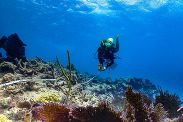
In the wake of Florida’s severe 2023 coral bleaching event, NOAA and our partners are launching new strategies and investing in cutting-edge technology to restore reefs and prepare them for a hotter future. The “Mission: Iconic Reefs” initiative seeks to boost coral cover from just 2 percent to 25 percent across seven key sites in the Florida Keys National Marine Sanctuary.
|
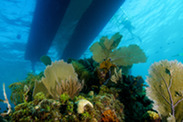
In the Florida Keys, NOAA and our partners are working to restore coral reefs, both to safeguard ocean ecosystems and to sustain a valuable tourism economy. NOAA-funded reef restoration projects within the Florida Keys National Marine Sanctuary help support almost 20,000 local jobs tied to tourism, fishing, and ocean recreation. Each year, these activities generate more than $2 billion for the region.
|
|
|
Highlights
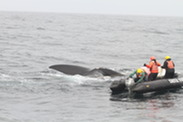
There were 64 confirmed large whale entanglement cases in 2023—a decrease from 2022 and below the historical average. NOAA Fisheries’ Marine Mammal Health and Stranding Response Program and our partners in the Large Whale Entanglement Response Network track and document as many entanglement incidents as possible to gain valuable information that may reduce future entanglement threats.
|
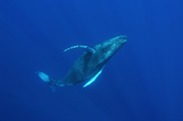
Data modernization at NOAA Fisheries means getting information out faster so people can use it to meet their needs. Our new Openscapes Champions program is a remote mentorship program for staff that focuses on open science and data modernization. In fall 2024, 120 NOAA Fisheries staff tackled projects to improve or restructure data workflows through the program.
|
|
|
Alaska
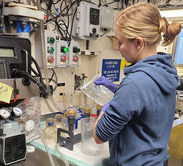
Environmental DNA (eDNA) is the genetic material shed by organisms into the surrounding environment. Analyzing eDNA can enhance fish stock assessments by providing a non-invasive, cost-effective, and scalable way to monitor fish populations. In a recent study, NOAA Fisheries scientists created a roadmap for integrating eDNA data into stock assessments.
|
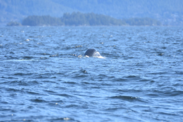
A new research paper discusses the first NOAA Fisheries record of a bowhead whale in Southeast Alaska. The whale was observed by a team of scientists working in Sitka Sound in March 2024. It is only the second documented sighting of this Arctic species in the eastern North Pacific, south of the Aleutian Islands.
|
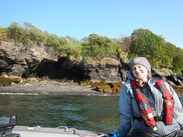
Read a guest blog post by undergraduate Ella Kelly, an intern at the Alaska Fisheries Science Center’s Auke Bay Laboratories. She describes her interest in marine science and her work helping scientists survey juvenile Pacific cod habitat in the Gulf of Alaska.
|
|
|
West Coast
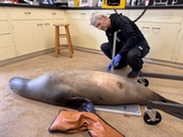
Following a joint investigation by the NOAA Fisheries Office of Law Enforcement, Ventura Police Department, and California State Parks, a California man was sentenced to 3 years in state prison for kicking and clubbing a stranded California sea lion. He was charged under the state’s animal cruelty law because of the aggravating factors. The pregnant female sea lion had to be euthanized.
|
|
|
Pacific Islands
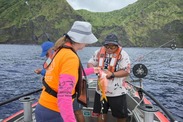
This month NOAA Fisheries scientists aboard NOAA Ship Oscar Elton Sette partnered with commercial fishermen in the Mariana Islands to survey key bottomfish species such as snappers, groupers, and jacks. The fishermen deployed from the Sette in smaller NOAA boats to target priority species using local fishing methods, while NOAA scientists collected biological samples to understand fish age and reproduction.
|
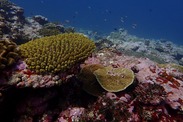
Five reef-building coral species in U.S. waters of the Pacific Islands are listed as threatened under the Endangered Species Act. NOAA Fisheries is designating critical habitat for these natural treasures to help conserve them for generations to come.
|
|
|
Southeast
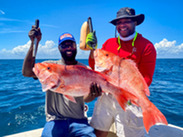
NOAA Fisheries and the Gulf States Marine Fisheries Commission announced six new partnerships and seven projects aimed at improving recreational fishing effort and discard data collection in the Gulf. This effort represents a key investment in enhancing data quality and reducing data uncertainty to support sustainable fisheries management across the region.
|

Read a guest blog post by teacher Steve Brown, who joined his former student—now a NOAA Fisheries scientist—aboard R/V Savannah to learn how to survey reef fish in the Southeast.
|
|
|
New England/Mid-Atlantic
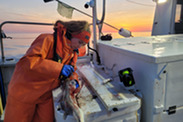
Years ago, biologist Hannah Ciarametaro sailed aboard F/V Mary Elizabeth as a fisheries observer. Now a field scientist with the Northeast Fisheries Science Center, Hannah describes returning to the Mary Elizabeth to participate in a cooperative research survey.
|
|
|
Upcoming Deadlines
July 27: Applications due for the Department of Energy’s Energy Technology Innovation Partnership Project
August 29: Proposals due for the Fisheries Innovation Fund solicitation from the Massachusetts Division of Marine Fisheries
September 5: Proposals due for NOAA’s Cooperative Institute Fostering Aquaculture Research and Marketing
September 10: Applications due for the Department of Transportation Maritime Administration’s 2025 Port Infrastructure Development Program
View more news and announcements
|
|
Upcoming Events
August 7: Safe Handling, Release, and Identification Workshop in Vero, FL
August 9: Woods Hole Science Stroll at NOAA Fisheries
August 11–14: Mid-Atlantic Fishery Management Council Meeting in Annapolis, MD
August 21: Atlantic Shark Identification Workshop in Mount Pleasant, SC
September 4: Safe Handling, Release, and Identification Workshop in Kenner, LA
September 20: Milford Lab Open House in Milford, CT
View more events
|
|
|
|