|
Highlights

July is Habitat Month at NOAA Fisheries! All month long, the Office of Habitat Conservation is sharing how we protect and restore habitat to sustain our nation’s fisheries, recover endangered species, and support coastal communities.
|

In Southeast Washington, NOAA funding is supporting the Cowlitz Indian Tribe’s goal of restoring 30 percent or more of the salmon and steelhead habitat on its traditional lands in the lower Columbia River watershed. NOAA Fisheries’ Office of Habitat Conservation awarded the Tribe $3.3 million to remove the 55-foot-tall, 425-foot-long Kwoneesum Dam on Wildboy Creek. The dam, which was removed in 2024, blocked upstream salmon and steelhead migration on the creek for almost 60 years.
We partner with tribes across the United States to restore fish habitat on their ancestral lands. This enables tribal and community members to one day renew harvesting species that declined or disappeared due to habitat degradation and other impacts.
|

In 2024, NOAA Fisheries funded several projects to restore habitat in collaboration with recreational anglers through the National Fish Habitat Partnership. Our partners have made considerable progress on this work, actively engaging local communities—including anglers—to conserve fish habitat. These projects demonstrate NOAA’s commitment to restoring fish habitat and supporting access to sustainable saltwater recreational fishing, a popular pastime that boosts the U.S. economy.
|
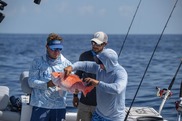
The Deepwater Horizon Return 'Em Right program trains anglers to use descending devices, improving Gulf reef fish survival rates after release. Addressing barotrauma, the initiative has trained nearly 50,000 anglers since 2022. A new video series highlights its importance, with research showing these devices reduce shark predation by over 99%, promoting responsible conservation.
|
|
|

The Oceanic Fish Restoration Project, part of NOAA’s restoration efforts after Deepwater Horizon, partnered with the pelagic longline fishing community to help rebuild robust fisheries in the Gulf. Fishers voluntarily paused operations, were compensated, and able to opt into alternative gear with reduced rates of bycatch. In the end, more than 40,000 fish across 60 species were left in the water. And, there was a 90 percent survival rate for any bycatch that occurred.
|

To restore degraded fish habitat on private lands, NOAA partners with organizations that work directly with landowners to find solutions that benefit everyone. One such partner, the Confederated Tribes of the Umatilla Indian Reservation, is based in Eastern Oregon. They have spent decades building long-term relationships with farmers, ranchers, and irrigation districts in order to restore salmon and steelhead habitat. This work has led to the return of these iconic species to rivers where they once returned by the thousands, supporting tribal and other fisheries.
The Confederated Tribes are now implementing nine restoration projects in Eastern Oregon and Washington with $3.3 million in funding from NOAA’s Office of Habitat Conservation. These projects are removing barriers and reconnecting creeks and streams in the Walla Walla, Umatilla, and Grande Ronde subbasins of the Columbia River.
|
Ten years after the Refugio Beach oil spill, a long-term effort to restore the coast and its habitat is well underway, thanks to a strong partnership, scientific expertise, and deep commitment to restoring what was lost. The restoration work within the last four years focuses on repairing damage to birds, marine mammals, shoreline and underwater habitats, and recreational areas. The trustees selected and carefully implemented projects to help repair injuries and allow people to continue to enjoy the coast for years to come. Some of the projects include efforts to expand capabilities for marine mammal stranding, red abalone outplaning to build a self-sustaining population, and improved beach access and safety features.
|
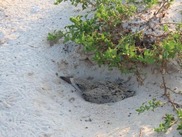
The Mississippi Trustee Implementation Group is initiating drafting of its fifth restoration plan to address, in part, natural resource injuries to Water Quality (Nutrient Reduction) and Birds caused by the Deepwater Horizon oil spill.
|
|
|

The Deepwater Horizon Natural Resource Damage Assessment Open Ocean Trustee Implementation Group released its Final Restoration Plan 4 and Environmental Assessment: Fish and Water Column Invertebrates and Sea Turtles committing more than $210 million to ten projects to help restore natural resources injured by the 2010 oil spill in the Gulf. Six projects will help restore fish and water column invertebrates, and four projects will help restore sea turtles.
|
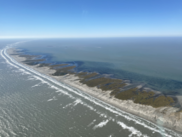
The Louisiana and Open Ocean Deepwater Horizon Trustees have released their Draft Joint Restoration Plan and Environmental Assessment #1: Restoring Wetlands, Coastal, and Nearshore Habitats, Federally Managed Lands, Fish and Water Column Invertebrates, Sea Turtles, Submerged Aquatic Vegetation, and Birds of the Chandeleur Islands for public review and comment.
The draft restoration plan evaluates projects for partially restoring natural resources injured by the Deepwater Horizon oil spill. The draft plan analyzes alternatives for ecosystem restoration at the Chandeleur Islands: four design alternatives for island expansion and two projects for restoring fish and water column invertebrates.
|
|
|
|
|
|