|
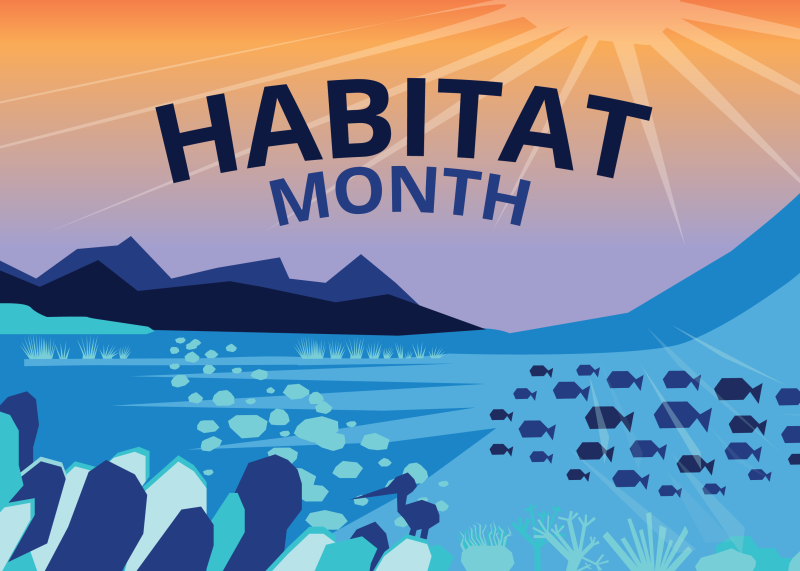 July is Habitat Month at NOAA Fisheries! All month long, we’re sharing how we protect and restore habitat to sustain our nation’s fisheries, recover endangered species, and support coastal communities.
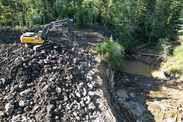
In Southeast Washington, NOAA funding is supporting the Cowlitz Indian Tribe’s goal of restoring 30 percent or more of the salmon and steelhead habitat on its traditional lands. The project will remove the Kwoneesum Dam and restore 6.5 miles of fish passage and 1.3 miles of in-stream habitat on Wildboy Creek in the Washougal River subbasin.
|
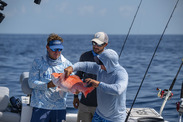
Across the United States, anglers and conservation groups are collaborating to improve fish survival during catch-and-release fishing through proper handling, hook removal, and gear selection. Programs like Return ‘Em Right provide training and outreach to help anglers reduce stress and injury to released fish. The importance of this work is reflected in the voices of boat captains, researchers, inventors, and partners in five new videos.
|
|
|
Highlights

It’s Culinary Arts Month, and we’re celebrating with seafood recipes matched to the traits of your birth month! From January’s trailblazers, to July’s optimists, to December’s free spirits, we’ve got you covered with sustainable seafood flavors to inspire every month of the year.
|
|
|
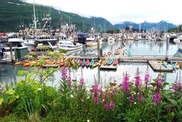
On June 30, the U.S. Department of Commerce announced the appointment of 20 new and returning members to the eight regional fishery management councils. Council members represent interested groups including commercial and recreational fishing industries, environmental organizations, and academia, along with state and federal agencies. They are vital to fulfilling the Magnuson-Stevens Act’s requirements to end overfishing, rebuild fish stocks, and manage them sustainably.
|
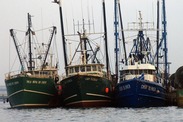
NOAA Fisheries is modernizing our Atlantic Coast logbook reporting systems, moving from paper to a single electronic reporting platform. The new integrated database system will combine five existing programs covering commercial and for-hire vessels from Maine to Texas. The effort supports more efficient, less costly reporting that eases burdens on fishermen.
|
As part of the Changing Ecosystems and Fisheries Initiative, NOAA researchers developed a new model that helps us better understand past ocean conditions so we can predict future ones with greater accuracy. The West Coast model configuration stretches from the Baja Peninsula through the Bering Sea, providing a cohesive picture of coastwide ocean conditions.
|
|
|
Alaska
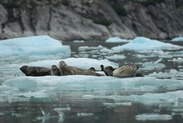
Each spring in Alaska’s glacial fjords, harbor seals give birth on ice floes that provide a platform to rest, molt, and care for their young. During the same time, tourism for glacier and wildlife viewing increases in the region. To protect harbor seals from disturbance, we established voluntary vessel approach guidelines in 2015. From kayaks to cruise ships, these measures help balance wildlife protection with growing visitor interest.
|
|
|
West Coast
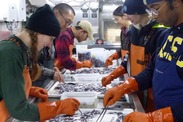
Researchers from NOAA Fisheries’ Southwest Fisheries Science Center and partners have found that a vitamin deficiency likely killed nearly half of newly hatched fry of endangered winter-run Chinook salmon in the Sacramento River in 2020 and 2021. The newly published research reports on the cause, extent, and impact of thiamine deficiency in salmon in California’s Central Valley.
|
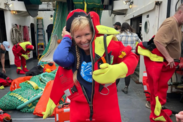
On June 28, Teacher at Sea Jojo Chang from Hau‘ula, Hawai‘i, set sail from San Francisco aboard NOAA Ship Bell M. Shimada. She joined scientists from the Northwest and Southwest fisheries science centers for the second leg of the new Integrated West Coast Pelagic Fisheries Survey.
|
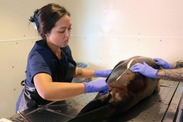
The team at the Pacific Marine Mammal Center in Laguna Beach, California, have responded to hundreds of marine mammal strandings amid the region’s worst domoic acid harmful algal bloom. Necropsy biologist Cristina Robinson shares her career success story and perspectives on inspiring others to care for and protect marine wildlife through educational content.
|
|
|
Pacific Islands
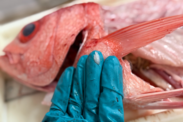
When a record-sized gindai showed up at the Honolulu Fish Auction, NOAA Fisheries scientists carefully collected samples to better understand how the species grows over time and how long they can live. These “fish detectives” collect clues from some of the region’s most valuable (and tasty!) commercial fish species to help scientists maximize harvest opportunities for fishermen.
|
|
|
New England/Mid-Atlantic

On July 7, Teacher at Sea Sinh Nguyen from Fort Worth, Texas, set sail from Norfolk, Virginia, aboard NOAA Ship Pisces. He joined scientists from the NOAA Fisheries’ Northeast Fisheries Science Center for the Larval Bluefin Tuna Slope Survey.
|
|
|
Upcoming Deadlines
July 27: Applications due for the Department of Energy’s Energy Technology Innovation Partnership Project
August 29: Proposals due for the Fisheries Innovation Fund solicitation from the Massachusetts Division of Marine Fisheries
September 5: Proposals due for NOAA’s Cooperative Institute Fostering Aquaculture Research and Marketing
September 10: Applications due for the Department of Transportation Maritime Administration’s 2025 Port Infrastructure Development Program
View more news and announcements
|
|
Upcoming Events
July 10: Atlantic Shark Identification Workshop in Virginia Beach, VA
July 11: NOAA Grant Competition Informational Webinar for the Cooperative Institute Fostering Aquaculture Research and Marketing
July 22: Gulf Council Public Comment Session
August 7: Safe Handling, Release, and Identification Workshop in Vero, FL
August 9: Woods Hole Science Stroll at NOAA Fisheries
August 11–14: Mid-Atlantic Fishery Management Council Meeting in Annapolis, MD
August 21: Atlantic Shark Identification Workshop in Mount Pleasant, SC
September 4: Safe Handling, Release, and Identification Workshop in Kenner, LA
View more events
|
|
|
|
|