|
Highlights
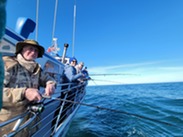
In 2024, NOAA Fisheries funded several projects to restore habitat in collaboration with recreational anglers through the National Fish Habitat Partnership. Partners in Hawaiʻi, Oregon, and South Carolina have made considerable progress on this work, actively engaging local communities—including anglers—to conserve fish habitat and support access to sustainable saltwater recreational fishing.
|
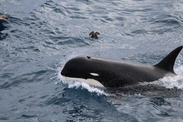
NOAA Fisheries scientists have discovered dozens of species over the years, including fish, sharks, whales, and invertebrates. Check out our collection of stories featuring these new kids on the block—how we discovered them, what makes them unique, and why they’re important.
|
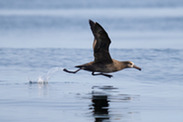
Though gear innovations have reduced seabird entanglements in commercial fishing operations, black-footed albatrosses are still sometimes caught as bycatch in Alaska hook-and-line gear. New genetic tools allow scientists to identify bycaught albatrosses back to individual breeding colonies in the Northwestern Hawaiian Islands. This genetic stock identification provides a better picture of population-level impacts and opens up the possibility of targeted management.
|
|
|
Alaska
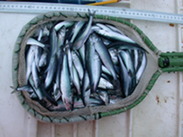
A new scientific study suggests that the inside waters of northern Southeast Alaska may have provided a temporary buffer for juvenile salmon migrating into the Gulf of Alaska during recent warm water events.
|
|
|
West Coast
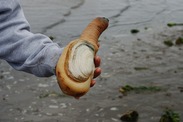
Geoducks (pronounced “gooey-ducks”) are large filter-feeding clams native to Washington. Salish Seafoods—a tribally owned seafood company that also sells clams, oysters, and wild salmon—farms geoducks in a way that connects them to the cultural heritage of the local Squaxin Island Tribe. Geoducks provide economic, cultural, and environmental benefits to Puget Sound.
|
|
|
Southeast

The Deepwater Horizon oil spill significantly impacted commercial fish species in the Gulf of America (formerly the Gulf of Mexico). The Oceanic Fish Restoration Project, part of NOAA’s restoration efforts after the spill, partnered with the pelagic longline fishing community to help rebuild robust fisheries in the Gulf. Participating fishermen agreed to either pause longline fishing for a period or to test out, for free, alternative gear designed to reduce bycatch.
|
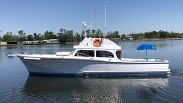
Following a NOAA Fisheries Office of Law Enforcement investigation, a Florida fisherman was convicted of poisoning dolphins with an unlawfully used pesticide and killing dolphins with a firearm. Earlier this month, he was sentenced to 30 days in prison and a fine of $51,000. Conflict between anglers and dolphins has been widely documented throughout the Southeast.
|
|
|
New England/Mid-Atlantic
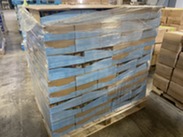
A NOAA Fisheries Office of Law Enforcement investigation resulted in a civil penalty for a grocery store in Virginia. Experts determined that two shipments of jarred tuna contained tuna from a Nicaraguan purse seiner. Nicaragua is one of seven nations that may not import certain non-fresh tuna products into the United States as they do not meet the dolphin-safe requirements under the Marine Mammal Protection Act.
|
|
|
Upcoming Deadlines
June 6: Proposals due for the Gulf Council’s solicitation for Review of Fishery Management Councils’ Regulatory Process
June 15: Priority applications due to participate in the Gulf of Maine Research Institute Marine Resource Education Program in the Southeast fishery region
June 27: Applications due for U.S. Department of Agriculture’s Agricultural Marketing Service Local Agriculture Market Program
September 10: (deadline extended) Applications due for the Department of Transportation Maritime Administration’s 2025 Port Infrastructure Development Program
View more news and announcements
|
|
Upcoming Events
June 3–4: Gulf Fishery Management Council Meeting (relocated to Tampa, FL)
June 3–5: Mid-Atlantic Fishery Management Council Meeting in Virginia Beach, VA
June 5–10: North Pacific Fishery Management Council Meeting in Newport, OR
June 9–13: South Atlantic Fishery Management Council Meeting in Cape Canaveral, FL
June 11–16: Pacific Fishery Management Council Meeting in Rohnert Park, CA
June 24–26: New England Fishery Management Council Meeting in Freeport, ME
View more events
|
|
|
|