|
Highlights
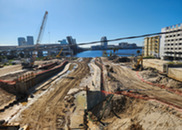
NOAA’s restoration investments don’t just support fish—they build healthier, more resilient communities. For decades, Jacksonville’s McCoys Creek flooded with every big storm—stranding residents, damaging homes, and making the evening news. But today, that’s changing. The McCoys Creek project will remove 150 properties from the flood zone; restore habitat for red drum, Atlantic sturgeon, and flounder; and create safe, beautiful recreational space for families.
|
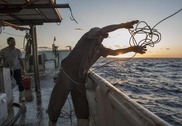
NOAA and partners have made significant progress addressing the impacts of the Deepwater Horizon oil spill. From marsh creation to better fishing practices, our work is restoring the Gulf’s habitats and marine resources. NOAA has taken the lead on more than 60 large-scale projects to restore natural resources. We work with state and local partners, coastal communities, user groups, and other constituents. In this story, we’ll highlight key projects that demonstrate the ways we have made progress towards recovery.
|
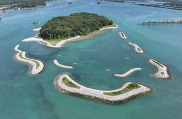
The saying “if you build it, they will come” holds true for habitat restoration. Before industrialization, the Detroit River was a complex ecosystem of rivers, streams, and wetlands. Since 2013, NOAA has partnered with the Friends of the Detroit River and others to restore portions of the Detroit River to create critical spawning and nursery habitat for native fish. Our project at Sugar Island created offshore shoals, which help prevent erosion and protect more than 20 acres of shallow, calm fish nursery and spawning habitat. And fish are already returning!
|
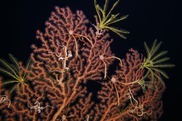
Fifteen years after the spill, we’ve made great strides in restoring the Gulf’s vibrant deep sea communities—and the work continues. The spill injured seafloor habitats in parts of the ocean that see little to no sunlight, also known as the mesophotic and deep benthic zones. These habitats are home to a complex community of fish, corals, and other invertebrates and serve as the foundation of food webs in the region. In October 2021, they embarked on their first field expedition to collect live Swiftia exserta and other mesophotic corals injured in the spill. Since that first expedition, the team and collaborators have spent hundreds of days at sea, collecting valuable data and implementing restoration efforts.
|
|
|
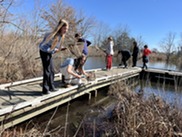
Chesapeake Bay Watershed Education and Training funding is helping every sixth grader in Queen Anne’s County Public Schools understand how wetlands provide habitat and protect water quality. Experts from the Sultana Education Foundation recently guided students through a day using wetlands as their classroom to learn about their local environment through water chemistry testing and getting to know the critters who use wetlands as habitat.
|
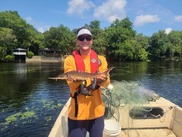
The Open Ocean Trustee Implementation Group, in partnership with the University of Florida, recently completed a project that informs restoration decision-making and the implementation of future projects to restore Gulf sturgeon—a species injured by the Deepwater Horizon oil spill. The Informing Gulf Sturgeon Population Status and Trends as a Baseline to Evaluate Restoration project set out to improve our understanding of Gulf sturgeon populations by establishing baselines, in order to better evaluate the success of and target restoration efforts.
|
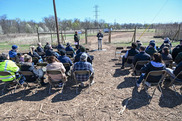
On Wednesday, April 9, 2025, a groundbreaking event took place for the Raritan River Floodplain Reforestation Project in central New Jersey. This project will create 112 acres of forested floodplains and wetlands at property owned and managed by the Duke Farms Foundation adjacent to the Raritan River–approximately 2.8 miles upstream of the American Cyanamid Superfund Site. The restoration project is designed to compensate the public for potential injuries to floodplains and wetlands resulting from releases of hazardous substances at the American Cyanamid Superfund Site.
|
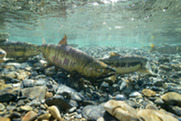
This spring, NOAA partner the Lower Columbia Estuary Partnership broke ground on a large-scale salmon habitat restoration project on the lower East Fork Lewis River in Washington State. This project will support the recovery of threatened steelhead and salmon on one of the few undammed rivers in the Lower Columbia River watershed and will also inject millions into the local economy and generate hundreds local jobs in construction, heavy equipment operations, trucking, engineering, forestry, and other industries.
|
|
|
Habitat Across NOAA
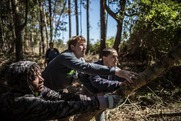
In our final podcast, learn about the GulfCorps conservation program. It’s helping local residents get training and experience restoring habitats harmed by the Deepwater Horizon spill that will help them prepare for future employment. The program hires young adults and trains them how to do conservation and restoration work.
|
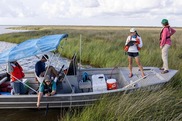
NOAA is commemorating 15 years since the Deepwater Horizon oil spill this April. NOAA was part of the initial response. Since then we have worked with our partners to plan, implement, and monitor projects to restore natural resources in the Gulf of America (formerly the Gulf of Mexico).
|
Earth Day is a time to celebrate our incredible planet. It gives us so much—the air we breathe, the water we drink, the marine life we love, and the fish and habitats that sustain us. At NOAA Fisheries, we work every day to conserve and recover our planet’s marine life and ecosystems. From restoring habitats, to protecting marine animals, to supporting sustainable U.S. fisheries, learn how we're using science to protect and improve our environment in this story.
|
|
|
|
|
|