|
|
Greetings everyone,
The new year has ushered in a new administration with new priorities and a series of executive orders to implement. Some of these will have profound influences on NOAA and the Southeast Fisheries Science Center in the coming weeks and months. The greatest impact will no doubt be felt by the reductions in force as the Department of Commerce implements the Executive Order Implementing The President’s “Department of Government Efficiency” Workforce Optimization Initiative. Many of our friends and colleagues have already left federal service as a result and more have applied for the VERA (Voluntary Early Retirement Authority) and VSIP (Voluntary Separation Incentive Payment) programs.
I truly wish the best for those who have left, and for those who plan to leave. It has been my honor to serve with all of you and I hope you thoroughly enjoy your next phase in life. I also want to thank those who remain for keeping the mission going. Now, more than ever, we must adapt to a new reality with a leaner workforce and evolving mission. No doubt some things we will do differently, some things we will hand off, and some things will end. So please pardon our dust as we reinvent ourselves to meet new expectations.
Keep reading!
 |
|
Thanks for your continued support and interest,
Clay Porch, Ph.D.
Southeast Fisheries Science Center Director
clay.porch@noaa.gov
|
|
|
We’re excited to announce our new Instagram account for NOAA Fisheries’ Southeast Fisheries Science Center and the Southeast Regional Office! We hope this new platform will provide more transparency and opportunities to engage with our communities throughout the region. We welcome you to follow along as we share science highlights, fun facts, and regulatory updates in a visually engaging way. |
|
 |
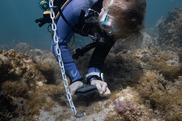
Scientists are using coral recruitment tiles to measure if and how restoration efforts like Mission: Iconic Reefs influence coral recruitment in the future. The team just finished deploying more than 30 coral recruitment tiles in the Florida Keys National Marine Sanctuary to establish a baseline to compare future measurements taken after outplanted corals mature and spawn on their own. |
|
 |
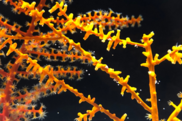
For the first time, scientists documented the captive spawning of a species of mesophotic octocoral—a breakthrough that could further restoration efforts for deep coral habitats. |
|
 |
Typically, built marine structures are not designed to benefit natural habitats. However, there is growing recognition that these structures can be strategically designed to fulfill their original function, while also minimizing negative environmental impacts and supporting ecosystem restoration. |
|
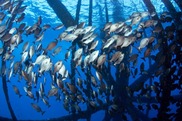 |
NOAA Fisheries and partners published research that identifies key habitat features of juvenile endangered smalltooth sawfish and predicts where else they could be. Credit: Olivier Born (Permit #22078) |
|
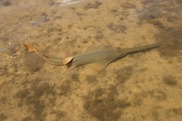 |
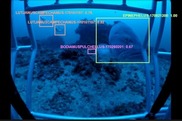
Videos and images from advanced underwater cameras are a critical component of collecting data. We use this information to make informed management decisions for marine species and habitat. |
|
 |
|
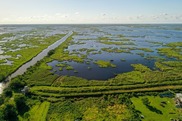
A new publication and accompanying report by NOAA scientists and partners present a synthesis of relevant literature—known as a systematic map—on the performance of nature-based solutions for coastal protection in six ecosystems: salt marsh, seagrass, kelp forest, mangrove, coral reef, and shellfish reef.
Also see: Nearly $37 Million Will Support Habitat Restoration in Coastal Louisiana
|
|
 |
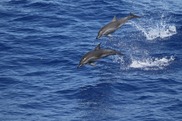
NOAA Fisheries’ final 2023 marine mammal stock assessment reports are now available. Updated regularly with the best available science, these stock assessments provide data on the health of marine mammal populations and inform efforts to sustainably manage them. We currently maintain stock assessment reports for 261 stocks, of which 66 reports are revised or new for 2023. |
|
 |
|
|
 |
|
As part of the Faces of the Southeast Fisheries Science Center series, meet Dr. Kelsey Martin. |
 |
|
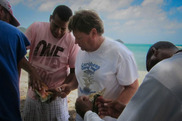
As part of the Faces of the Southeast Fisheries Science Center series, meet Dr. Ron Hill. |
New Phone Number for Text Message Alerts
For your awareness, starting May 13, NOAA Fisheries will be sending text message alerts from a new, toll-free phone number: (844) 548-2865. This will replace our current 468-311 number. Learn more about our text message service.
|
|
Mark Your Calendar
-
March 31, 2025: Gulf Council Meeting to Gather Feedback on Proposed Changes to Shrimp Effort Monitoring
Virtual, 6-9 p.m. ET
-
April 7-10, 2025: Gulf of Mexico Fishery Management Council Meeting
Gulf Shores, AL
-
April 22-23, 2025: 186th Caribbean Fishery Management Council Meeting
St. Croix, USVI
-
April 28-May 2, 2025: SEDAR 90 South Atlantic Red Snapper Data Workshop
Charleston, SC and virtual
-
June 9-13, 2025: South Atlantic Fishery Management Council Meeting
Cape Canaveral, FL
|
|
|
The mission of NOAA's Southeast Fisheries Science Center is to provide the scientific advice and data needed to effectively manage the living marine resources of the Southeast region and Atlantic high seas.
Visit our website
|
|
|
|