|
Input on Management Track Assessments Sought
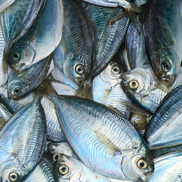
We’re looking for people in the commercial and recreational fishing industries, state agency scientists, academic researchers, and interested members of the public to help guide the development of the June 2026 Management Track Assessments. We’re soliciting information on Atlantic herring, butterfish, Georges Bank Atlantic cod, Georges Bank haddock, longfin inshore squid, and ocean quahog. Your input on topics such as movement, stock health, and fishing behavior dynamics will help our scientists better understand what is happening on the water and improve the science. We held a virtual meeting to collect comments on February 26. You can provide comments now using this community input form. The form is open through April 30, 2025.
|
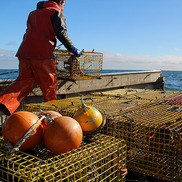
Experimental On-Demand Gear Testing
Our Gear Research Team is collaborating with 20 commercial lobster vessels to test on-demand (ropeless) fishing gear in state and federal waters normally closed to lobster and Jonah crab fishing with static vertical lines. Testing is currently underway off Massachusetts and Rhode Island in:
- South Island Restricted Area through April 30, 2025
- Massachusetts Restricted Area through May 15, 2025
Because on-demand gear has no surface buoys, it won’t be visible at the surface. Mariners within 5 nautical miles of experimental on-demand gear, can “see” gear positions and orientations on a smartphone or tablet using the free EarthRanger Buoy app available from Apple and Google app stores. TimeZero users can also view gear positions on their charts with an experimental feature in version 5. There is a potential for gear conflict. If on-demand gear is accidentally towed up, please don’t discard it. Hold onto the gear and contact our Gear Research Team. This work is similar to experiments we conducted in 2023 and 2024.
|
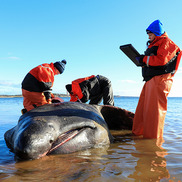
Basking Shark Necropsy
In early February, scientists from our Apex Predators Program received a call reporting a stranded basking shark near Wellfleet on Cape Cod, Massachusetts. The team rushed out to collect as much data and as many biological samples as they could before the incoming tide. They identified the shark as a 26-foot female basking shark and were able to collect ovary, uterus, stomach, liver, skin, gill, muscle, and eye samples. These data will help the team better understand the biology and ecology of basking sharks. Sharks in our region are more likely to wash ashore during winter. This particular shark may have gotten trapped in shallow water as the tide ebbed from the harbor. If you happen to find a stranded shark in Rhode Island or Connecticut, please take a few photos and report it to our Apex Predators Program scientists.
|
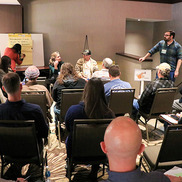
Northeast Cooperative Research Summit a Success
In January, more than 150 fishermen, scientists, managers, and students gathered in Portland, Maine, for the 2025 Northeast Cooperative Research Summit. The annual meeting brings together commercial fishermen and researchers to discuss recent collaborative research projects, facilitate regional coordinations, and cultivate new relationships between the fishing and science communities. This year's summit included presentations, breakout discussions, an industry highlight, and a research prioritization exercise. Attendees also had the opportunity to tour Portland Fish Exchange, a groundfish processing facility, and Ready Seafood, a lobster distribution plant. As one participant reflected, “The value and emphasis placed on integrating the traditionally siloed groups is remarkable.” A summary of the proceedings will be released in the coming months.
|
Hook-and-Line Survey Update
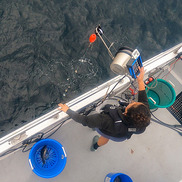
The next pilot Hook-and-Line Survey is scheduled for spring 2025 targeting the continental shelf between Massachusetts and Virginia. The survey has several objectives:
- Continue developing survey protocols
- Expand the spatial scope
- Analyze and evaluate gear performance and selectivity data
- Explore analytical approaches for modeling catch rates
This pilot survey started as a way to collect fisheries data in developed offshore areas where traditional survey methods like our Bottom Trawl Survey, are not feasible. The survey uses jigging machines to catch fish and is working with recreational fishermen in our region to develop and refine its approach.
|
Blog: Gettin’ Jiggy Developing a New Fisheries Survey
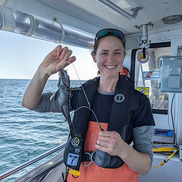
In fisheries biologist Lindsey Nelson’s new blog, she shares what goes into creating a completely new cooperative research fisheries survey. Last year, she and others in our Cooperative Research Branch worked with fishermen in our region to develop and test a new survey to sample fish safely and effectively around developed offshore areas where traditional survey gears can’t. After deciding to use automatic jigging machines for the survey, the team got to work testing and collecting data on all the fine details like what kind and size of bait to use, should they use teasers, finding the best jigging pattern and speed, height off the seafloor, sensitivity to detect fish on the line, and more.
|
Workshops with the Sea Scallop Industry Coming Up in March
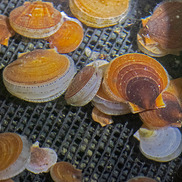
Our scientists are collaborating with sea scallop fishermen and industry members through a series of stakeholder workshops that began in 2021. Workshops are intended for members of the fishing community. In 2025, we'll hold three worksops in March. In this small group setting we will discuss changing oceanographic conditions, impacts on scallop fishing communities and what we can do to adapt. Together with the Commercial Fisheries Research Foundation and the University of Connecticut, our scientists will address fishing industry concerns, which will be incorporated into management recommendations. Bringing together social and natural science, researchers will collectively set goals with industry members and plan for the resilient future of the sea scallop fishery, which is facing changing ocean conditions.
|
Director's Message
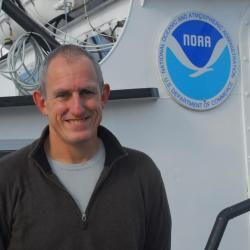
We value people, science, and service. These values form the foundation of our long-term strategic priorities, annual action plans, programs, and more.
An excellent example of these values in action is our work developing on-demand fishing gear systems and our on-demand gear team that is leading this work. They:
There are a huge number of partners engaged in this broader effort and we will continue to bring our values to the on-demand program and all the other programs that we’re involved in.
We’re proud of the important science and service we provide to ensure the nation’s fisheries and aquaculture are healthy and sustainable, and that protected species and important habitats are conserved.
|
|
|
Upcoming Meetings and Events
Feb 27: 2025 Assessment oversight panel meeting for June management track stocks
Feb 27–Mar 1: Maine Fishermen’s Forum
Mar 4: Longfin squid modeling meeting
Mar 17–21: Longfin squid modeling meeting
Mar 24: Sea scallop stakeholder workshop in New Bedford, Massachusetts
Mar 27: Sea scallop stakeholder workshop in Gloucester Point, Virginia
Mar 28: Sea scallop stakeholder workshop in Barnegat Light, New Jersey
Mar 10–14: Atlantic herring research track assessment peer review
Apr 21–25: Atlantic sea scallop research track assessment peer review
|
|
|
|
|