|
|
Greetings everyone,
As the year 2024 draws to a close, I wanted to reflect a little on the challenges we faced and the successes we shared here in the Southeast. As you know, the Southeast Region has more recreational and commercial fishermen than the rest of the nation combined, so it is no surprise that we have had more than our share of controversies about the amount of fish caught in our waters. Fortunately we made great strides moving toward electronic reporting for our commercial fisheries, have been active partners in three new recreational fishing initiatives designed to improve coordination with the states and stakeholders, and are key players in the shrimp futures initiative (see article below). Besides fishing, the Southeast Region has the fastest growing population in the nation and 12 of the top 20 busiest ports in America. The competing needs of a burgeoning human population, coupled with the warming of the climate, has put unprecedented pressure on the extensive wetlands along our coast and has decimated what used to be the third largest coral reef tract in the world. To understand and mitigate these impacts, we partner with private, state and federal agencies on myriad projects including a ground-breaking approach to marine spatial planning that received the Department of Commerce Gold Medal Award. We also acquired new assets and developed technology to improve our resource survey capacity for both fisheries and protected species. Funding provided through the Deepwater Horizon RESTORE Act and Inflation Reduction Act has fueled many of these gains and I am looking forward to our science reaping the benefits of that investment for many years to come.
Of course the Southeast Center achieved much more this year than what I just described, and certainly more than I could ever do justice to in a single newsletter, but to give you just a taste, here are a few of our other accomplishments:
- More than 579 days at sea for 14 scientific surveys
-
742 visual sightings of marine mammals comprising 19 species
-
327 acoustic detections in the Gulf of Mexico dominated by sperm whales
-
29 passive acoustic moorings deployed to monitor North Atlantic right whales
-
109 captured and tagged green, loggerhead, Kemp's ridley sea turtles
-
1,382 trips sampled by the Southeast Region Headboat Survey
-
2,139 total observer sea days on commercial fishing vessels
-
33,300 fish from 150 species measured
-
14,896 otoliths and 355 spines collected for aging
-
20,677 commercial logbook trips processed and validated
-
253 hours of outreach to 2462 members of the community
-
63 publications including 47 journal articles, 9 reports, and 7 technical memoranda
-
2 NOAA Bronze Medal Awards
-
1 Department of Commerce Gold medal for offshore wind spatial planning
- and a partridge in a pear tree!
Looking forward to next year, we hope to continue improving how we share our news with you. Feel free to reach out to our team with feedback to let us know what you’d like to hear more about.
From all of us at the Southeast Fisheries Science Center, we hope you all have a wonderful holiday season and happy new year!
 |
|
Thanks for your continued support and interest,
Clay Porch, Ph.D
Southeast Fisheries Science Center Director
clay.porch@noaa.gov
|
|
|
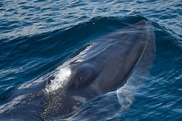
The crew collects valuable information from endangered sperm and Rice’s whales, dolphins, and seabirds in the final days of the 2024 Vessel Survey for Abundance and Distribution of Marine Mammals and Seabirds. |
|
 |
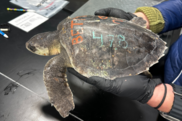
Nearly 80 cold-stunned sea turtles named after Taylor Swift songs were transported from New England to rehabilitation facilities on the coast of the Gulf of Mexico. They will be brought back to health before being released.
|
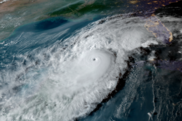
The 2024 Atlantic hurricane season had a profound impact on recreational fishing in the Gulf of Mexico, presenting new challenges to coastal communities. Learn how business owners, marine ecosystems, and recreational fishing seasons were affected.
|
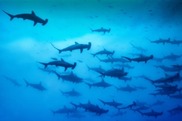
NOAA Fisheries and partners examined the global extinction risk and biodiversity loss of sharks and rays. While they’re in bad shape globally, countries with sustainably managed fisheries like the United States may provide a safe place to survive.
|
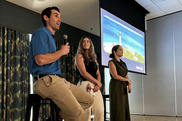
Sometimes you need the help of a village to bring your ideas to life, especially as it pertains to community outreach. Intern Bianca Sproul shares her experience planning science seminars in her hometown.
|
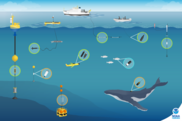
NOAA Fisheries uses the latest technologies to detect endangered North Atlantic right whales and support the species’ recovery.
|
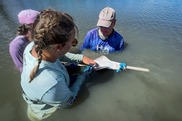
NOAA Fisheries scientists have been studying smalltooth sawfish in South Florida since 2009. Here’s what we’ve learned so far. |
|
 |
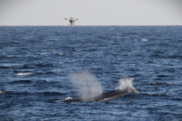
NOAA Fisheries and partners got an up-close look at the life of these endangered whales. |
|
 |
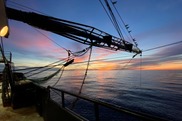
NOAA Fisheries scientists from the Southeast and Pacific Islands exchanged ideas for common challenges in island-based fisheries science. |
|
 |
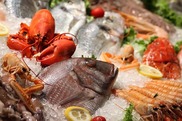
Learn the facts about wild-caught American shrimp, including what makes it a sustainable seafood choice. |
|
 |
The Beaufort Laboratory in North Carolina is celebrating its 125th Anniversary! Learn about our history and research at the second oldest federal marine science facility in the nation. |
|
 |
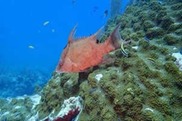
Funding from the NOAA RESTORE Science Program is supporting the development of next-generation fisheries forecasting methods. |
|
 |
|
|
 |
|
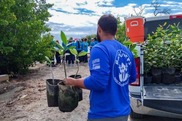
NOAA will support capacity building and restoration activities that benefit tribes and underserved communities and enhance their resilience to climate change. |
 |
|
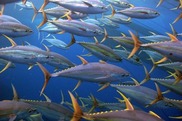
In a banner year for the International Commission for the Conservation of Atlantic Tunas, U.S. leadership led to several breakthrough outcomes, including new management measures for Atlantic tropical tunas and North Atlantic swordfish. |
 |
|
Meet members of the team and learn more about their work, including Joy Merino from the Southeast Fisheries Science Center. |
 |
|
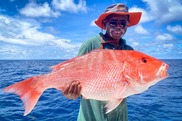
Inflation Reduction Act funds were awarded to collect data and improve scientific data and management decisions for red snapper in the Gulf of Mexico. |
 |
|
The plan outlines actions we can take to enhance industry resilience and competitiveness in the face of climate change and other stressors. |
|
As part of the Faces of the Southeast Fisheries Science Center series, meet Kelsi Furman.
|
|
 |
|
|
Mark Your Calendar
-
January 6, 2025: SEDAR 87 Gulf of Mexico White, Pink, and Brown Shrimp Assessment Webinar
-
January 8-9, 2025: Gulf Recreational Initiative Workgroup Meeting – New Orleans, Louisiana, and virtual
-
January 15, 2025: SEDAR 88 Gulf of Mexico Red Grouper Red Tide TWG Webinar
-
January 16, 2025: Gulf Recreational Initiative Public Engagement Session – virtual
-
January 27-30, 2025: Gulf of Mexico Fishery Management Council Meeting – New Orleans, Louisiana, and virtual
-
January 29, 2025: SEDAR 91 US Caribbean Spiny Lobster Assessment Webinar
-
February 3, 2025: Applications due for the 2025 Inclusive NOAA Fisheries Internship Program (IN FISH)
-
February 4-5, 2025: Gulf States Marine Fisheries Commission Gulf Fisheries Information Network (GulfFIN) Recreational Data Standards Workshop – Gulf Shores, AL, and virtual
-
March 3–7, 2025: South Atlantic Fishery Management Council Meeting – Jekyll Island, GA
Explore past issues of the Southeast Fisheries Science Center's Sea Notes Newsletter.
|
|
|
The mission of NOAA's Southeast Fisheries Science Center is to provide the scientific advice and data needed to effectively manage the living marine resources of the Southeast region and Atlantic high seas.
Visit our website
|
|
|
|
|