|
Highlights
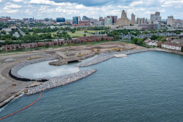
NOAA is recommending $4.2 million in Great Lakes Restoration Initiative funding to continue our work restoring important habitat for fisheries in the Great Lakes. The funding will help restore habitat for Great Lakes species by opening river systems to fish passage, reconnecting rivers to their floodplains, and restoring and enhancing river, stream, and wetland habitats.
|
How are regional fisheries similar to financial portfolios? Scientists from NOAA Fisheries are exploring the use of portfolio optimization techniques in fisheries management. Their research could help reduce risk in fisheries management in the United States.
|
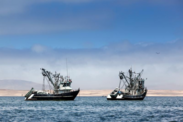
NOAA Fisheries denied U.S. port privileges to fishing vessels of 17 nations as a result of negative certification under the High Seas Driftnet Fishing Moratorium Protection Act.
|
|
|
Alaska
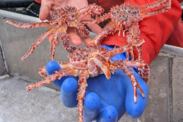
Fishing data coupled with survey data is useful for predicting fall, winter, and spring crab bycatch distribution.
|
|
|
West Coast
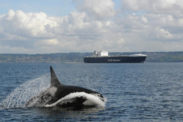
New research helps explain how vessel noise reduces foraging efficiency and success in West Coast killer whales.
|
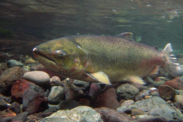
The Elwha River restoration project offers valuable insights into the complex ecological processes involved in dam removal and river recovery.
|
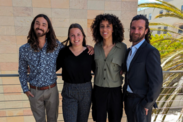
Interns are studying the cost-effectiveness of habitat restoration methods to support Chinook salmon recovery. They found that floodplain restoration offers the best bang for the buck.
|
|
|
Pacific Islands

Sarah Malloy was selected as the Regional Administrator for NOAA Fisheries’ Pacific Islands Regional Office. She brings more than 25 years of experience in natural resource management and policymaking to the job.
|
|
|
Southeast
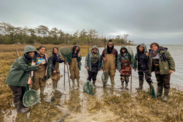
With support from NOAA, the North Carolina Coastal Federation is funding research opportunities for undergraduate and graduate students. They will study the benefits of oyster reef restoration and other marine science topics.
|
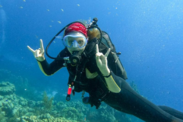
Rebecca Ruiz is a graduate student at North Carolina State University’s Center for Marine Sciences and Technology. She is using novel technology and artificial intelligence to investigate the benefits provided by oyster reefs restored by the North Carolina Coastal Federation in Pamlico Sound.
|
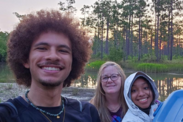
Amin Neal recently completed a 10-week undergraduate research fellowship at North Carolina State University’s Center for Marine Sciences and Technology. The rising sophomore spent the summer generating code to track the movements of sand tiger sharks.
|
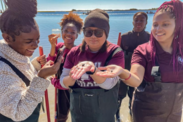
Lauren Johnson attended three of Dr. Gerald’s field trips as an undergraduate and will soon begin her graduate studies at North Carolina Central University. She will examine the types of contaminants impacting local oyster populations.
|
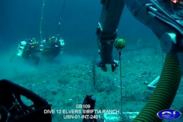
NOAA Fisheries and partners conducted a saturation diving mission deep in the Gulf of Mexico to advance our coral restoration efforts. Throughout the mission, the pressure was on in more ways than one—literally and competitively.
|
|
|
New England/Mid-Atlantic
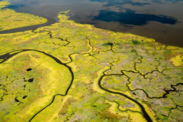
In collaboration with the U.S. Fish and Wildlife Service, NOAA Fisheries developed a guidance document to support the development of coastal marsh restoration projects in the Mid-Atlantic region.
|
|
|
Upcoming Deadlines
September 17: Applications due for Small Business Innovation Research and Small Business Technology Transfer Programs Phase I
September 30: Proposals due for the 2025 Sea Scallop Research Set-Aside Program
October 23: Comments due on proposed rule for 10 species of giant clams under the Endangered Species Act
October 28: Applications due for FY 2025 NOAA Great Lakes Fish Habitat Restoration Partnership grants
October 30: Applications due for the John H. Prescott Marine Mammal Rescue Assistance Grant Program
October 31: Applications due for Species Recovery Grants to Tribes
November 1: Applications due for Bluefin Tuna Research Program
November 4: Proposals due for Citizen Science for Improved Stock Assessments and Climate-Ready Fisheries Management
View more news and announcements
|
|
|
|