|
Highlights
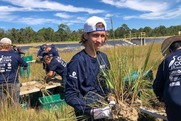
NOAA Fisheries is recommending more than $45 million in funding for 27 new projects that will advance the coastal habitat restoration and climate resilience priorities of tribes and underserved communities. Of the more than $45 million in funding, we are recommending more than $20 million for federally recognized tribes and tribal organizations. This investment is provided through the Biden-Harris Administration’s Bipartisan Infrastructure Law and Inflation Reduction Act. Contact: Jessica Edwards.
|
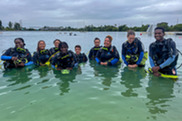
The NOAA-supported Your Shores program at the Phillip and Patricia Frost Museum of Science is helping Miami high school students from diverse backgrounds to become the next generation of marine scientists. The program provides them with dive certifications, habitat restoration and research experience, and college preparation. NOAA’s Office of Habitat Conservation is funding the program through the Bipartisan Infrastructure Law and Inflation Reduction Act to address the inequity of opportunities for students of all backgrounds in the marine science field and promote community-based habitat restoration. Contact: Erin McDevitt.
|
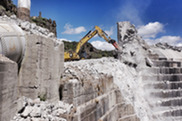
With the dams on the lower Klamath scheduled for complete removal by September, salmon will reenter 420 miles of habitat for the first time in a century. The amount of habitat opened up on the Klamath is equivalent to the distance between Portland, Maine, and Philadelphia–a journey through seven states. In addition, NOAA is recommending $20 million in funding for additional river restoration to the Yurok Tribe and Oregon Department of Fish and Wildlife. Contact: Bob Pagliuco.
|
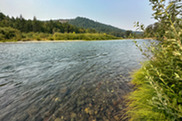
With $710,000 in funding from NOAA, the Confederated Tribes of the Grand Ronde is removing fish barriers on their land. The North Santiam River is a high priority for the recovery of threatened Upper Willamette River spring Chinook and Winter Steelhead. The Tribes will replace two culverts and remove two earthen berm obstructions to reconnect part of the North Santiam River to its floodplain. Contact: Regina Southworth.
|
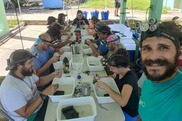
With NOAA funding through the Bipartisan Infrastructure Law and Inflation Reduction Act, many of our partners are helping to build capacity for current and future habitat restoration. Their efforts are supporting current and future restoration practitioners and advancing projects that are important to local communities, through workforce development programs, job creation, support for project planning, and more. Contact: Jessica Edwards.
|
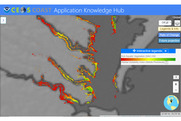
NOAA Satellite products are helping guide restoration work in the NOAA Middle Peninsula Habitat Focus Area. For example, data from satellites helps experts understand where submerged aquatic vegetation is located, identifies different species of saltwater marsh plants, and tracks changes in shorelines. Contact: Kim Couranz.
|
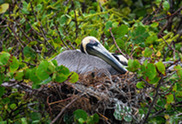
A new demonstration video for an Avian Data Monitoring Portal developed by the Deepwater Horizon restoration Regionwide Trustee Implementation Group is now available. The portal houses a large amount of survey data for Gulf of Mexico colonial waterbirds. This tutorial may be particularly useful for users who need a little extra help navigating the database. This powerful resource can answer questions about how colonial waterbirds are using the northern Gulf of Mexico coast and barrier islands. Contact: Natalie Matthews.
|
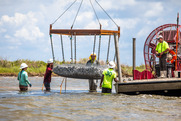
In June, NOAA and our partners completed the West Cove Living Shoreline–a selected restoration project from the Damage Assessment, Remediation, and Restoration Program’s Final Restoration Plan and Environmental Assessment of the Shell Green Canyon 248 oil spill. West Cove sits on the west side of Calcasieu Lake, surrounded by a large mix of salt and fresh-water marshes nestled within the Sabine National Wildlife Refuge in Cameron Parish, Louisiana. The spill damaged fish, bird, and marine mammal habitats and along the West Cove shoreline, in particular, protective reefs. The project was selected to address such damage and restore lost habitats. Contact: John Barco.
|
|
|
Habitat Across NOAA
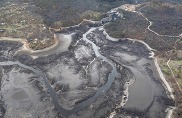
The removal of four dams on the Klamath River will reopen more habitat to Pacific salmon than all previous dam removals in the West combined. Now it will have a monitoring program to match—designed by top salmon scientists to track when and how many fish of different species return and where they go. The program will gather details about how and when fish return to the upstream habitat formerly blocked by four dams, gaining to more than 400 reopened miles of their former habitat.
|
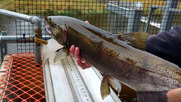
NOAA Fisheries is recommending $105.9 million in FY24 Pacific Coastal Salmon Recovery Fund funding for 14 new and continuing salmon recovery programs and projects across the West Coast and Alaska. Of this amount, $34.4 million is from the Bipartisan Infrastructure Law and $7.5 million from the Inflation Reduction Act. This historic investment will support state and tribal programs and projects to protect, conserve, and restore West Coast salmon populations while tackling the climate crisis, boosting resilience, and promoting economic growth by building a climate resilience.
|

NOAA’s National Centers for Environmental Information has published a new StoryMap describing sites with notable deep-sea coral and sponge biodiversity in U.S. waters. Scientists have explored and studied each site using diving robots, camera systems, and seafloor mapping sonar. The StoryMap contains photos, videos, and highlights from these site characterizations in several regions of the U.S., along with links to download in-depth reports.
|
|
|
Announcements
Restore America’s Estuaries is currently seeking dedicated volunteers to assist with the 2024 Coastal & Estuarine Summit, a premier conference for coastal conservation professionals. This year's Summit will be held near Washington, D.C., from October 6-10, 2024. In exchange for working one 8-hour shift, volunteers will receive complimentary general admission to the Summit for the remaining two days. Responsibilities include assisting with attendee check-in, monitoring sessions, and providing general support. Volunteers must be at least 18-years-old. To apply, complete the volunteer application form.
|
|
|
|
|
|