|
Highlights
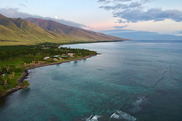
NOAA is recommending nearly $220 million in funding for 32 transformational habitat restoration and coastal resilience projects this year, as well as an additional $66 million in future year funding, under the Biden-Harris Administration’s Bipartisan Infrastructure Law and Inflation Reduction Act. This historic investment will strengthen the climate resilience of our nation’s coastal ecosystems and communities. Contact: Jessica Edwards.
|
Join us in celebrating Habitat Month 2024! Learn more about how NOAA Fisheries' Office of Habitat Conservation is working to restore habitat to support fisheries, protected species, and coastal communities. Contact: Alison Hammer
|
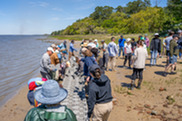
Salt marshes are disappearing in South Carolina at an alarming rate due to sea level rise and erosion. In response, The Nature Conservancy is significantly expanding the use of nature-based solutions along the state’s entire coast with $6.8 million from NOAA. They are constructing a 2,000-foot-long oyster castle living shoreline reef near Marine Corps Air Station Beaufort and also installing living shorelines with historically marginalized communities such as the Gullah Geechee. Contact: Lindsay French.
|

Four college students and a recent graduate are earning great career experience while supporting our work toward healthy Chesapeake Bay habitat! These outstanding and energetic young people are joining us through this year’s summer internships with the NOAA Chesapeake Bay Office. Contact: Bart Merrick.
|
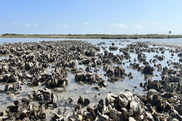
Habitat restoration isn't just about planting trees—it's about revitalizing and fortifying entire ecosystems to benefit all who rely on them. In particular, the Damage Assessment, Remediation, and Restoration Program (DARRP) aims to restore habitat for fisheries and wildlife which also supports recreation and tourism for people. When oil or hazardous waste spills into the environment, it harms habitats, and can limit outdoor recreational activities like fishing, boating, and swimming. Through DARRP, NOAA helps restore and reconnect all walks of life to these natural spaces. Contact: Jeff Smith.
|
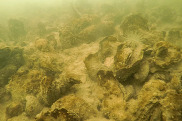
NOAA is working with our partners in Maryland and Virginia to restore oyster reefs in 10 Chesapeake Bay tributaries by the end of 2025. Once those 10 tributaries are complete, they will include 2,334 acres of healthy reef; we have 256 acres left to restore. Check out progress in the world’s largest oyster reef restoration project! Contact: Kim Couranz. increases.
|
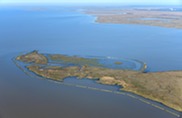
Hancock County Marsh Living Shoreline, one of the Deepwater Horizon oil spill Mississippi Trustee Implementation Group’s wetlands, coastal, and nearshore habitats restoration projects, received international recognition at the 35th PIANC World Congress. PIANC is the World Association for Waterborne Transport Infrastructure and awards a variety of honors. The Mississippi Department of Environmental Quality was awarded second place worldwide for its efforts to protect and restore the Hancock County Coastal Preserve. Contact: Natalie Matthews.
|
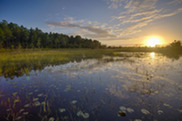
The Deepwater Horizon Florida Trustee Implementation Group has approved the Final Restoration Plan 3 and Environmental Assessment: Water Quality. The plan selects 11 projects for implementation to address the Water Quality Restoration Type at an estimated cost of $111.5 million. Contact: Natalie Matthews.
|
|
|
Habitat Across NOAA
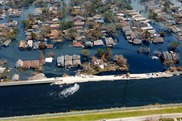
In NOAA Fisheries' new podcast episode, we'll hear from Arthur Johnson, CEO of the Center for Sustainable Engagement and Development in the Lower Ninth Ward, and Mike Biros, Restoration Program Director for the Coalition to Restore Coastal Louisiana. Both groups are part of the Central Wetlands Reforestation Collective, which received $1.2 million in federal funding from NOAA to restore wetlands bordering the Lower Ninth to involve communities in restoring wetlands along the coast of New Orleans.
|

From May 30 to June 9, NOAA and partners spearheaded a research expedition east of Cape Cod, Massachusetts, to gather data to support informed decision-making about offshore wind energy leasing and transmission cable routing. The expedition team used advanced sonar technology to collect bathymetric (seafloor topography), backscatter (seafloor texture), and water column data to identify potential sensitive or vulnerable hard-bottom features that are home to deep-sea corals and other habitats.
|
|
|
|
|