|
Highlights

The recovery of Pacific bluefin tuna has achieved a major milestone—the species exceeded international targets a decade ahead of schedule. The rebuilding of Pacific bluefin tuna reflects a fisheries management success. International organizations cooperated across the Pacific to reverse decades of overfishing for the prized species. “This is an amazingly resilient fish and the new assessment is showing us that. While the population is thriving, ongoing monitoring of data quality is essential to ensure the continued accuracy of the assessment,” said Dr. Huihua Lee, a research mathematical statistician at NOAA Fisheries’ Southwest Fisheries Science Center. Learn More!
|
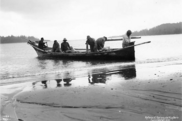
NOAA Fisheries announced the final rule and decision to grant the Makah Tribe a waiver from the take prohibitions in the Marine Mammal Protection Act (MMPA). This waiver provides for a limited subsistence and ceremonial hunt of Eastern North Pacific gray whales in accordance with the Treaty of Neah Bay of 1855 and quotas established by the International Whaling Commission (IWC). This waiver authorizes the Makah Tribe to resume hunting up to 25 Eastern North Pacific gray whales over a 10-year period in U.S. waters. Learn more!
|
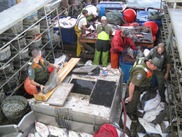
Secretary of Commerce Gina M. Raimondo, working with NOAA Fisheries, evaluates each fishery resource disaster request based primarily on data submitted by the requesting official and determined that fishery resource disasters occurred in the Oregon 2023 ocean commercial Chinook salmon fishery, Alaska 2022 Chignik salmon fishery, and Alaska 2023 Upper Cook Inlet East Side Setnet salmon fishery. This positive determination makes these fisheries eligible for disaster assistance from NOAA, based on the availability of Congressionally appropriated disaster funding. Learn More!
|
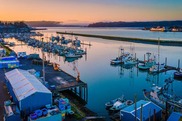
The first 3-day commercial Pacific halibut fishing season of 2024 in convention waters off the West Coast opened on Tuesday, June 25 at 8 a.m. and ended on Thursday, June 27 at 6 p.m. NOAA’s Office of Law Enforcement, along with our state and federal partners, were out on the water and at the docks, conducting patrols throughout the season ensuring compliance with the rules and regulations governing commercial Pacific halibut fishing to support a sustainable fishery. Learn more!
|
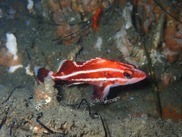
NOAA Fisheries has reviewed the current status of threatened Puget Sound/Georgia Basin yelloweye rockfish and endangered bocaccio, as required under the Endangered Species Act. While yelloweye rockfish are making progress toward recovery, bocaccio remain so rare that a meaningful assessment is not possible. Biologists have concluded that both fish should retain their current status. The status review also prioritizes recovery actions for the next 5 years. "The key is that it has to be a community effort—we all have to do our part to contribute to species recovery and ecosystem health,” said Dayv Lowry, Rockfish Recovery Coordinator for NOAA Fisheries’ West Coast Region. Learn more!
|
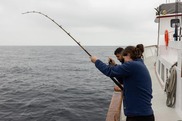
The scientific knowledge of NOAA Fisheries and the on-the-water knowledge of anglers on the California coast have come together in a cooperative research program. It is filling in data gaps on the population and life cycle of rockfish. It started as a pilot project in 2022 with six charter boats in Southern California ports with a focus on quillback and copper rockfish. The program has expanded to 24 vessels this year, covering every recreational fishing port in the state. The results will inform management and help keep fishing within sustainable limits, which benefits ecosystems and anglers. Learn more!
|
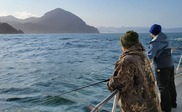
This year, NOAA Fisheries is funding three projects to restore habitat through the coastal National Fish Habitat Partnerships. These projects will actively engage local communities-- including anglers—who make critical contributions to fish habitat conservation nationwide. The projects demonstrate our commitment to restoring fish habitat and supporting access to sustainable saltwater recreational fishing, a popular pastime that boosts the U.S. economy. Learn more!
|
|
|
Partner News
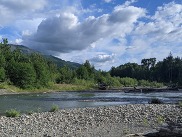
The Bipartisan Infrastructure Law and the Inflation Reduction Law are making waves in the Puget Sound. Ecosystem and species recovery projects led by tribes, state, and national agencies. NOAA Fisheries has granted Learn more!
|
|
|
|
Sea Turtle Week was in June! Check out how we celebrated this amazing species!
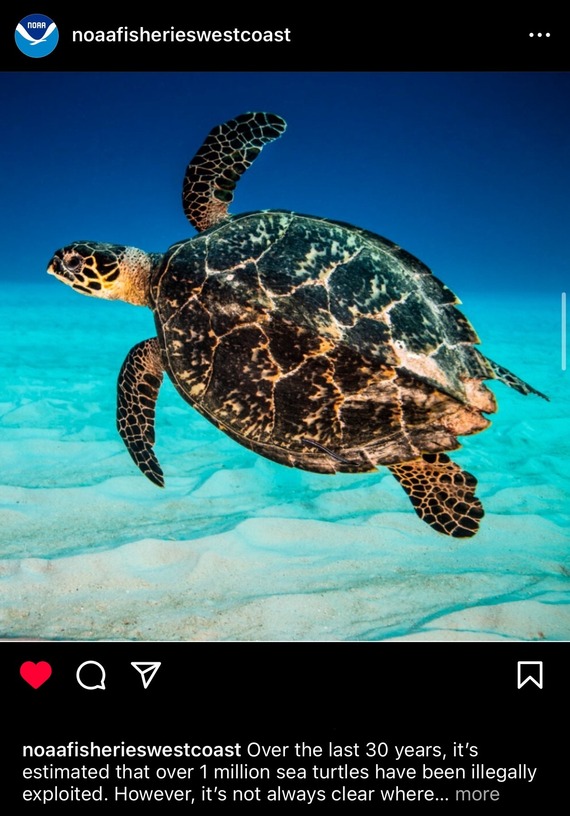 Share this post from our Instagram or Facebook
|
|
Thanks to a grant through NOAA, the special virtual Marine Naturalist Teachers' program is completely FREE for qualified teachers in King County to participate! The objective of this program is to provide a learning experience that enhances your knowledge and classroom lessons. The program highlights the ecology, current status and conservation efforts for the endangered Southern Resident killer whales and other local marine species as well as of the Salish Sea. Apply here!
|
July 1st - Supervisory Financial Management Specialist
Events
July 15: Educator Workshop: Summer Institute for Climate Change Education
Funding Opportunities
July 23 - Saltonstall-Kennedy Grant Competition
|
|
|
Please contact us with any questions regarding NOAA Fisheries West Coast Region media and news.

Michael Milstein, Public Affairs Officer Lead (971) 313-1466
Areas of Focus: Salmon recovery, west coast sustainable fisheries, endangered species recovery, marine mammal protection act, anadromous fish passage and reintroduction, fisheries science, protected species science, habitat conservation.
|

Lalena Amiotte, Tribal Relations Coordinator (360) 519-4222
Areas of Focus: West Coast Region tribal relations, training, and resources support, formal government-to-government consultation, General Counsel, Office of Law Enforcement, and Northwest and Southwest Fisheries Science Centers.
|

Alessandra Puig-Santana, Digital Community Coordinator
Areas of Focus: Social media management, content creation, science communication, newsletters.
|
 |
|
Tressa Arbow, Education & Outreach Coordinator
Areas of focus: Educator professional development, science education and communication, place-based learning, curriculum development, public outreach and engagement
|
 |
|
Nicholas Rahaim, Public Affairs Officer
Areas of focus: Media relations, news media, web stories, fisheries management, blue economy, fishery-marine mammal conflicts, fishing gear innovation, offshore wind energy development, multimedia storytelling, seafood supply chains.
|
|
|
Help Stranded Marine Mammals
To report stranded, injured, or dead marine mammals along the West Coast, stay 100 yards (300 feet) away to prevent injury and seal pup abandonment, and immediately call the West Coast Region Stranding Hotline at (866) 767-6114.
If you see a possible violation of a federal marine resource law, call the NOAA Enforcement Hotline at (800) 853-1964.
To report derelict fishing gear, use the no-fault reporting system online or call (855) 542-3935.
|
|
|
|
|