Reminder: Keep Your Distance to Protect Yourself, Your Boat, and Marine Animals!
Summertime along the New England and the Mid-Atlantic coastlines offers the potential for exhilarating marine wildlife viewing experiences, especially as whales and other marine animals follow bait fish and may be close to shore. Whether on the beach or on the water, if you see protected animals like whales, dolphins, seals, sea turtles, or Atlantic sturgeon, follow the tips below to keep the animals and your passengers safe.
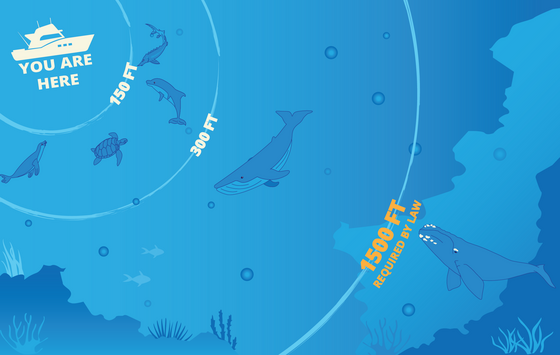
Give Space
-
North Atlantic right whales: 1500 feet or 5 football field lengths (required by law)
-
Other whales: 100 (at least) -600 feet (is best)
-
Seals, dolphins and sea turtles: 150 feet
-
Leaping sturgeon also require extra space to avoid injury to you and the fish
 Don’t Chase!
- If a whale approaches within 100 feet of your vessel, put your engine in neutral. Do not re-engage your engine until the whale is observed on the surface, outside of the 100-foot or 1500-foot (if it’s a right whale) zone.
- Don’t follow or chase marine animals
- Don’t cut through their path - you could separate moms and calves
Report
You can help save the life of a marine mammal (whale, dolphin, seal) or sea turtle in trouble by calling our New England/Mid-Atlantic hotline (866) 755-6622, radioing the Coast Guard, or contacting your closest authorized responder directly.
Photography and Video Tips
By law, don’t use drones within 1,500 feet of right whales. Maintain at least 1,000 feet from other marine mammals and sea turtles since the shadows and noise from drones can scare or bother them.
Know the Law
Marine mammals, sea turtles, and Atlantic sturgeon are protected by federal laws that prohibit people from harming or harassing them. If your behavior changes their behavior, that may be considered harassment.
For more information, please visit our web page.
|