|
Highlights
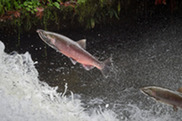
The cold water rivers of Western Washington hold some of the last, best freshwater habitat for salmon and steelhead in the lower 48 states. However, there are more than 4,000 culvert barriers blocking fish passage on the Olympic Peninsula. With $19 million in NOAA funds, nonprofit and tribal partners plan to remove 17 barriers blocking fish passage on critical spawning rivers originating in Olympic National Park, Washington. Contacts: Larissa Lee, Terill Hollweg.
|
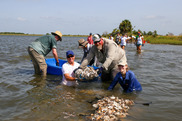
With $5 million in NOAA funds, Gulf Coast partners will expand efforts to restore oyster populations, protect vanishing land, and reconnect communities to their coastal heritage through oyster shell recycling. Overharvesting, human-caused disasters like the Deepwater Horizon oil spill, and sedimentation caused by powerful storms have reduced historic oyster populations in the Gulf by 85 percent or more. The decline of oysters threatens livelihoods and the health of coastal ecosystems where they are a keystone species. Contact: John Barco.
|
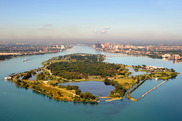
NOAA and our partners work through the Great Lakes Restoration Initiative to restore habitat in the Great Lakes region to support the fish, ecosystems, and communities that rely on them. Learn about a few key numbers that help illustrate the scope of our habitat restoration work in the region through this program. Contact: Julie Simmons.
|
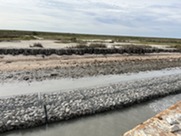
The Louisiana Trustees for the Deepwater Horizon oil spill restoration have created a multifaceted restoration project benefitting both bird and oyster habitat within Calcasieu Lake in Cameron Parish, Louisiana. Recently they completed the installation of 810 large wire mesh baskets filled with limestone rock along the northeastern edge of Rabbit Island to limit the impacts of erosion and storm surge. Contact: Mel Landry.
|
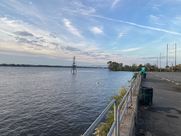
Recently, the Trustee Council for the Metal Bank Superfund Site in Philadelphia, Pennsylvania released a Draft Restoration Plan and Environmental Assessment. They are proposing to allocate restoration funds toward the implementation of environmental enhancements associated with the shoreline restoration component of the Tacony Boat Launch project. The Trustees are seeking public comment on the restoration alternatives. Public comment is open for 45 days until April 12, 2024. Contact: Rich Takacs.
|
|
|
Habitat Across NOAA

The Klamath River is making the most of recent precipitation to rapidly reshape itself by removing decades worth of sediment accumulated behind dams now slated for removal. With the reservoirs behind the dams now empty, the river is transporting the sediment downstream while it is still wet and mobile.
|
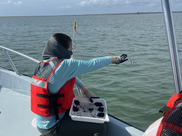
The Submerged Aquatic Vegetation Program at the Virginia Institute of Marine Science achieved a groundbreaking eelgrass habitat restoration in Burtons Bay, on Virginia's Eastern Shore, thanks to a $2.2M grant provided under the NOAA Bipartisan Infrastructure Law’s Coastal Zone Management Habitat Protection and Restoration Awards.
|
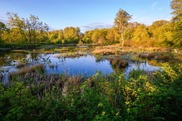
Five independent reviewers have found that NOAA Fisheries' “Nearshore Calculator” is based on the best available science. Our scientists developed the tool to assess the value of salmon habitat in Puget Sound. Learn more.
|
|
|
Announcements
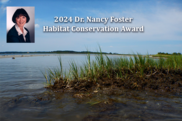
Do you know someone who has demonstrated exceptional achievement and dedication to marine, coastal, or riverine habitat conservation? Nominate them for the 2024 Dr. Nancy Foster Habitat Conservation Award to be presented at the Restore America’s Estuaries 2024 Coastal & Estuarine Summit in October. Nomination packages are due by June 1, 2024.
|
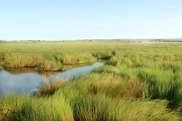
As players take to the courts, join our team as we cheer on healthy marsh habitat! During late March, we’ll showcase the importance of marshes and wetlands at center court as well as restoration projects that are helping these habitats rebound. Follow @NOAAHabitat. Tipoff is March 17!
|
|
|
|
|