|
Highlights
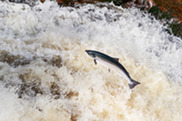
Up to $700,000 in NOAA funding is available for habitat restoration projects that directly benefit Atlantic salmon in the Gulf of Maine region. The Gulf of Maine distinct population segment of Atlantic salmon is listed as endangered under the Endangered Species Act and is one of ten NOAA Species in the Spotlight. Contact: Amanda Cousart.
|
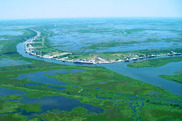
The Coastal Wetlands Planning, Protection, and Restoration Act Program has approved more than $4.3 million in funding for the NOAA-sponsored South Delacroix Marsh Creation Project. The project will restore more than 400 acres of marsh in Plaquemines Parish, Louisiana. Contact: Cecelia Linder.
|
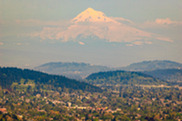
In Portland, Oregon, numerous species of salmon and trout must swim through highly-modified urban waterways to reach their spawning grounds. To ensure their safe passage, the Clackamas Partnership is removing barriers and restoring habitat at 10 sites around the Portland Metro area. NOAA’s Office of Habitat Conservation awarded $3.8 million to the Partnership under the Bipartisan Infrastructure Law and Inflation Reduction Act. This work will benefit threatened species, including the Upper Willamette River Chinook and steelhead. Contact: Lauren Senkyr.
|
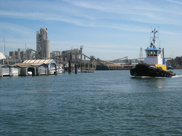
A new storymap created by NOAA and the Elliott Bay Trustee Council provides a visual journey of the Lower Duwamish River in Washington and the habitat restoration work that is underway in this important urban river. The storymap highlights the restoration work that is helping the river's natural resources and surrounding communities recover and thrive. Contacts: Larissa Lee, Terill Hollweg.
|
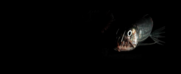
The Open Ocean Trustees of the Deepwater Horizon oil spill restoration program have approved a new Monitoring and Adaptive Management Activity aiming to measure how different marine creatures and habitats are vertically connected. It will collect and analyze data over three years of field work to assess benefits to fish and water column invertebrates, marine mammals, and sea turtles that can be attributed to Mesophotic and Deep Benthic Community studies with funding from the Deepwater Horizon oil spill. Contact: Laurie Rounds.
|
|
|
Habitat Across NOAA
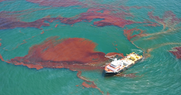
The NOAA Institutional Repository has added a new collection to provide easier access to NOAA’s assessment and restoration related documents pertaining to the 2010 Deepwater Horizon oil spill. It contains NOAA-authored publications, peer-reviewed articles, tech memos, and studies documenting impacts from the DWH oil spill, as well as NOAA work focused on identifying and conducting work to advance science needs to either fill data gaps needed to better target restoration or to advance our ability to monitor and evaluate progress toward recovery of NOAA trust resources.
|
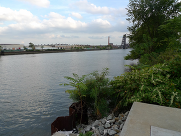
In 2023, NOAA and partners helped to recover over $92.8 million from polluters to restore seven waterways in six states following oil spill and industrial pollution incidents through NOAA’s Damage Assessment, Remediation, and Restoration Program. These restoration efforts will benefit fish, wildlife, and disadvantaged communities disproportionately impacted by pollution.
|
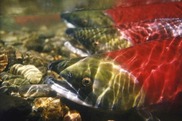
NOAA recently announced plans for $27 million to recover threatened and endangered Pacific salmon in the face of climate change. These funds are made possible by the Inflation Reduction Act. This investment in science will support informed management actions as a component of NOAA’s comprehensive strategy for Pacific salmon recovery. NOAA’s strategy outlines how investment in science enhances efforts in restoring and connecting Pacific salmon habitats, ensuring water quality and quantity, managing sustainable fisheries and continuing to improve fish hatcheries.
|
|
|
Announcements
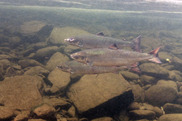
Join us Monday, March 4 at 3:00 PM EST for a public webinar to learn about NOAA's Atlantic Salmon Habitat Restoration Partnership Grant funding opportunity. Up to $700,000 in NOAA funding is available for habitat restoration projects that directly benefit Atlantic salmon in the Gulf of Maine region. Click link to register.
|
|
|
|
|