|
Highlights
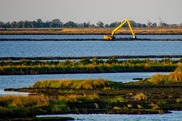
NOAA has $45 million in funding available for projects to advance the coastal habitat restoration and climate resilience priorities of tribes and underserved communities. This funding is through the Biden-Harris Administration’s Bipartisan Infrastructure Law and Inflation Reduction Act. Of the $45 million in funding, $20 million is specifically available to U.S. federally recognized tribes, Alaska Native Corporations, and organizations that represent tribes through formal legal agreements, through direct awards or subawards. The remaining $25 million is available to all eligible applicants. Applicant webinars will take place September 20 and 26. Contact: Jessica Edwards.
|
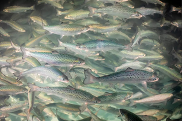
NOAA Fisheries is awarding nearly $1.2 million in funding for four partners to continue projects that restore habitat for Atlantic salmon in the Gulf of Maine region. The Gulf of Maine distinct population segment of Atlantic salmon is listed as endangered under the Endangered Species Act and is one of nine NOAA Species in the Spotlight. Contact: Jessica Edwards.
|
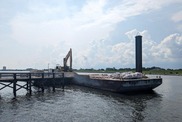
With $4.5 million dollars in funding from NOAA under the Bipartisan Infrastructure Law and Inflation Reduction Act, Jefferson Parish is building the first living shoreline to protect a federal levee system along with restoring wetlands. This new project strives to address challenges from sea level rise and storm flooding through construction of a mile-long living shoreline in Bucktown, Louisiana. Contact: Jennifer Smith.
|
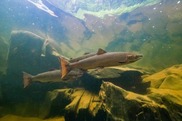
Our long-term partners—the Atlantic Salmon Federation and the Penobscot Nation—received more than $10.5 million dollars in funding from NOAA under the Bipartisan Infrastructure Law and Inflation Reduction Act to connect Atlantic salmon to cold water spawning grounds and revive the once-vital human connections to the river. These projects will further improve access to 450 miles of stream habitat and more than 13,000 acres of lakes and ponds. Contact: Matt Bernier.
|
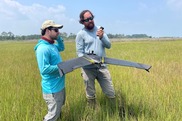
The Goodwin Islands, which are owned by the College of William and Mary and are part of the Chesapeake Bay National Estuarine Research Reserve, are at the mouth of the York River in Virginia. Here, scientists from several Middle Peninsula Habitat Focus Area partners study how submerged aquatic vegetation and coastal marshes respond to environmental change. Contact: Kim Couranz.
|
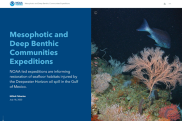
In 2022, NOAA and collaborators embarked on eight scientific expeditions in the Gulf of Mexico’s deeper waters in the vicinity of the Deepwater Horizon oil spill. The data gathered during these expeditions is advancing restoration in some of the Gulf’s most inaccessible yet important habitats. Explore the StoryMap to learn more about this innovative work. Contact: Dani Weissman.
|
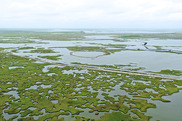
The Long Point Bayou Project, near Lake Calcasieu, Louisiana, will create approximately 400 acres of marsh habitat for fish, birds, and invertebrates like shrimp upon completion. In 2006, the area was heavily impacted by more than 2 million gallons of highly toxic “slop oil” that spilled into the Calcasieu River in one of the United States’ largest and most toxic oil spills. The oil killed marsh plants, and the shoreline began to erode within 2 weeks of the event. It also polluted sediments and killed many fish and other organisms. Sediment pumping from the Calcasieu Shipping Channel began in August 2023, and is now being used to build new marsh platforms. Contact: John Barco.
|
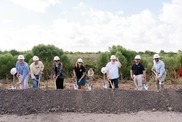
Louisiana’s Coastal Protection and Restoration Authority broke ground in August on the Mid-Barataria Sediment Diversion project at Mississippi River Mile 60.7 in Plaquemines Parish, Louisiana. The 2010 Deepwater Horizon oil spill killed swaths of wetland plants that help stabilize coastal areas. Without this shoreline protection, the existing trend of coastal land loss was accelerated by the spill, especially in the state’s Barataria Basin estuary. The sediment diversion project will reconnect the Mississippi River to Louisiana's Barataria Basin estuary to restore 13,000 acres of wetland habitat injured in the spill, and contribute to the broader restoration of its ecosystem. Contact: Mel Landry.
|
|
|
Habitat Across NOAA
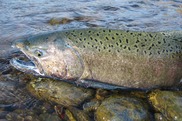
To support West Coast salmon and steelhead populations, NOAA Fisheries has recommended $106 million in funding for 16 new and continuing programs and projects through our Pacific Coastal Salmon Recovery Fund grant program. Conservation efforts will take place in California, Oregon, Washington, Idaho, and Alaska. The funds, including $34.4 million under the Bipartisan Infrastructure Law and $7.5 million under the Inflation Reduction Act, will support the recovery, conservation, and resilience of Pacific salmon and steelhead.
|
|
|
Announcements
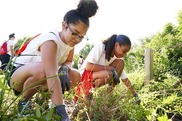
Celebrate estuary habitat with NOAA and partners Restore America's Estuaries, National Estuarine Research Reserve Association, and the Association of National Estuary Programs to help showcase the importance of estuaries. #EstuariesWeek
|
BIL/IRA Habitat Restoration Grant Application Due Dates
|
|
|
|