|
Highlights
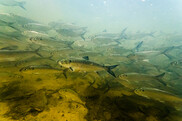
When NOAA and partners removed Bloede Dam from the Patapsco River, it opened up miles of free-flowing habitat to migratory species. A recent study has shown river herring are now using the habitat upstream of the former dam, highlighting the importance of dam removals in NOAA’s work to support migratory fish. Contact: Mathias Collins.
|

This year, NOAA Fisheries is funding four projects through the coastal National Fish Habitat Partnerships. These projects will support fish habitat restoration through various approaches—coral outplanting onto reefs, streambank revegetation, and seagrass planting. Project partners will actively engage local communities, including anglers, who make critical contributions to habitat conservation nationwide. Contact: Alex Atkinson.
|
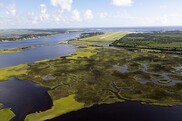
The South Atlantic region of the United States is home to approximately 1 million acres of salt marsh, but these important habitats and adjacent communities are at risk due to climate change and other threats. The South Atlantic Salt Marsh Initiative has released a plan recommending key strategies and actions for conserving salt marshes for future generations. Contact: Howard Schnabolk.
|
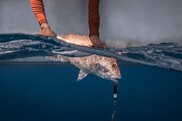
The Return ‘Em Right project—an angler-driven initiative that tackles release mortality from barotrauma in Gulf reef fish—is ready to support anglers flocking to the Gulf of Mexico’s waters for the opening of red snapper seasons as summer begins. It provides eligible anglers with free release gear, shipped to their door. Eligible anglers include those who fish recreationally offshore in the Gulf of Mexico, and who have completed a short training. This project supports the Deepwater Horizon oil spill restoration effort. Contact: Julia Goss.
|
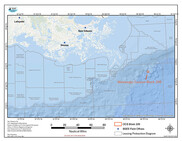
A recent settlement, valued at $3.1 million, was finalized between NOAA and LLOG Exploration Offshore, LLC to resolve their liability for natural resource injuries resulting from a pipeline spill into the deep waters of the Gulf of Mexico off the coast of Louisiana. Following the settlement, NOAA will publish a plan for public comment that will identify potential restoration projects to offset the injuries sustained from the spill. Settlement funds will be used for restoration planning and implementation activities. Contact: John Barco.
|
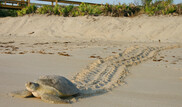
The Deepwater Horizon restoration Open Ocean Trustee Implementation Group completed acquisition of a 1.07-acre parcel in April and a 0.8-acre parcel in January 2023 in eastern Florida. These beachfront parcels will protect habitat for beach nesting sea turtles in perpetuity as part of the Archie Carr National Wildlife Refuge. The acquisition is part of the Long-Term Nesting Beach Habitat Protection for Sea Turtles project. Contact: Christy Fellas.
|
|
|
Habitat Across NOAA
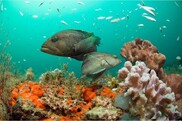
NOAA has received historic funding under the Inflation Reduction Act: $3.3 billion. Of that funding, NOAA Fisheries will receive an unprecedented investment to strengthen the agency’s core mission to provide science-based management and conservation of the nation’s marine resources as we confront climate change—including for habitat restoration. Learn more about how NOAA Fisheries will prioritize these resources.
|
Celebrate the 50th anniversary of the Endangered Species Act this year by learning more about NOAA's work to conserve endangered species and their habitats. Under the Act, NOAA Fisheries is responsible for the protection, conservation, and recovery of more than 160 endangered and threatened marine and anadromous species.
|

NOAA Fisheries researchers set up a study to document the recovery of coho and Chinook salmon returning to the Cedar River Municipal Watershed in western Washington. It was their first time in the watershed after a 100-year absence following the restoration of a migratory corridor. This groundbreaking study, the longest and one of the largest such efforts in the Pacific Northwest, offers a lesson to those in the restoration community.
|
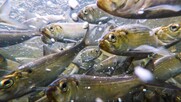
NOAA Fisheries has developed an Atlantic Coast habitat conservation plan for river herring. It addresses threats, data gaps, and recommendations to benefit these species at a coastwide level. The plan includes a Restoration Project Showcase. These successful project examples include techniques used, funding sources, and “lessons learned” that can inform future restoration efforts.
|
|
|
|
|