|
Highlights
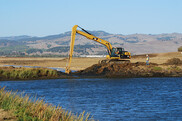
NOAA is recommending more than $265 million in funding for 38 transformational habitat restoration and coastal resilience projects this year, as well as an additional $20.4 million in future year funding, under the Biden-Harris Administration’s Bipartisan Infrastructure Law. This is a historic investment in strengthening the climate resilience of our nation’s coastal ecosystems and communities. Contact: Jessica Edwards.
|
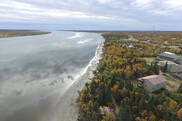
NOAA is recommending nearly $25 million in funding for 35 new projects that will advance the coastal habitat restoration priorities of underserved communities. The investment, provided through the Bipartisan Infrastructure Law, will support community-driven habitat restoration and help build the capacity of underserved communities to more fully participate in restoration activities. Contact: Jessica Edwards.
|
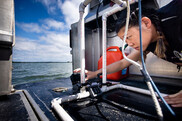
Every 2 years, the NOAA Chesapeake Bay Office shares highlights from its work with members of Congress in the office’s Biennial Report to Congress. The most recent edition was recently released and includes snapshots of NOAA’s work in fisheries science, observations, habitat analysis, education, climate change, and more. Contact: Kim Couranz.
|
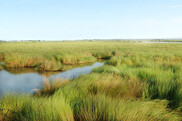
NOAA’s largest wetland restoration project ever is ahead of schedule, and is on track to be completed months earlier than anticipated. When finished, the Upper Barataria Marsh Creation project in coastal Louisiana will create habitat, reduce erosion, and protect communities. Construction is slated for completion by July 2023. Contact: Mel Landry.
|
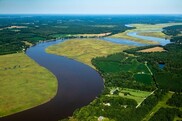
Visit the Middle Peninsula Habitat Focus Area in Virginia through our new video to learn about the challenges the area faces from climate change—and the projects NOAA is working on with partners to enhance coastal resilience. Contact: Andrew Larkin.
|
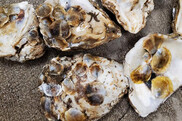
NOAA scientists teamed up with researchers from the U.S. Naval Academy and other partners to see whether oyster larvae can be directly planted onto restoration reefs—rather than onto oyster shells and then onto restoration reefs. They found that in certain situations, oyster larvae can be set directly onto reefs. More remains to be learned about how such efforts could be scaled up. Contact: Stephanie Westby. |
|
 |
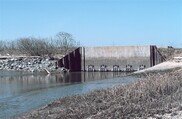
The Army Creek Superfund Site Trustee Council released an amended draft restoration plan. Public comment on the proposed restoration project is open through May 20, 2023. The original project to restore the wetlands at the Lower Army Creek is no longer feasible. Trustees are now proposing to restore tidal exchange to wetlands at Pickering Beach marsh near Dover, Delaware. Contact: Rich Takacs. |
|
 |
|
|
Habitat Across NOAA
To celebrate Earth Day, see how NOAA Fisheries’ scientists are studying and tracking changes in our environment to better understand and respond to climate change all week long. Our goal has been—and remains—safeguarding the nation’s valuable marine resources (including habitats) and the many people, businesses, and communities that depend on them. Learn more!
|
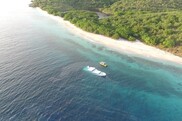
What happens when boats run aground on a coral reef or a natural disaster strikes these habitats? Coral reefs can be damaged by both human activities and natural events. Since 2006, NOAA-led emergency response teams have reattached over 60,000 corals at 142 sites in Puerto Rico and the U.S. Virgin Islands.
|
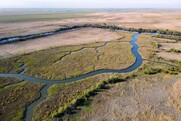
The problem for salmon is that much of the natural habitat they historically relied on is gone. This new video explores how NOAA has been working with community partners for decades to bring more of that habitat back, and our research and monitoring are proving it works. With funding from NOAA’s Pacific Coastal Salmon Recovery Fund and other sources, states and tribes undertake thousands of restoration projects every year.
|
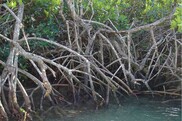
Research is underway on blue carbon in coastal marshes, mangroves, and seagrasses. This new podcast explores the efficacy of blue carbon sequestration, and the important role of dredge material in restoring coastal ecosystems. The episode features Jenny Davis, Research Ecologist with NOAA’s National Centers for Coastal Ocean Science, among others.
|
|
|
Announcements
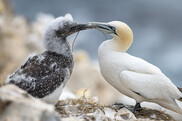
To benefit and restore populations of seabirds affected by the 2010 Deepwater Horizon oil spill, the Open Ocean Trustees have released their third restoration plan. The proposed plan features 11 projects and a budget of $26 million for birds and habitats across a wide swath of the northern hemisphere, including eastern Canada and parts of the Caribbean. The full plan and factsheets about the proposed projects are available on Gulf Spill Restoration. Comment is open through April 28, 2023.
|
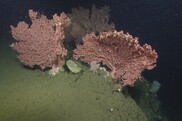
NOAA Ocean Exploration and partners have kicked-off a telepresence-enabled expedition on NOAA Ship Okeanos Explorer off the California, Oregon, and Washington coasts. From April 15 to 26, remotely operated vehicle dives are exploring deep-sea coral and sponge habitats, potential hydrothermal vent and fracture zones, and the water column. Dives will be livestreamed via the NOAA Ocean Exploration website and YouTube channel.
|
|
|
|
|