|
Highlights
The sharp decline of the sunflower sea star has prompted NOAA Fisheries to propose listing the species as threatened under the Endangered Species Act. From 2013-17, an outbreak of Sea Star Wasting Syndrome killed more than 90 percent of sunflower sea stars. While Sea Star Wasting Syndrome is not well understood, it appears to be exacerbated by rapid changes in water temperature, warmer ocean temperatures, and other physical stressors. Read more
|
Fiero Marine Life Center is a West Coast Marine Mammal Stranding Network Partner who monitors and recovers protected marine mammal species in Clallam County, Washington. Responding to stranding events requires trained professionals with the right equipment, knowledge, and experience to ensure the safety of the animal and the responders. Fiero’s Executive Director, Melissa Williams, says “Our favorite success stories are not about any particular animal, but about the humans in our community.” Read more
|
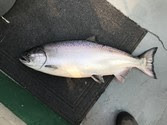
Forecasts of fall Chinook returns, especially to the Sacramento and Klamath Rivers were so low that NOAA Fisheries has halted salmon fishing for the last two months of the salmon season that ends this May. Inseason actions include recreational and commercial salmon fisheries south of Cape Falcon off the coasts of California and southern Oregon. Read more
State fish and wildlife managers are now sharing the available alternatives for the remainder of the year’s salmon season with the public and the fishing community for public comment.
|
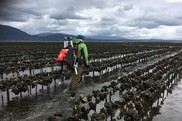
NOAA Fisheries’ West Coast Region is pleased to share our Public Scoping Report which summarizes the public comment received on the Notice of Intent to prepare a Programmatic Environmental Impact Statement for the proposed Southern California Aquaculture Opportunity Areas. This Public Scoping Report provides a high-level overview of the nature and themes of the comments received. Read more
|
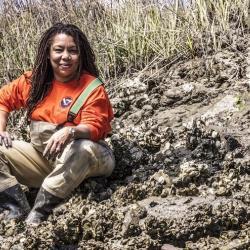
March is Women's History Month. To celebrate, we're showcasing some of our colleagues who contribute to NOAA Fisheries' core missions every day. From Research Zoologist to Communications Intern, learn more about their career journeys, day-to-day jobs, and what Women's History Month means to them. Read more
|
|
|
From Our Science Centers
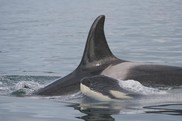
New genome sequencing shows that Southern Residents are highly inbred. Inbreeding can cut the lifespan of whales nearly in half– reducing their survival and number of offspring, and making them more vulnerable to other threats. Without a genetic influx from other populations or some other major improvement in environmental conditions, inbreeding is likely to continue the decline. Read more
|
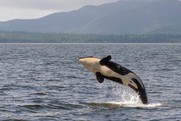
A new analysis shows differences in how Southern and Northern Resident killer whales hunt for food. Researchers found female Northern Resident whales did most of the foraging, while males took on the majority of foraging among the Southern Residents. Why do these differences exist? Researchers are still trying to find out for sure, but suggest that it may be due to the different environmental and social pressures the two populations face. Read more
|
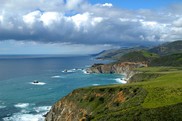
Robust climate indices like the Pacific Decadal Oscillation and Oceanic Niño Index predicted cold and productive ocean conditions for salmon and other species throughout 2022. However, weakened upwelling and local intrusions of warmer water resulted in poor productivity and warmer-than-normal coastal conditions in the latter half of the year. Read more
|
 |
|
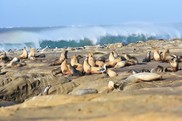
California sea lions are outstanding ecosystem indicators because they consume a variety of forage species. Changes in their diet over time can be linked to changing ocean conditions that affect the availability of their prey. We've been studying their diet for 40 years by analyzing their scat (aka poop!). Read more |
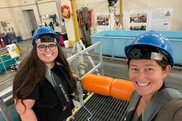
"When I was a child I used to romanticize the era of Jacques Cousteau. The thought of conducting research so effortlessly from a sail boat filled my head with lofty ideas," says NOAA Fisheries scientist, Cory Hom-Weaver. "Now that I’m in the field of marine mammal acoustics, I realize that it takes a village to prepare for field work." NOAA's Southwest Acoustic Ecology Team is preparing for a week in the field off of the Central California Coast to collect recordings of whales and dolphins. Read more
|
Join us online for free lectures from NOAA Fisheries Service scientists, partners, and colleagues who discuss warming waters, climate anxiety, salmon behavior, Pacific sleeper sharks, marine protected areas, and more! Join us on Thursdays at 11am Pacific. Read more
|
|
|
Partner News
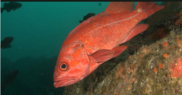
Did you know a large-scale effort of volunteer scuba divers is underway to measure young of year rockfish in Puget Sound? Tracking young-of-the-year (YOY) rockfish, meaning fish that have not yet reached one year of age, helps us understand their preferred habitats and population characteristics. Yet monitoring rockfish populations across their extensive range is too challenging for NOAA to accomplish on our own. Data from citizen scientist scuba divers will help us recover endangered rockfish. A new video highlights the effort, written and produced by Bob Friel and SeaDoc Society. Watch the Video
|
|
|
|
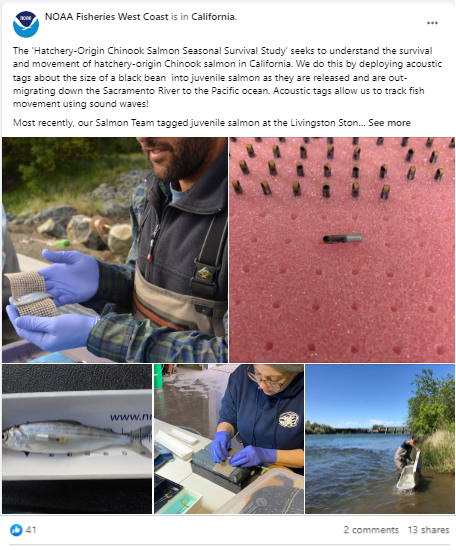
The 'Hatchery-Origin Chinook Salmon Seasonal Survival Study' seeks to understand the survival and movement of hatchery-origin Chinook salmon in California. We do this by deploying acoustic tags about the size of a black bean into juvenile salmon as they are released and are out-migrating down the Sacramento River to the Pacific ocean. Acoustic tags allow us to track fish movement using sound waves!...Find this post on our Facebook or Instagram
|
|
NOAA Planet Stewards is providing up to $5,000 in federal funding support for formal and informal educators to carry out hands-on stewardship projects with K-12 students, as well as the general public. Stewardship projects must make a substantive and quantitatively measurable impact on an environmental issue related to the educator’s community.
Projects should focus on the conservation, restoration, and/or protection of human communities and/or natural resources from environmental issues in one of the following four focus areas: marine debris, habitat conservation and/or restoration, carbon footprint reduction, carbon sequestration.
All stewardship project funding applications and supporting documents are due by June 4, 2023 at midnight PT. Learn more
|
March 10 Regulations to Authorize Deep-set Buoy Gear under the Fishery Management Plan for U.S. West Coast Fisheries for Highly Migratory Species
March 31 Fisheries Off West Coast States: West Coast Salmon Fisheries; 2023 Specifications and Management Measures
May 22 Amendment 20 to the Coastal Pelagic Species Fishery Management Plan
Events
April 20 Marine Debris Science Update Webinar
April 29 Superpod: Saving the Endangered Orcas of the Pacific Northwest Event at MOHAI
May 11 National Marine Sanctuaries, The Ocean as a Carbon Sponge: Why Blue Carbon is Important
July 11 Financial Assistance Workshop for Grant Applicants and Recipients—Seattle
Funding
April 5 National Sea Grant Special Projects F: FY 2023 Aquaculture Technologies and Education Travel Grants
April 3 Bycatch Reduction Engineering Program Funding
April 12 National Sea Grant Special Projects G: FY 2023 Aquaculture Economics and Markets Collaborative
April 12 2023 National Coastal Resilience Fund
April 28 Port Infrastructure Development Program Funding
May 2 National Sea Grant Special Projects K: FY 2023 Sea Grant Contaminants of Emerging Concern
May 8 Hatch’s Aquaculture, Blue Carbon, and Marine Biotech Accelerator 5.0 Program
May 9 National Sea Grant Special Projects J: FY 2023 Community Flooding Social Science Liaisons
June 4 NOAA Planet Stewards Supporting Stewardship
|
|
|
Please contact us with any questions regarding NOAA Fisheries West Coast Region media and news.
 |
|
Michael Milstein, Public Affairs Officer Lead (971) 313-1466
Areas of Focus: Salmon recovery, west coast sustainable fisheries, endangered species recovery, marine mammal protection act, anadromous fish passage and reintroduction, fisheries science, protected species science, habitat conservation.
|
 |
|
Matt Burks, Public Affairs Officer (503) 730-8439
Areas of Focus: Aquaculture opportunity areas, marine mammal stranding network, whale entanglement, salmon recovery, endangered species recovery, marine mammal protection act, west coast sustainable fisheries, habitat conservation.
|
 |
|
Julie Weeder, Acting Tribal Coordinator (707) 702-1584
Areas of Focus: West Coast Region tribal relations, training, and resources support, formal government-to-government consultation, General Counsel, Office of Law Enforcement, and Northwest and Southwest Fisheries Science Centers.
|
 |
|
Alicia Keefe, Education and Outreach Coordinator (206) 526-4447
Areas of Focus: Supports education and outreach efforts for California, Idaho, Oregon, and Washington; represents the region at public and school events; and develops curriculum, activities, and partnerships in support of marine stewardship.
|
|
|
Help Stranded Marine Mammals
To report stranded, injured, or dead marine mammals along the West Coast, stay 100 yards (300 feet) away to prevent injury and seal pup abandonment, and immediately call the West Coast Region Stranding Hotline at (866) 767-6114.
If you see a possible violation of a federal marine resource law, call the NOAA Enforcement Hotline at (800) 853-1964.
To report derelict fishing gear, use the no-fault reporting system online or call (855) 542-3935.
|
|
|
|
|