|
Highlights
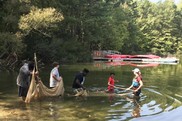
The NOAA Chesapeake Bay Office has released information on two FY22 Chesapeake Bay-Watershed Education and Training funding opportunities. New awards funded under these Notices of Funding Opportunity will help school districts deliver meaningful watershed educational experiences to students, help school districts increase their capacity to facilitate environmental education, and support statewide environmental literacy initiatives. NOAA supports environmental education because students who take part in inquiry-based, hands-on learning about their environment are better equipped to care for our ecosystem now and in the future. Contact: Elise Trelegan.
|
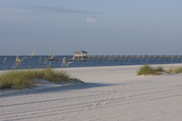
Federal and state agencies are restoring the Gulf after the largest oil spill in the United States. $2.4 billion in settlement funds were committed to more than 200 habitat and resource restoration efforts through 2020. NOAA has led or partnered with other agencies on more than 60 of them. Contact: Melissa Carle.
|
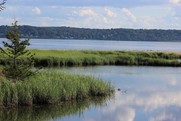
NOAA Fisheries and partners assessed the vulnerability of coastal habitats in the Northeast United States to climate change and the findings were recently published in PLOS ONE scientific journal. We found salt marshes, shellfish reefs, deep-sea corals, seagrasses, kelp, and intertidal habitats to be among the most vulnerable. The coastal habitats with the highest climate vulnerability are also those most often at risk from degradation. The assessment highlights the importance of prioritizing habitat protection and restoration to support resilience and adaptability to future conditions under climate change. Contact: Kara Meckley.
|
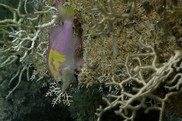
In Puerto Rico, NOAA scientists and partners are conducting a study with the local fishing community to better understand queen snapper and habitat interactions. Researchers found that the queen snapper can live to be 45-years-old in Caribbean waters. That’s much older than their original estimate of 8 years. Researchers also observed the fish interacting with their deep-sea environment. Contact: Dani Weissman.
|
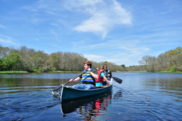
NOAA and partners have supported communities through restoration at two urban Superfund sites in Massachusetts and Washington. To help the areas’ resources recover, we’re increasing access to parks, and getting locals involved in habitat restoration through training and job opportunities. Contact: Jeff P. Smith.
|
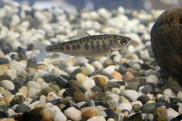
28 populations of salmon and steelhead are listed as threatened or endangered in Washington, Oregon, Idaho, and California—largely due to habitat loss and other factors. In our work restoring polluted waterways, we’ve rebuilt or conserved thousands of acres of important salmon habitat, and more! Learn more, by the numbers. Contacts: Megan Callahan-Grant, David White.
|
|
|
Habitat Across NOAA
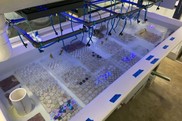
NOAA scientists partnered with the University of Miami to build a coral cultivation and research facility. The new saltwater systems help scientists understand what makes corals resilient. In just 6 months, we are already rearing thousands of recruits from seven different coral species.
|
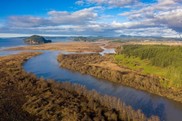
NOAA Fisheries developed and introduced the Conservation Calculator last year as a science-based tool to assess the impacts of shoreline development on nearshore habitat. One way to do that is by obtaining credits that represent shares of a restoration project, which could be a conservation bank. The Calculator ensures that the restored habitat eventually provides the same ecological benefits of the habitat that was lost.
|
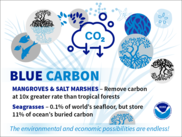
Our oceans and coasts provide a natural way of reducing the impact of greenhouse gases on our atmosphere through the sequestration (or taking in) of carbon. We call this “blue carbon.” Multiple NOAA-funded research and monitoring efforts have focused on blue carbon storage opportunities, and the benefits that could come from restoring coastal habitats. Read fast facts about blue carbon.
|
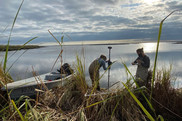
NOAA and the National Fish and Wildlife Foundation recently announced $39.5 million in new grants from the National Coastal Resilience Fund that will support coastal resilience projects in 28 states and U.S. territories. The 49 grants announced will generate more than $58.3 million in matching contributions for a total conservation impact of nearly $97.8 million. The Fund increases and strengthens natural infrastructure to protect coastal communities while also enhancing habitats for fish and wildlife.
|
|
|
|
|