|
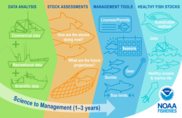
2022 Fisheries Stock Assessment Schedule is Out
The Milford Method: NOAA Fisheries’ Role in Shellfish Aquaculture
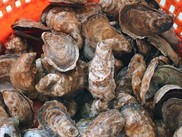
Did you know that much of the science behind modern shellfish aquaculture was developed at a small NOAA Fisheries lab in coastal Connecticut? The Milford Lab, located on Long Island Sound, has a rich and illustrious history rooted in our nation’s development of commercial aquaculture. The laboratory was established in the 1920s as a modest research outpost by the Bureau of Commercial Fisheries, the precursor agency to today’s NOAA Fisheries. Connecticut’s budding oyster industry advocated for establishing the lab, and it was completed in 1931. In celebration of our 150th Anniversary, we share the unsung heroes, key places and special events that have helped shape the legacy of the Northeast Fisheries Science Center. Speaking of our anniversary, make sure you check out the latest NOAA Fisheries science heroes highlighted in our science center scrapbook page.
|
North Atlantic Right Whales Use Gulf of St. Lawrence as Seasonal Habitat
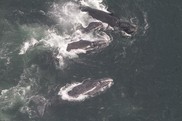
A new study confirms Canada’s Gulf of St. Lawrence is an important seasonal habitat for endangered North Atlantic right whales. Researchers have identified 187 individual North Atlantic right whales—about 40 percent of the catalogued population—in Canada’s Gulf of St. Lawrence during the summer. They used photographs of North Atlantic right whales collected during surveys conducted between 2015 and 2019. Many of the right whales remain in the area through the summer and autumn, feeding and socializing primarily in southern parts of the Gulf. Almost all of these whales return every year—a pattern not seen elsewhere—and stay for up to 5 months.
|
'Tis the Season for Holiday Craft Fun!

Enjoy these downloadable and printable paper snowflake templates that celebrate a few of our Woods Hole Science Aquarium’s residents. Two of our designs have 3D design elements to really make them pop! Decorate your walls, windows, ceiling, holiday tree, and even your holiday cakes with these four designs: French angelfish, harbor seal, thorny skate, and Atlantic wolffish. Want to create your own snowflake? No worries, we’ve provided a blank template for you to create your own. If you make a snowflake, we’d love to see it. Take a photo and post it on social media using the hashtag #WHSASnowflakes.
|
Northeast Aquaculture Science Collaborations to Follow in 2022
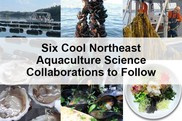
With increasing demand for seafood, aquaculture can be a sustainable food source with many social, environmental, and economic benefits. NOAA aquaculture research in the Northeast focuses on farming finfish, shellfish, and sea vegetables. Marine aquaculture is a resource-efficient method of increasing and diversifying U.S. seafood production. Currently, U.S. aquaculture represents 21 percent of the total national seafood production by value. Aquaculture is also a powerful tool that supports species and habitat restoration. Our scientists at the Northeast Fisheries Science Center work with partners around the globe to provide essential information for the public, industry, and policymakers. Here are six aquaculture collaborations to keep your eye on in 2022.
|
Have You Ever Seen a Paper Nautilus?
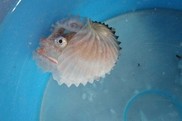
One of the many memorable experiences aboard our fisheries surveys is to witness first hand some of the incredible and eye-catching marine life at sea. In this blog biological science technician Christine Kircum shares a tale about a paper nautilus and other sightings aboard the NOAA Ship Henry B. Bigelow for Leg 3 of the fall bottom trawl survey. Our bottom-trawl survey monitors the region’s fishery resources, and is the longest running of its kind in the world. Data collected are used to monitor the distribution and relative abundance of fish and invertebrate species on the continental shelf and upper slope of the Northwest Atlantic Ocean.
|
2021 Northeast Fall Ecosystem Monitoring Cruise Completed
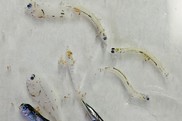
The 2021 Northeast fall ecosystem monitoring (EcoMon) survey aboard NOAA Ship Pisces completed sampling at 57 percent of planned stations. The survey achieved near-complete coverage from north of Cape Hatteras, North Carolina, to Cape Cod, Massachusetts. The cruise was completed in 11 days, beginning October 15 and ending October 26. Together, the core measurements conducted by our EcoMon cruises help researchers understand and predict changes in the Northeast shelf ecosystem and its fisheries. Researchers are scheduled to sail on the next EcoMon survey in the spring of 2022.
|
#NOAALive4Kids with Vince Saba on Climate Change
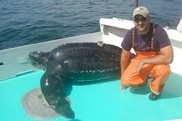
Tune in on December 14 at 4 p.m. ET for the next NOAA Live! Webinar “Turning Up the Heat: Fish and Sea Turtles in a Warming World” with Vincent Saba, NOAA's Northeast Fisheries Science Center in Woods Hole, MA and NOAA's Geophysical Fluid Dynamics Laboratory at Princeton University in Princeton, New Jersey. From microscopic plants to large whales, climate change is affecting all ocean life. There are many ways climate change can affect ocean ecosystems but during this webinar, we will investigate the effects of warming temperatures on marine fish and sea turtles. Marine fish spend all of their life in the water but did you know that sea turtles must lay their eggs on beaches? We'll explore how our warming planet affects fish and sea turtles in very different ways.
|
About the Incidental Take Program
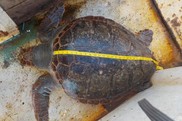
Our Incidental Take Program ensures that fishery observers collect data needed to reduce protected species bycatch in commercial fisheries. An incidental take occurs when an animal protected under the federal Marine Mammal Protection Act, Endangered Species Act, or Migratory Bird Treaty Act is unintentionally captured, live or dead, during fishing operations. If an observer is onboard when this relatively rare event occurs, the information they obtain informs management decisions and helps researchers learn more about each species. Observer-collected data is an important addition to data obtained from live-captured and stranded animals. Our observers are trained to identify and sample protected species in accordance with our research permits.
|
James E. Hanks, Advocate for Aquaculture Research and Mentorship
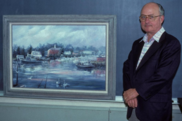
Throughout its history, our Milford Laboratory has been known for advanced aquaculture research, strong connections to commercial aquaculture operations, and support for up-and-coming young researchers. These seeds were planted by the lab’s first director, Victor Loosanoff. Dr. James E. Hanks, the second director, took the lab to a higher level over his long career as a federal scientist. Hanks is remembered as a supportive mentor, a strong advocate for shellfish and environmental research, for his significant contributions toward promoting aquaculture. He was also known for encouraging innovation wherever he saw it.
|
From the Director: Happy Holidays
I want to say thank you to everyone who contributed to living marine resource science and management in the Northeast region in 2021. This year has been extremely challenging. Despite this, working together, and through some difficult situations, we have largely gotten our work done: producing science advice in support of management—surveys, data collection, experiments, analyses, assessments, publications, and much more. This month marks the 48th Anniversary of the Endangered Species Act—a good reminder that the NOAA Fisheries mission includes the conservation and protection of a range of endangered and threatened species. NOAA Fisheries has jurisdiction over 165 endangered and threatened marine species. In the Northeast region these species are Atlantic salmon, Atlantic sturgeon, shortnose sturgeon, oceanic whitetip shark, giant manta ray, North Atlantic right whale, blue whale, fin whale, sei whale, sperm whale, green turtle, kemp’s ridley turtle, leatherback turtle, and loggerhead turtle. On behalf of everyone at the Northeast Fisheries Science Center, I would like to wish you and yours a happy and healthy holiday season. Take care and enjoy. Jon Hare, Center Director
|
|
|
Upcoming Events
Dec 6, 10 American plaice research track working group meeting #5
Dec 7 Haddock research track working group meeting #15
Dec 10 NOAA’s Marine Debris student art contest entries deadline
Dec 10 Bluefish research track working group meeting #5
Dec 10 Atlantic cod research track working group meeting #2
Dec 14 Butterfish research track working group meeting #15
Dec 14 NOAA Sanctuaries’ Dr. Nancy Foster Scholarship Program applications due
Dec 16-17 Illex research track working group meeting #8
Dec 21 Spiny dogfish research track working group meeting #5
Dec 31 Atlantic Salmon Ecosystems Forum online registration deadline
Jan 12-14 Registration Open: Joint Northeast Aquaculture Conference & Exposition and Milford Aquaculture Seminar
Jan 5 State space models research track working group meeting #5
Jan 24-28 Haddock research track assessment peer review meeting
Jan 31 Educational Partnership Program with Minority-Serving Institutions applications due
Jan 31 Ernest F. Hollings Undergraduate Scholarship Program applications due
|
|
|
|
|