Living Shoreline Projects Move Forward in Florida, Mississippi
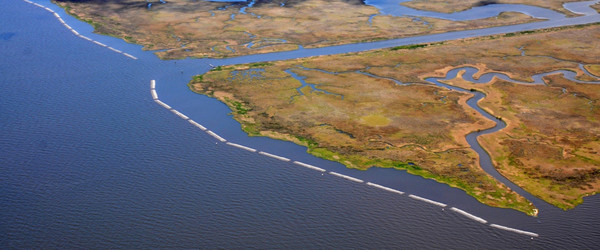
Work continued making progress on two living shoreline projects in Florida and Mississippi this summer, building natural infrastructure that will help protect coastal habitats and communities in the Gulf of Mexico. Together, these projects are restoring more than 55 acres of marsh and 56 acres of reef habitat to help restore injuries caused by the Deepwater Horizon oil spill.
Shorelines, marshes, and barrier islands provide protection for coastal communities and habitats along the Gulf of Mexico. However, many of these habitats have been lost or degraded due to storms, sea level rise, and industrial infrastructure. Living shorelines offer a nature-based method for preventing the loss of these valuable habitats and boosting the resilience of coastal communities.
Living shorelines use natural materials such as plants, rocks, and oysters to help stabilize shorelines and slow erosion, while also creating habitat for wildlife. Compared to traditional, hardened structures such as bulkheads, revetments, and concrete seawalls, living shorelines are often cheaper to build and maintain.