|
Computers Now “See” Animals on the Ocean Bottom
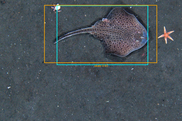
Researchers at the Northeast Fisheries Science Center are using a machine learning software to teach computers how to identify sea life in millions of images of the ocean floor, a development that improves Atlantic sea scallop assessments. Our annual sea scallop research survey collects approximately 5 million images of the ocean bottom off the Northeast United States. Scientists and volunteers then manually examine an astonishing 100,000 of these images, roughly 2 percent of the number gathered. If computers can be trained to identify sea life in these images faster and more thoroughly than humans, all kinds of information about other sea life and their habitats can also be captured.
|
Numbers From Fish
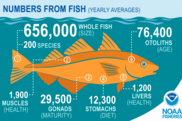
Every year, the Northeast Fisheries Science Center compiles valuable information from more than 600,000 fish collected by fishermen, scientists, and observers. These fish parts fit together like a puzzle, giving scientists a picture of the overall condition and health of the fishery. The goal is to provide the science needed to sustainably manage our fisheries.
|
Joy the Loggerhead Turtle Released Off Cape Cod
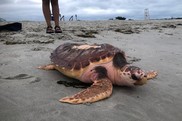
We are pleased to announce that Joy, our Science Aquarium’s young loggerhead turtle, has recovered from injuries that she sustained after cold-stunning in 2018 and was released back into the wild in late August. Joy spent nearly two years with us, regrowing her damaged shell and regaining her strength. For more on Joy, watch her video, made just before she was released. Turn up the sound!
|
New Stock Assessment Webpages
Celebrating Seafood Month
Sports Medicine Leads to Discovery About Mussels
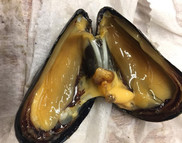
A new study conducted at the Northeast Fisheries Science Center’s Milford Laboratory found that feeding rates of blue mussels slow down under ocean acidification conditions. The cause may be the slowing beat of gill cilia, similar to a known response in human lung cells. Reduced feeding and filtration have implications for energy and growth in blue mussels, as well as ecosystem level effects.
|
The Ocean is a Noisy Place
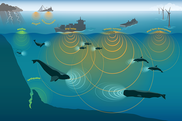
Ocean noise has become a chronic issue—greatly impacting marine life and the marine ecosystem in general. This is why our Passive Acoustic Research Group participates in collaborative projects geared toward addressing this issue and finding solutions. Marine mammals and many fish produce and perceive sound in the ocean. In an environment where vision is limited, hearing is one of the most important senses. These animals rely on sound for navigating, socializing, establishing dominance, attracting mates, avoiding predators, and finding food.
|
More Food Does Not Always Mean More Consumption
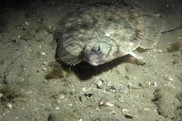
Scientists at the Northeast Fisheries Science Center have developed an unusually rich picture of who is eating whom off the Northeastern United States. The findings, published recently in Fish and Fisheries, provide a close look at fish feeding habits for 17 fish species, predators, and their prey. Decades of data allowed our researchers to look at predator-prey interactions in a different way: among multiple species throughout the water column.
|
Cooperative Research Looks at Historical Data

Since 2007, our Study Fleet Program has worked with commercial fishermen to collect detailed data about their fishing operations. This fall, Dr. Janne Haugen will conduct a novel analysis of fishing effort data collected by the Study Fleet. She will explore how estimates of a vessel's “fishing footprint” change when using this fine-scale fishing data in comparison to results when aggregated data are used, as is often the case. This work will determine if commercial fishing operations are adequately described by existing models of fishing activity within planned wind energy areas.
|
Electronic Monitoring–An Alternative to Groundfish At-Sea Monitors
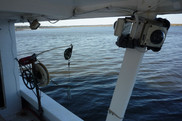
The commercial fishing industry needs cost-effective and workable options to better monitor fishing activity. Electronic monitoring (EM) is emerging as a viable option for some fishermen. An EM system uses video cameras and gear sensors to meet sector at-sea monitoring requirements. Interest in EM has grown steadily in the Northeast region since pilot studies began in 2010. Beginning May 1, 2021, groundfish fishermen may choose EM over human at-sea monitors if EM is part of their sector’s approved operations plan. For those who choose EM, some portion of their trips may also be selected to carry Northeast Fisheries Observer Program observers to comply with bycatch reporting requirements. Guidance is available to assist sectors with submitting an operations plan and contract by October 15, 2020 for fishing year 2021.
|
Meet Meghana Parikh, Research Veterinary Medical Officer

Meghana is a new staff member at our Milford Laboratory. As a veterinarian and epidemiologist, Meghana brings a “one health” approach to her work with the shellfish aquaculture industry. She wants to get to know the shellfish growers and the challenges they face, and help them improve their livelihoods and create sustainable food products.
|
Solicitation Call for Working Group Members
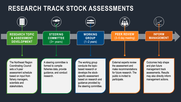
We are currently soliciting working group members for both butterfish and illex squid. Both species will be assessed at our research track peer review meeting in November 2021. If you are interested in being a member of either working group, please fill out the google form by October 16, 2020. Please contact Michele Traver with questions.
|
|
|
Upcoming Events
COVID-19: We continue to plan events, but they may be delayed, cancelled, or moved to a virtual platform closer to their date.
Oct 1-29 Index-Based Methods Working Group October 2020 Meetings
Oct 1-31 Milford Laboratory Virtual Open House
Oct 10-28 Ocean Fun Days: Celebrating 17 years of energy conservation and environmental awareness
Oct 12 Sea Scallop 2021-2022 Research Set-Aside Call for Proposals
Oct 16 Call for Butterfish and Illex Squid Working Group Members
|
|
|
|
|