|
Sept. 22, 2020 Marine Recreational Information Program |
|
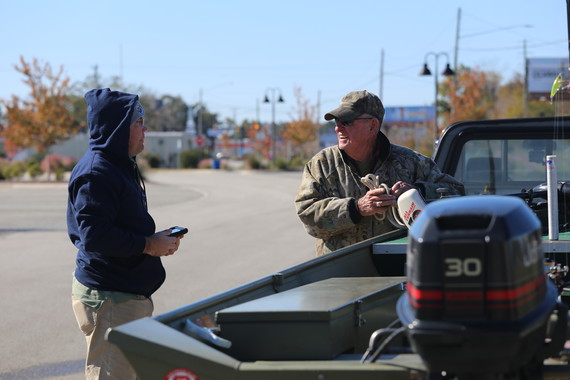 A field interviewer surveys an angler in Jacksonville, North Carolina. The data he collects will inform our estimates of total recreational catch.
|
|
|
From Maine to Mississippi, anglers often wonder why we’re asking for information about their fishing trip and how we’ll use the data we collect. Finding a field interviewer at your local marina, boat ramp, or beach is one way to get answers to your questions about recreational fishing data collection. But you don’t have to wait until you’re at the dock to learn why your catch counts.
The Marine Recreational Information Program has developed two new print and digital fact sheets that answer anglers' most common questions about our in-person survey of shore, private boat, and for-hire catch, and our mail survey of shore and private boat trips. Together, these surveys collect data from tens of thousands of angler trips and hundreds of thousands of coastal households each year. Anglers are our primary source of recreational fishing data. Their understanding and support of these surveys is vital to the assessment and management of sustainable fish stocks.
So, read our Q&As on the Access Point Angler Intercept Survey and the Fishing Effort Survey. If you have a question to add, email the Marine Recreational Information Program.
|
|
About MRIP
The Marine Recreational Information Program (MRIP) is the state-regional-federal partnership responsible for developing, improving, and implementing surveys that measure how many trips saltwater anglers take and how many fish they catch.
Do you have a question about recreational fishing data collection or estimation? Email Dave Bard at david.bard@noaa.gov or visit countmyfish.noaa.gov.
|
|
|
|