|
Sans Tourists, Juneau Scientists Partner to Capture Data on Humpback Whales
Research aims for baseline information on whale behavior and biology in absence of vessels.
This is a collaborative effort with the University of Alaska Southeast, University of Alaska Fairbanks, NOAA Fisheries Alaska Regional Office and Alaska Fisheries Science Center/Auke Bay Laboratories and the Pacific States Marine Fisheries Commission.
|
|
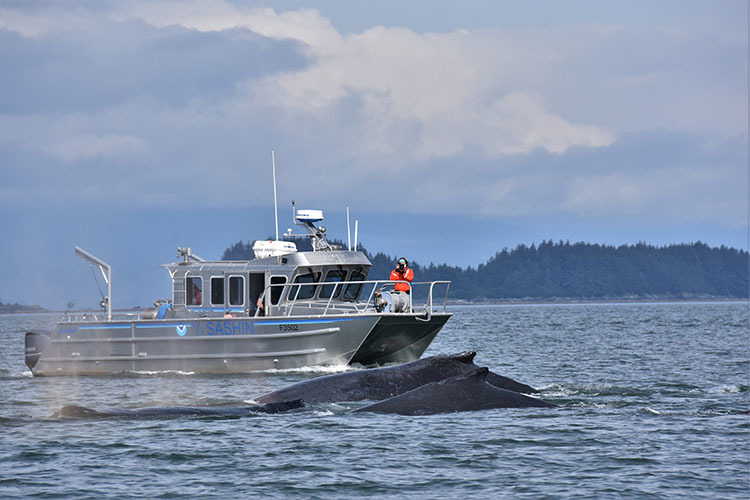 Scientists watch humpback whales near Juneau. Credit: Bruce Baker, Permit 20648.
It’s an unusual year out on the water near Juneau, Alaska.
Normally a throng of tourists would arrive in Juneau on cruise ships. They would board one of the more than 65 whale watching vessels for an opportunity to see whales.
Juneau is a premiere location for whale watching, especially humpback whales. Humpbacks migrate to Alaska each spring to feed in the nutrient-rich waters and build up fat stores through the summer. Then they migrate back to Hawaii, Mexico, and other areas of the Pacific Ocean in the fall to breed and calve in tropical waters over the winter. They frequently breach, blow, and dive—showing their tail flukes. If whale-watchers are lucky, they may even get to see humpback whales engaged in “bubble net feeding.” This rare cooperative feeding method occurs in only a few areas around Alaska.
Read more.
|
|
|
|