|
Distribution Changes in Baleen Whales

Scientists using passive acoustic recordings of whale calls have found that four of the six baleen whale species found in the western North Atlantic Ocean—humpback, sei, fin and blue whales—have changed their distribution patterns in the past decade. The recordings were made over 10 years by devices moored to the seafloor at nearly 300 locations, from the Caribbean Sea to western Greenland.
|
Exploring the Potential of Northeast Offshore Mussel Farming

Scientists from our Milford Laboratory conducted the first environmental suitability study of offshore northeast waters for blue mussel aquaculture, and found large areas to be suitable at the right depth. The team has continued this work, presenting the case that domestic offshore mussel farming could be a sustainable contribution to American seafood competitiveness in a recent perspectives column in Fisheries Magazine. They also examined the risks harmful algal blooms would pose to offshore aquaculture, and found the risks similar to those faced by coastal aquaculture farms.
|
NOAA Fisheries Cancels Four Research Surveys

NOAA Fisheries has announced more survey cancellations off the East and Gulf Coasts of the United States due to the uncertainties created by the COVID-19 pandemic and the unique challenges those are creating for NOAA Fisheries. Three of the cancelled surveys are in the Northeast: the Summer Ecosystem Monitoring, Northern Shrimp, and Autumn Bottom-Trawl surveys.
|
Know Your Sharks
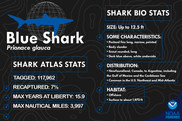
A 52-year database of the distribution and movements of 35 Atlantic shark species published by science center researchers in January revealed new information on some of the least known species. It also uncovered a few surprises about where sharks go and how long they live. Much of that work is based on data collected from sharks tagged and/or recaptured by volunteers between 1962 and 2013. To help volunteer taggers identify sharks by species, our Apex Predator Program has compiled an identification guide, which has been recently updated and posted online for anyone to use.
|
2020 Observer On-Deck Reference Guide
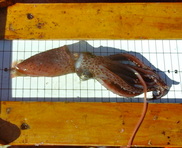
An updated 2020 Observer On-Deck Reference Guide is now available to help fisheries observers quickly determine biological sampling protocols and methods while at sea. The guide is packed with useful information about biological sampling targets, length and age structure information, biological sampling of protected species, photos and descriptions of gear configurations by fishery, species verification requirements and brief ID guides, protected species ID guides, and specialized catch estimation strategies. You can request an electronic copy of the guide or contact Debra Duarte with questions about observer data collection.
|
Woods Hole Student Program Goes Virtual
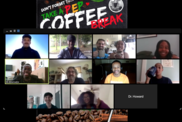
Sixteen college students from around the country are participating in this year’s Woods Hole Partnership Education Program (PEP). The program offers the same basic content and growth experiences as in past summers, but this year it’s virtual. Dive behavior in loggerhead sea turtles, bacteria in salt marshes, tracking sandbars, and visualizing water masses in the ocean are just a few of the 16 research projects undertaken by this summer's students.
|
Lecture and Award Focus on Diversity and Inclusion

Two Northeast Fisheries Science Center staff members, one active and the other retired, were recently honored for their contributions to making Woods Hole a more welcoming, inclusive, and diverse community. The Woods Hole Diversity Initiative named research scientist Larry Alade as the 2020 recipient of the John K. Bullard Diversity Award. Longtime center employee and now retiree Ambrose Jearld Jr. was also honored at the annual Ambrose Jearld Jr. Lecture on Diversity and Inclusion, presented by a former Woods Hole Partnership Education Program student Nigel Golden.
|
Upcoming Assessment Peer Reviews
Penobscot River Salmon Returns

Good news—Atlantic salmon return to Maine’s Penobscot River this year appear to be the highest since 2011. On July 28, Maine’s Department of Marine Resources reported 1,426 salmon returns, up from 1,076 in 2019. These numbers are a vast improvement from 2014, when only 248 Atlantic salmon returned to the river to spawn. The Penobscot River hosts the largest remaining run of endangered Atlantic salmon in the United States.
|
Meet Joy the Loggerhead Sea Turtle
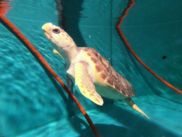
Joy is recovering from injuries she sustained in a 2018 cold-stunning event on Cape Cod. In our new video, you can see how well she is doing as our Woods Hole Science Aquarium staff nurses her back to health and, we hope, a safe release and long life in the wild. The aquarium remains closed to the public to help constrain the spread of COVID-19.
|
Meet Dave Packer, Research Ecologist

Interning, volunteering, and working for several federal agencies have been important parts of Dave Packer’s education and career. This includes being a park ranger, wilderness firefighter, and clinical research test subject. Now a research ecologist at the Northeast Fisheries Science Center, Dave’s work focuses on fish habitats, ranging from riverine systems and salt marshes to the deep ocean.
|
Internships Going Virtual in 2020
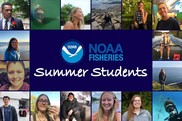
When mentors at our science center realized that lab facilities would be closed over the summer, they got creative. Using virtual meetings and cloud-based platforms, mentors and their students have been connecting and working on research that supports NOAA Fisheries’ mission. From analyzing the impacts of ocean acidification and investigating unusual mortality events (UME) in seals, to policy and conservation work with sea-run fish and analyzing fish behavior videos, these students are gaining real-world research experience and overcoming challenges in a shifting landscape.
|
|
|
Upcoming Events
COVID-19: We continue to plan events, but they may be delayed, cancelled, or moved to a virtual platform closer to their date.
Sept 7 Office of National Marine Sanctuaries “Get Into Your Sanctuaries” photo contest
Sept 15 Dr. Nancy Foster Habitat Conservation Award nomination
Sept 14-18 September Fisheries Stock Assessment Peer Review
|
|
|
|
|