|
Partnerships Improve Atlantic Surfclam Stock Assessment
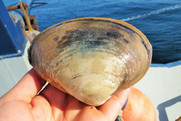
From the research survey conducted aboard a commercial clam vessel, to the new assessment model built with academic colleagues, partnerships make the surfclam assessment better. Working with partners led to a two-area model, which more accurately deals with changes happening to surfclams. This gives fisheries managers more confidence that the assessment accurately reflects what is going on in the population.
|
Northeast Observer Waiver Extended
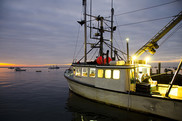
Although we had announced plans to resume observer deployments on July 1, we recognize the COVID-19 pandemic continues to evolve and as such, has required us to re-evaluate and adapt to changing circumstances. In response, NOAA Fisheries is extending the waiver granted to vessels with Greater Atlantic Region fishing permits to carry human observers or at-sea monitors through July 31, 2020.
|
Listening for Whales in Shipping Lanes
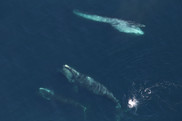
Science Center whale researchers and acousticians Danielle Cholewiak, Tim Cole, Sofie Van Parijs, and Genevieve Davis, and their WHOI collaborator Mark Baumgartner recently deployed an autonomous glider near the New York shipping lanes south of Massachusetts and Rhode Island. This glider is outfitted with a variety of water and environmental sensors, acoustic tag receivers, and hydrophones to record vocalizations of baleen whales, including endangered North Atlantic right whales. All glider data is delivered to the research team in near real-time. You can see some of what the team is finding, including what whales were found in this area and when. Underwater technology is helping us find whales even when we can’t see them.
|
Northeast Fisheries Observers Who Love Their Work
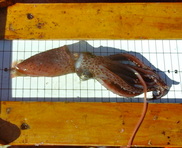
For Oceans Month, some of our fisheries observers have been blogging about what they do and what they love about it. Denise Craft, a fisheries observer since 2002, is our most recent blogger. You can also meet Andrew D’Agostine, Camille Smith, Brandon Raguz, and Julaina Bennett in this captivating blog series where observers share their stories about what it's like to be at sea and what drives their passion.
|
Meet Gilbert, the Snowy Grouper

Our Woods Hole Science Aquarium may be closed to the public for now, but we are making our most popular animals into internet stars. Meet Gilbert, our snowy grouper, who headlines the first in our video series on residents of the Woods Hole Science Aquarium.
|
Fish Rules App Makes Recreation Fishing Easy
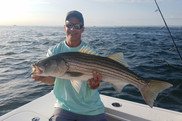
Recreational anglers from Maine to Texas and The Bahamas can now keep track of saltwater fishing regulations just by looking at the #FishRulesApp on a smartphone. This app provides images of various species for identification and lets fishermen know in real time if a fish is in season at their location, how many they can keep, minimum size, bag and vessel limit, and more. Anglers can also interact with the regulations in the app, so if you have a question about something, you can tap for more info. And images of fish caught can be posted to social media platforms like Facebook. And since you’re taking pics of your best catches, why not submit one to NOAA Fisheries’s recreational fishing photo contest #NOAAsFavoriteCatch? Contest ends September 1, 2020.
|
Stock Assessments in the Northeast
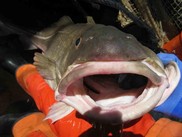
Stock assessments provide the scientific basis for fisheries management, and are the end result of data collection and analysis from research surveys and fishing. From July 7-9, the Transboundary Resources Assessment Committee will meet to peer review the assessment of Eastern Georges Bank cod and haddock, and Georges Bank yellowtail flounder. From September 14-18, management track stock assessments for groundfish and sea scallops will be peer reviewed. In November there will be a peer review of the results of the Index-Based Methods and Control Rules Working Group, and the research that they have conducted. This working group will provide research to improve multiple assessments.
|
Connecting Fishermen and Students to Science
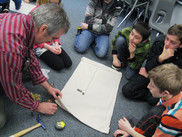
Northeast Fisheries Science Center oceanographer Jim Manning has spent 33 years studying the ocean. He has sought ways to test ocean circulation models with direct observations and helped others use the data collected for a variety of needs. Collaborations and partnerships have developed along the way. One of Jim’s earliest collaborative projects is the Environmental Monitors on Lobster Traps, or eMOLT.
|
Northeast Observer Sea-Day Schedule and Bycatch Analyses
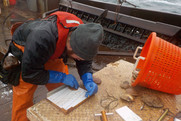
We have posted four new reports related to discard monitoring for April 2020-March 2021 in Northeast commercial fisheries. These documents show how many sea days must be monitored to obtain data needed to estimate discard for 15 federally managed species groups and sea turtles in 62 fleets across the region. We also released the sea-day schedule for trips selected for coverage through Northeast Fisheries Observer providers. NOAA Fisheries will reimburse 100 percent of industry sea-day costs for the Northeast multispecies groundfish fishery in FY2020.
|
Charles Perretti Focuses on Gulf of Maine Cod and Haddock
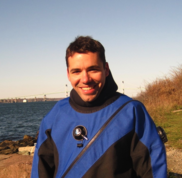
In June we welcomed Charles Perretti to the science center, our new lead assessment scientist for Gulf of Maine cod and haddock. Originally from Long Island, New York, he received his undergraduate degree at the University of Maryland, College Park, and his masters degree from Stony Brook University. His PhD from Scripps Institution of Oceanography, University of California San Diego was focused on developing quantitative methods for marine population assessments. When he’s not staring at a computer screen Charles says he enjoys “scuba diving, gardening, and doing whatever my toddler tells me to do.”
|
Measuring Atlantic Bluefin Tuna With a Drone
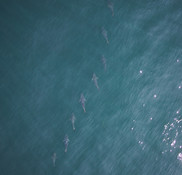
Researchers are using an unmanned aerial system (or drone) to gather data on schooling juvenile Atlantic bluefin tuna in the Gulf of Maine. A recent pilot study tested whether a drone could keep up with the tuna while also taking photographs that captured physical details of this fast-moving fish. The drone was equipped with a high-resolution digital still image camera. Results show that drones can capture images of both individual fish and schools. They may be a useful tool for remotely monitoring behavior and body conditions of the elusive fish.
|
Meet Harvey Walsh, Ecosystem Monitoring Program Lead
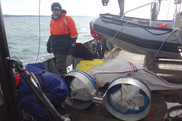
The desire to spend time outdoors as a child in Minnesota led Harvey Walsh to a career in fisheries research. He was hooked once he spent time studying larval and juvenile fish in the ocean. Harvey has been collecting data on the Northeast Continental shelf for more than 40 years. Learning about cool things is a key part of his job.
|
RODA Awarded State of the Science Grant
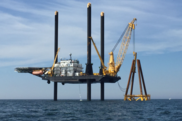
The Responsible Offshore Development Alliance (RODA) received a $150,000 grant from NOAA Fisheries to aggregate existing knowledge and organize a symposium on the current science regarding fisheries and offshore wind interactions. The project, “Understanding the State of the Science,” will advance agency, fishing industry, offshore wind energy developer, and public understanding of existing research on interactions between the two industries.
|
Saltonstall-Kennedy Grant Program Funding Opportunity
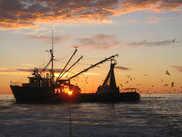
The 2021 Saltonstall-Kennedy Grant competition is now open. The program funds projects to address needs of fishing communities, optimize economic benefits by maintaining sustainable fisheries, and increase opportunities to keep working waterfronts viable. An informational webinar about the grant and the proposal process will be held on July 9. Pre-proposals are due August 7 while full proposals are due November 20.
|
|
|
Upcoming Events
COVID-19: We continue to plan events, but they may be delayed, cancelled, or moved to a virtual platform closer to their date.
July 7-9 Transboundary Resources Assessment Committee Peer Review
July 9 FY21 Saltonstall-Kennedy Grant Informational Webinar
Sept 14-18 September Management Track Assessments for Groundfish and Sea scallops
|
|
|
|
|